Yarrow
FlowerAchillea millefolium
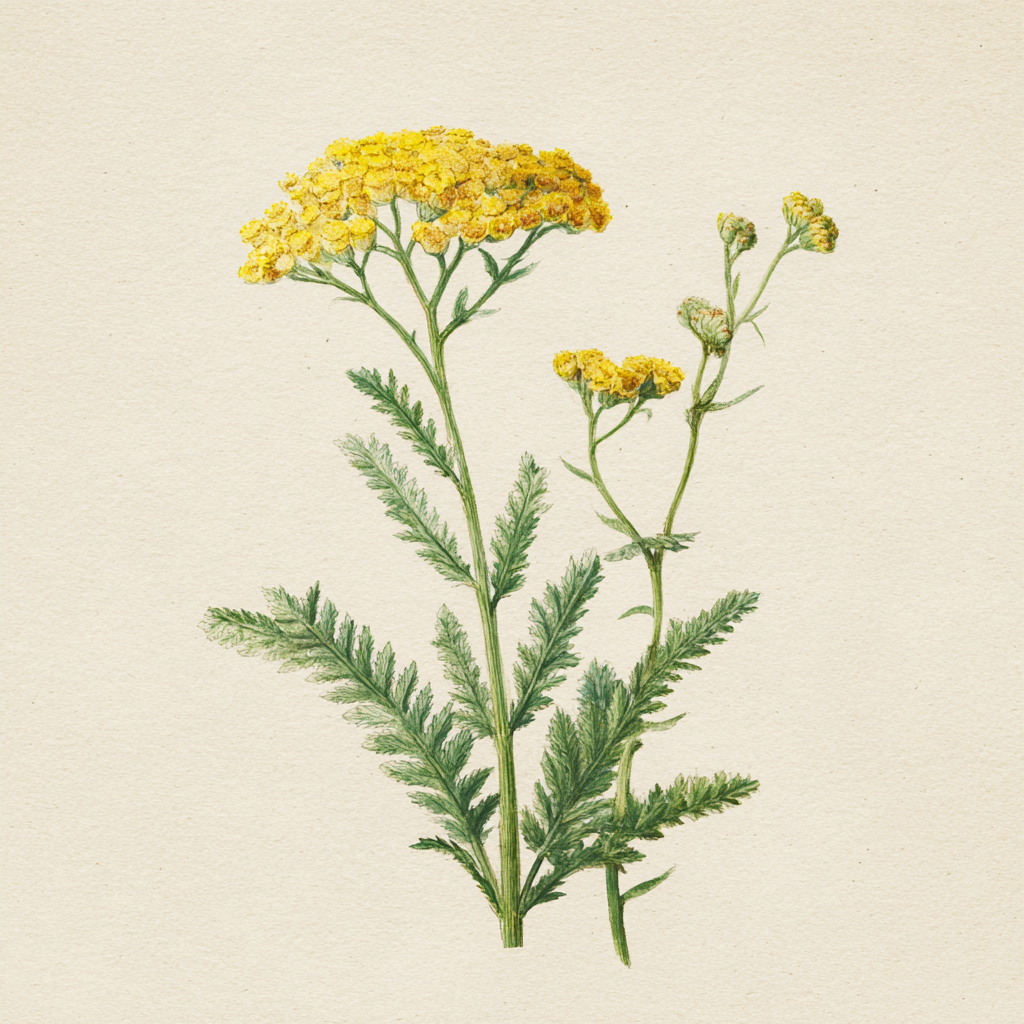
Have seeds for this? Add to inventory →Yarrow is a deep-rooted plant that concentrates copper, potash, and phosphorus in its leaves, making it useful as a chop-and-drop mulch. It is also one of the most powerful beneficial insect attractors in the organic garden; its flat-topped flower clusters are landing pads for predatory wasps, hoverflies, and ladybugs that prey on garden pests.
Growing Conditions
Growing Conditions
Sunlight
Full Sun
Water Needs
Low
Soil
Well-draining loam; pH 5.5 - 7.0; tolerates poor, dry soil
Spacing
12 - 24 inches
Days to Maturity
Perennial; flowers in year 1 from transplant; blooms May - September
Growing Zones
Growing Zones
Thrives in USDA Zones 3 - 10
When to Plant
When to Plant
Transplant
Spring or autumn
Direct Sow
Surface sow in spring; cold stratification improves germination
Harvest
Cut flat flower heads for drying; divide clumps every 3 years
Phenology (Natural Timing Cues)
Direct Sow
Yarrow seed is tiny and slow, and the seedlings emerge as delicate ferny growth that takes time to develop into the tough, spreading clumps yarrow eventually becomes. Surface sowing in early spring takes advantage of natural cold stratification - seed that sits through remaining cool nights and wets-and-dries cycles from spring rain will germinate more reliably than seed sown later into warmer, drier soil. The seed needs light to germinate and should be pressed onto the surface rather than buried. Cold stratification significantly improves germination rates, so early spring sowing when temperatures fluctuate is ideal rather than problematic. In practice, many established yarrow clumps are maintained through division rather than grown from seed.
- Forsythia is beginning to bloom.
- Soil surface is workable and not crusted.
- Cool-season perennial crowns are just starting to push new growth.
- Surface moisture from spring rain is steady rather than drying quickly.
Transplant
Yarrow transplants readily at almost any time outside of midsummer heat and midwinter freeze - it is one of the more forgiving perennials. The spring window before summer heat and the autumn window after summer heat are both reliable. Divisions should have a firm root plug and some green growth before moving. The main cause of failure is transplanting into dry, cracking soil during a hot period: the shallow roots desiccate before they can spread. Deep watering after transplant and some temporary shade during any hot spell immediately after planting significantly improves success.
- Forsythia is blooming in spring or first cool nights have returned in autumn.
- Soil drains cleanly after rain and holds moisture without staying soggy.
- Divisions have visible green growth and a root plug that holds together when lifted.
Start Dates (Your Location)
Average dates use your saved zone; readiness also checks your forecast when available.
Best Planting Window
Spring window
Spring
Plant early enough for roots to settle before summer heat.
Autumn window
Early autumn
Plant early enough for roots to grow before winter; avoid late planting into cold, wet soil.
Planting Method
Use nursery-grown planting stock rather than treating this as a standard seed-starting crop.
Critical Timing Note
Plant early enough for roots to establish before weather stress arrives.
Use the average timing, but check your local forecast before planting.
Typical Harvest Window
May to September
Organic Growing Tips
Organic Growing Tips
Plant yarrow throughout the garden as a universal attractor of beneficial predatory insects.
Yarrow is said to intensify the aromatic oil content and medicinal strength of nearby herbs.
Add yarrow leaves to the compost heap as an activator - it speeds decomposition significantly.
Divide and spread clumps around the garden every 3 years; yarrow thrives on neglect and poor soil.
Care Guidance
Optional seasonal guidance for what you can do, even when nothing is urgent.
Care Guidance
Watering
Extra watering is often only useful during extended dry periods. If the top 2 to 3 inches are still holding moisture, additional water may not help.
Feeding
Extra feeding is rarely required if soil is healthy. If growth looks pale or slow, a light compost top-dressing is often enough before adding anything stronger.
Seasonal care
In late fall, a light cleanup and fresh mulch can help if winter protection is useful in your climate. Leaving a little space around crowns and trunks often helps air move and keeps excess moisture from sitting there.
Harvest timing
Harvests often cluster around May to September. If fruit, leaves, or roots start looking ready, color, size, firmness, and scent usually tell you more than the calendar alone.
Known Varieties
Common cultivars worth knowing
Known Varieties
Common White
Wild-type white yarrow with strong pollinator value and tough growth.
Best for
meadow plantings
Colorado Mix
Seed mix with soft pastel flower colors on sturdy plants.
Best for
dry borders
Paprika
Red-orange flowers that age to softer tones.
Best for
warm color schemes
Moonshine
Silver foliage with flat lemon-yellow flowers.
Best for
dry ornamental beds
Summer Pastels
Mixed pastel flower heads on compact plants.
Best for
cut flowers
Companion Planting
Companion Planting
Good companions
Support & insectary plants
Nearby plants that attract pollinators, beneficial insects, or improve soil health.
- Lavender
Attracts pollinators and beneficial insects
- Echinacea
Attracts pollinators and beneficial insects
- Black-Eyed Susan
Attracts pollinators and beneficial insects
- Bee Balm
Attracts pollinators and beneficial insects
- Calendula
Trap crop for aphids; attracts predatory insects
- Chamomile
Attracts beneficial insects and produces nutrient-rich mulch
- Fennel
Attracts pollinators and beneficial insects
- Comfrey
Attracts beneficial insects and produces nutrient-rich mulch
- Sweet Alyssum
Attracts pollinators and beneficial insects
Avoid planting near
No known conflicts
Common Pests
Common Pests
All pest management in Garden uses safe, organic, non-toxic methods only. No synthetic pesticides, ever.
Simple Ways to Use
Simple Ways to Use
Start here if you're not sure how to use this crop in the kitchen.
Quick recipes you can make right away
Yarrow Tea
Pour 1 cup of hot water over 1 to 2 teaspoons of dried yarrow leaves and flowers, then steep 5 to 10 minutes before straining. Yarrow is traditionally used as a tea, so keep the cup simple and clearly labeled if you are storing dried material.
Yarrow Herbal Steam Bowl
Place a small handful of dried yarrow in a heat-safe bowl, pour hot water over it, and let the steam rise for a minute before leaning near the bowl. Keep your face back far enough to stay comfortable, and refresh with hotter water only if the bowl has cooled safely.
Yarrow Infused Oil
Fill a clean jar loosely with fully dried yarrow leaves and flowers, cover them completely with oil, and let it stand out of direct sun for 1 to 2 weeks. Strain well and label the jar clearly so it is used as a simple infused oil rather than mistaken for cooking oil.
How to Preserve
How to Preserve
Use this section to store or process extra harvest before it spoils.
Practical methods for extra harvest
Air dry yarrow flower clusters
Cut flower clusters on a dry day and hang them in small bunches or spread them on a screen in a warm airy place out of direct sun. Dry them for about 7 to 10 days, until the flowers feel crisp and the stems snap with no soft bend left.
Dry yarrow leaves for tea blends
Spread clean leaves in a thin single layer and dry them until they crumble easily between your fingers and no thick midrib feels cool or flexible. Keep leaves and flower clusters separate if you want easier measuring later.
Store dried yarrow or infuse in oil
Cool all dried material fully before jarring, then store it whole or use only fully dried herb for an oil infusion. If the jar fogs or the herb softens after storage, dry it longer before sealing it again.
New to preserving food?
New to dehydrating? Read the dehydrating guide.How to Store
How to Store
Simple storage tips
Use fresh yarrow soon after harvest or refrigerate it briefly while you prepare it for drying.
Dry yarrow only when the foliage and flowers are completely dry from dew or rain, because damp clusters mold easily.
Store dried yarrow in an airtight jar in a cool dark place, and expect the best aroma within about 6 to 12 months.
Keep infused oil labeled and out of heat and light, and discard it if the smell turns sour or stale.
Store dried flower clusters whole until use when possible, because they hold aroma better than crushed herb.
How to Save Seed
How to Save Seed
Step-by-step seed saving
- 1
Let some flower clusters stay on the plant until they turn brown and fully dry.
- 2
Cut the dry heads into a paper bag and let them sit a few more days if the stems still feel soft.
- 3
Rub the heads gently over a tray to release the small seeds, then remove the larger dry pieces.
- 4
Store the fully dry seed in a cool dry place in a labeled packet or jar.
Native Range
Native Range
- Origin
- Circumboreal temperate Northern Hemisphere, with native populations across North America, Europe, and Asia as part of a widespread species complex
- Native Habitat
- Dry meadows, grasslands, open woodlands, prairie edges, pastures, and disturbed sites with well-drained, lean soils in full sun to partial shade
- Current Distribution
- Naturally widespread across temperate Northern Hemisphere regions and extensively naturalized in disturbed habitats, roadsides, and cultivated landscapes worldwide.
Taxonomy
Taxonomy
- Kingdom
- Plantae
- Family
- Daisy family (Asteraceae)
- Genus
- Achillea
- Species
- Achillea millefolium
Morphology
Morphology
Root System
Spreading rhizomatous perennial roots that form durable clumps and can knit through dry soil.
Stem
Upright, tough, lightly hairy stems that hold flat flower clusters above the foliage.
Leaves
Finely divided fern-like leaves with a strong aromatic scent when crushed.
Flowers
Flat-topped clusters of many small composite flower heads, usually white in wild forms but often colored in cultivars.
Fruit
Tiny dry achenes produced in the spent flower clusters.
Natural History
Natural History
Yarrow (Achillea millefolium) is among the oldest documented medicinal plants in human history. Pollen analysis from a Neanderthal burial at Shanidar Cave in northern Iraq, dated to approximately 60,000 years ago, found concentrated pollen of several flowering plants including Achillea, suggesting possible intentional placement of medicinal plants with the dead - though the intentionality interpretation has been contested and the debate continues. The genus name Achillea derives from Achilles: ancient Greek tradition held that the hero used yarrow to staunch the bleeding wounds of his soldiers during the Trojan War, and Pliny the Elder recorded this story in his Naturalis Historia, giving yarrow one of the most storied eponyms in botanical history. The species name millefolium means "thousand-leaved," referring to the finely divided feathery leaves - a quality so distinctive that the plant has parallel vernacular names in many European languages (milfoil in English, millefeuille in French, Tausendblatt in German, milenrama in Spanish) all referencing the same anatomical feature. In China, yarrow stalks were the traditional tool for casting hexagrams in the I Ching, the ancient Book of Changes: stalks were counted and divided in a specific ritual process to generate the numbers that selected a hexagram for divination. This use made yarrow virtually sacred in the Chinese cosmological tradition, associated with the ability to access the order underlying apparent randomness. Yarrow pollen has been found in European Neolithic burial sites, and it appears in the Norse, Anglo-Saxon, and Celtic folk medicine records as a wound and fever plant with the vernacular names woundwort, soldier's woundwort, nosebleed plant, and staunchgrass - all referencing the same haemostatic tradition.
Traditional Use
Traditional Use
Yarrow has one of the longest continuous documented use histories of any plant, from disputed Neanderthal pollen evidence through Homer's Achilles to the I Ching's divination tradition to the wound-herb kits of European armies - a span of claims that makes it one of the most cross-culturally significant plants in the garden.
Parts Noted Historically
Shanidar Cave and the Neanderthal Evidence - Flowers
In 1960, archaeologist Ralph Solecki excavated Shanidar Cave in northern Iraq and found concentrated flower pollen around a Neanderthal burial dated to approximately 60,000 years ago - including Achillea, Senecio, and several other plants with medicinal properties in later human traditions. Solecki's interpretation, published in the journal Science in 1975, was that Neanderthals had placed medicinal flowers with their dead, implying intentional behaviour, emotional ritual, and plant knowledge. The claim has been contested: a 2020 reanalysis in the Journal of Archaeological Science suggested the pollen might have been deposited by burrowing rodents rather than intentional human placement. The debate remains open, but it means yarrow has at least a credible claim to the longest potential use history of any documented plant.
Achilles and the Greek Military Tradition - Leaves
Pliny the Elder's version of the Achilles story - that the hero used yarrow to staunch the bleeding wounds of his soldiers at Troy - gave the plant its genus name and embedded it firmly in the Western medical tradition. Whether this story is pure myth or reflects an older Greek practice of using feathery Achillea leaves as a field dressing is unknowable, but the connection between yarrow and battlefield wound care appears consistently across European military history. Medieval European armies carried yarrow as a standard wound herb, and it appears in military medicine texts through the 17th century. The Anglo-Saxon name "woundwort" and the folk names "soldier's woundwort," "staunchgrass," and "nosebleed plant" all reference the same haemostatic tradition across different languages and periods.
I Ching and Chinese Divination - Dried stalks
The traditional method of consulting the I Ching, described in the text itself (c.1000-700 BCE in its current form, building on older traditions), uses dried yarrow stalks as the physical medium for generating hexagrams. The stalks are counted, divided, and sorted in a precise ritual process repeated three times to produce each line of the hexagram, generating the numbers from which a hexagram is read. The choice of yarrow was not arbitrary: the plant was associated in Chinese cosmology with the ability to bridge the human world and the underlying order of Heaven and Earth. Confucius reportedly valued the yarrow stalks as sacred objects in themselves, stating that the sage who consults the oracle should spend several days in meditative preparation. The I Ching yarrow method has been practiced continuously for roughly three thousand years, making it one of the longest-running documented uses of any plant in any culture.
European Folk Wound Medicine - Flowering tops and leaves
John Gerard described yarrow in his 1597 Herball as useful for wounds and bleeding, citing Dioscorides and the Achilles tradition while adding his own clinical observations. Nicholas Culpeper's 1652 Complete Herbal expanded on this, recommending yarrow for wounds, nose bleeds, and stopping blood generally. The consistency of this tradition across European folk medicine from classical Greek sources through 17th-century English herbals to 20th-century field-medicine guides suggests a plant with real, observable activity. Modern research has identified achillin and achillicin (sesquiterpene lactones) and tannins in yarrow that contribute to haemostatic and anti-inflammatory effects, providing plausible chemistry for a tradition that predates chemistry by millennia.
Yarrow belongs to the Asteraceae (daisy family) and may cause contact dermatitis or allergic reactions in people sensitive to this plant family, which also includes ragweed, chrysanthemum, and chamomile. Internal use of yarrow preparations is a traditional practice with a long history, but it is not culinary material and has specific contraindications including pregnancy.
This information is provided for historical and educational purposes only and is not medical advice. Always consult a qualified healthcare professional before making decisions related to your health.
Loading photo submission…