
Powdery Mildew
One of the most common fungal diseases in the garden, caused by several related species. Unlike most fungi, powdery mildew actually thrives in warm, dry weather with poor air circulation, rather than in wet conditions. It affects an enormous range of crops and is almost universal in humid temperate climates.
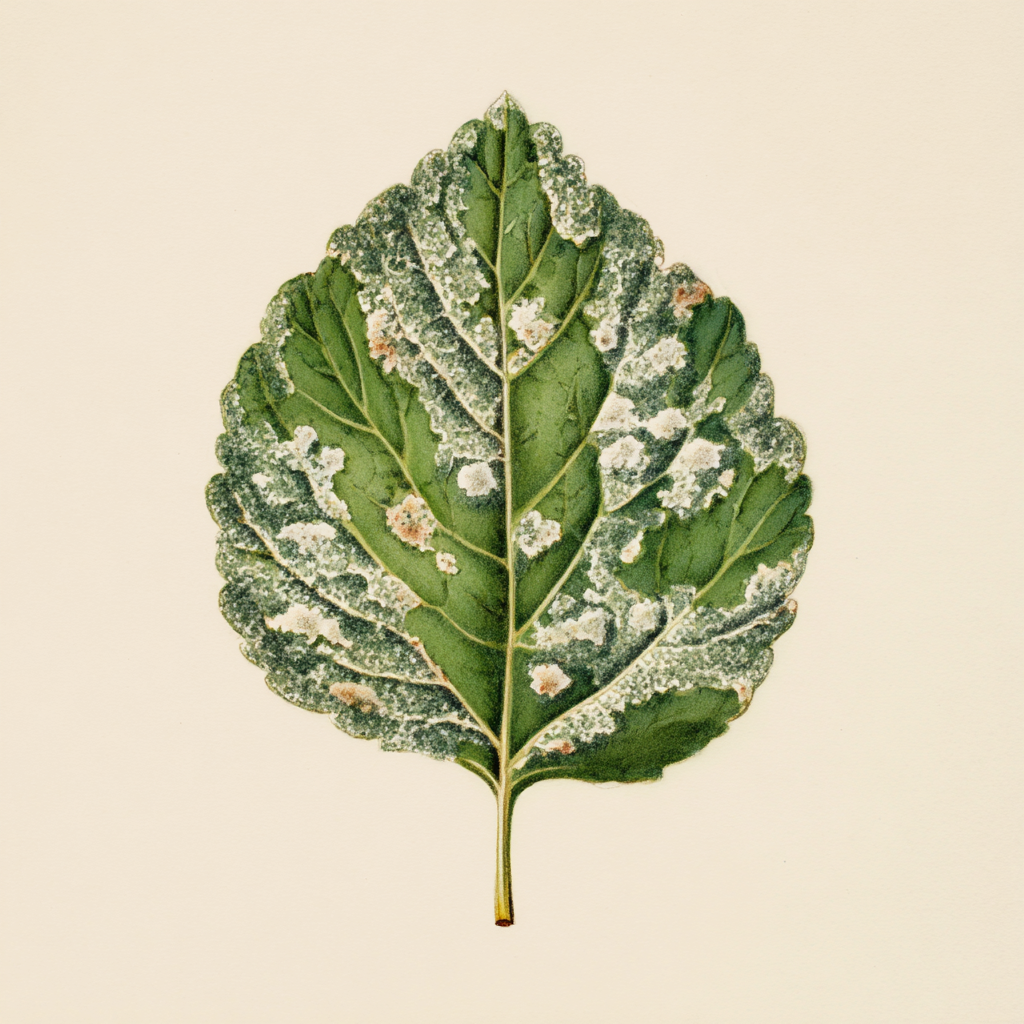
Symptoms to Look For
- White or grey powdery coating on upper leaf surfaces, appearing as if the leaves were dusted with flour
- Distorted, curling, or stunted new shoots
- Yellowing of leaves beneath the white coating
- Premature leaf drop and dieback of affected shoots
- The white coating can initially be rubbed off, but as the disease progresses it becomes permanent
Affected Plants
Organic Solutions
Baking Soda Spray
Mix 1 tablespoon of baking soda, 1 tablespoon of neem oil, and a few drops of castile soap per litre of water. The alkaline coating inhibits spore germination on the leaf surface. Apply to all leaf surfaces every 7 - 10 days, or after rain. Most effective as a preventive.
Milk Spray
A 40% solution of fresh milk in water is as effective as many chemical fungicides in several published studies. Proteins in milk react with sunlight to produce antiseptic compounds on the leaf surface. Spray upper leaf surfaces weekly in warm, dry weather.
Neem Oil
Neem oil has proven antifungal properties and disrupts the spore germination cycle. Apply as a preventive spray at the first sign of conditions favouring disease (warm days, cool nights) and as a treatment at the earliest symptom stage.
Improve Airflow
Prune affected foliage, remove dense interior growth, and increase spacing between plants. Powdery mildew spores germinate on leaf surfaces but struggle to establish where air moves freely. Ventilation is the most durable preventive measure.
Organic Remedies
Prevention
- Choose disease-resistant varieties of cucumber, courgette, and squash - many modern varieties have excellent powdery mildew resistance built in
- Avoid overhead watering, which wets foliage that remains damp and promotes all fungal diseases
- Maintain adequate spacing between plants from the time of transplanting: crowding is the primary cause of powdery mildew outbreaks in vegetable gardens
- Spray aerated compost tea as a foliar application every two weeks — the beneficial microorganisms colonise leaf surfaces and actively compete with powdery mildew spores, significantly reducing disease pressure on plants growing in biologically active soil
Garden, by Willowbottom recommends only organic, wildlife-friendly solutions. No synthetic pesticides, no harmful chemicals - ever.