Aphids
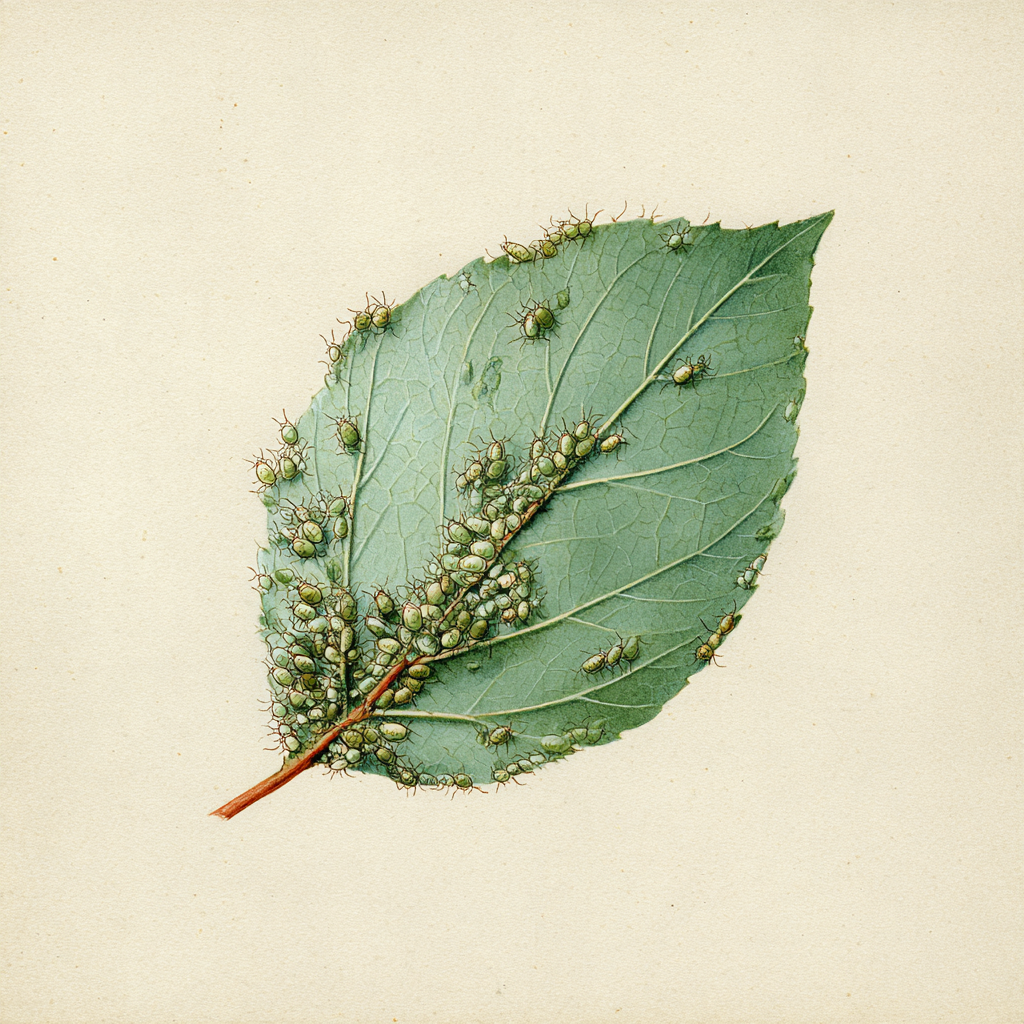
Soft-bodied sap-sucking insects 1 - 3 mm long that cluster on new growth and leaf undersides in large colonies. They can be green, black, white, or grey depending on species. In warm weather aphid populations double every few days, making early action essential.
Symptoms to Look For
- Curled, distorted, or puckered new growth at shoot tips
- Sticky, shiny honeydew coating on leaves and stems below colonies
- Black sooty mould growing on honeydew deposits
- Yellowing or stunted leaves, particularly on young growth
- Ants running up and down stems, "farming" aphid colonies for their honeydew
Affected Plants
Organic Solutions
Strong Water Blast
Direct a firm jet of water from a hose at affected growth, particularly leaf undersides. This physically dislodges the colony. Aphids that fall to the soil rarely make it back to the plant. Repeat every 2 - 3 days.
Insecticidal Soap Spray
A 1 - 2% solution of pure castile soap in water kills aphids on contact by disrupting their cell membranes. Spray directly onto colonies, covering undersides of leaves. Safe for most beneficial insects once the spray dries.
Neem Oil Spray
Mix 2 tablespoons of neem oil with 1 teaspoon of castile soap per litre of warm water. Spray all surfaces, especially leaf undersides. Apply at dusk to avoid harming pollinators and beneficial insects. Neem disrupts aphid feeding and reproduction; repeat every 5–7 days for three weeks.
Kaolin Clay Spray
Mix wettable kaolin clay per package directions and spray onto all plant surfaces. The fine particle film confuses and deters aphids without harming soil biology or beneficial insects. Reapply after rain. Completely safe and leaves no toxic residue.
Encourage Ladybirds and Lacewings
A single ladybird can consume 50 aphids per day; a lacewing larva can eat 200 per week. Plant dill, yarrow, fennel, and calendula nearby to attract and sustain these predators naturally.
Organic Remedies
Prevention
- Plant nasturtiums as sacrificial trap crops - aphids strongly prefer them and can be removed en masse from a single plant
- Avoid over-fertilising with nitrogen, which produces the soft, sappy growth that aphids prefer over tougher plant tissue
- Maintain a diverse garden with plenty of flowering plants to sustain permanent populations of aphid predators — ladybirds, lacewings, hoverflies, and parasitic wasps are your best long-term aphid control
- Boost plant immunity with regular foliar applications of aerated compost tea — plants with strong biological soil support are measurably more resistant to aphid colonisation
Garden, by Willowbottom recommends only organic, wildlife-friendly solutions. No synthetic pesticides, no harmful chemicals - ever.