
Mint
HerbMentha spicata
Have seeds for this? Add to inventory →Mint is a vigorous, spreading perennial herb whose strong scent deters aphids, flea beetles, cabbage white butterflies, and rodents. It is best grown in containers to prevent it from aggressively colonising garden beds.
Growing Conditions
Growing Conditions
Sunlight
Partial Shade
Water Needs
Moderate
Soil
Rich, moist, well-draining loam; pH 6.0 - 7.0
Spacing
18 - 24 inches (or in containers to restrict spread)
Days to Maturity
Harvest sprigs once plant is 4 - 6 inches tall
Growing Zones
Growing Zones
Thrives in USDA Zones 3 - 11
When to Plant
When to Plant
Transplant
Spring or autumn; plant from divisions or purchased transplants
Harvest
Harvest regularly to promote bushy, leafy growth
Phenology (Natural Timing Cues)
Transplant
Mint establishes most easily from divisions or nursery transplants rather than seed, which germinates slowly and produces variable plants. The single most important step before planting is containment: sink a pot, root barrier, or bottomless bucket into the bed before the mint goes in - retrofitting containment around established runners is much harder. Spring and autumn are both reliable planting windows; the key is settled moisture while divided roots re-establish before growth accelerates.
- Early dandelions are beginning to bloom (spring planting).
- Soil is workable and holds steady moisture without waterlogging.
- Divisions show active white roots when tipped from their pot.
- Summer heat has eased and soil stays moist longer without daily watering (autumn planting).
Start Dates (Your Location)
Average dates use your saved zone; readiness also checks your forecast when available.
Best Planting Window
Spring window
Spring
Plant early enough for roots to settle before summer heat.
Autumn window
Early autumn
Plant early enough for roots to grow before winter; avoid late planting into cold, wet soil.
Planting Method
Plant divisions from a healthy parent plant. Divisions preserve the established plant’s traits better than seed.
Critical Timing Note
Keep divisions watered through establishment and protect them from harsh sun until new growth resumes.
Use the average timing, but check your local forecast before planting.
Typical Harvest Window
May to October
Organic Growing Tips
Organic Growing Tips
Plant in sunken containers with drainage holes to enjoy mint's benefits while preventing invasive spread.
Cut plants back hard in midsummer to promote a flush of fresh, flavourful new growth.
Steep mint leaves in water and spray around brassica beds to deter aphids and cabbage butterflies.
Divide congested clumps every 2 - 3 years and replant in compost-enriched, fresh soil — mint that is regularly divided and fed with compost maintains higher essential oil content, more vibrant flavour, and better resistance to rust and mildew.
Care Guidance
Optional seasonal guidance for what you can do, even when nothing is urgent.
Care Guidance
Watering
If the top 2 inches of soil feel dry, a deep watering at the base may help more than frequent light watering. In healthy soil, rain may cover much of what it needs.
Feeding
Extra feeding is rarely required if soil is healthy. If growth looks pale or slow, a light compost top-dressing is often enough before adding anything stronger.
Seasonal care
In late fall, a light cleanup and fresh mulch can help if winter protection is useful in your climate. Leaving a little space around crowns and trunks often helps air move and keeps excess moisture from sitting there.
Harvest timing
Harvests often cluster around May to October. If fruit, leaves, or roots start looking ready, color, size, firmness, and scent usually tell you more than the calendar alone.
Known Varieties
Common cultivars worth knowing
Known Varieties
Spearmint
Classic garden mint with sweet flavor and moderate menthol.
Best for
tea, salads, sauces
Peppermint
Hybrid mint with stronger menthol aroma and sharper flavor.
Best for
tea, desserts
Chocolate Mint
Dark-stemmed peppermint type with dessert-like aroma.
Best for
desserts, containers
Apple Mint
Soft fuzzy leaves with a mild fruity scent.
Best for
fresh drinks, garnishes
Mojito Mint
Spearmint selection known for clean flavor in drinks.
Best for
beverages
Companion Planting
Companion Planting
Common Pests
Common Pests
All pest management in Garden uses safe, organic, non-toxic methods only. No synthetic pesticides, ever.
Simple Ways to Use
Simple Ways to Use
Start here if you're not sure how to use this crop in the kitchen.
Quick recipes you can make right away
Fresh Mint Tea
Lightly bruise a small handful of mint leaves, pour 1 cup of hot water over them, and steep 5 to 10 minutes until the tea smells bright and minty. Strain before drinking so the leaves do not keep steeping and turn the tea harsh.
Mint Infused Water
Press a few mint sprigs gently between your fingers, add them to a pitcher of cold water, and chill it for at least 30 minutes before serving. Replace the sprigs after a day if the water starts tasting grassy instead of fresh.
Mint Yogurt Sauce
Finely chop mint leaves and stir them into plain yogurt with a pinch of salt and a squeeze of lemon until the sauce is evenly flecked with green. Let it stand 10 minutes before serving so the mint softens and flavors the yogurt.
How to Preserve
How to Preserve
Use this section to store or process extra harvest before it spoils.
Practical methods for extra harvest
Air dry mint
Tie mint into small bundles or spread sprigs in a single layer in a warm airy place out of direct sun, then dry them for about 5 to 7 days. The mint is ready when the leaves crumble easily and the stems snap cleanly with no bend.
Freeze mint leaves or sprigs
Rinse and dry the mint well, then freeze whole leaves or short sprigs on a tray until firm before bagging them. Use the frozen mint in tea, drinks, or cooked dishes, because the leaves will darken and soften after thawing.
Make mint vinegar
Pack a clean jar loosely with fully dried mint leaves, cover them completely with vinegar, and steep for 1 to 2 weeks out of direct sun. Strain once the vinegar smells strongly minty, then use it in dressings or splashed into cold drinks.
New to preserving food?
New to freezing? Read the freezing guide.New to dehydrating? Read the dehydrating guide.How to Store
How to Store
Simple storage tips
Stand fresh mint stems in a jar with a little water, loosely cover the top, and keep it in the refrigerator for the longest fresh life.
Change the water every 1 to 2 days, and remove any blackened lower leaves so they do not sour the jar.
Use fresh mint within about 5 to 7 days, before the leaves darken, wrinkle, or lose their scent.
Store dried mint in an airtight jar in a dark cool place, and expect the best flavor within about 6 to 12 months.
If mint is already spreading aggressively in the garden, harvest extra often and dry or freeze it rather than letting long stems get woody.
How to Save Seed
How to Save Seed
Step-by-step seed saving
- 1
Most garden mint is kept by division rather than seed, because peppermint is sterile and seed-grown mint often does not match the parent plant well.
- 2
To keep the same mint, dig a rooted runner or divide a clump in spring or fall and replant it right away into moist soil.
- 3
If you do let mint set seed, collect it only when the flower heads are brown and dry, but expect mixed results from the seedlings.
Native Range
Native Range
- Origin
- Spearmint is native to Europe and western Asia, with a long history of cultivation and naturalization beyond that range.
- Native Habitat
- Damp meadows, stream margins, ditches, wet grasslands, and open moist soils.
- Current Distribution
- Naturalized across many temperate regions, especially in disturbed habitats.
Taxonomy
Taxonomy
- Kingdom
- Plantae
- Family
- Mint family (Lamiaceae)
- Genus
- Mentha
- Species
- Mentha spicata
Morphology
Morphology
Root System
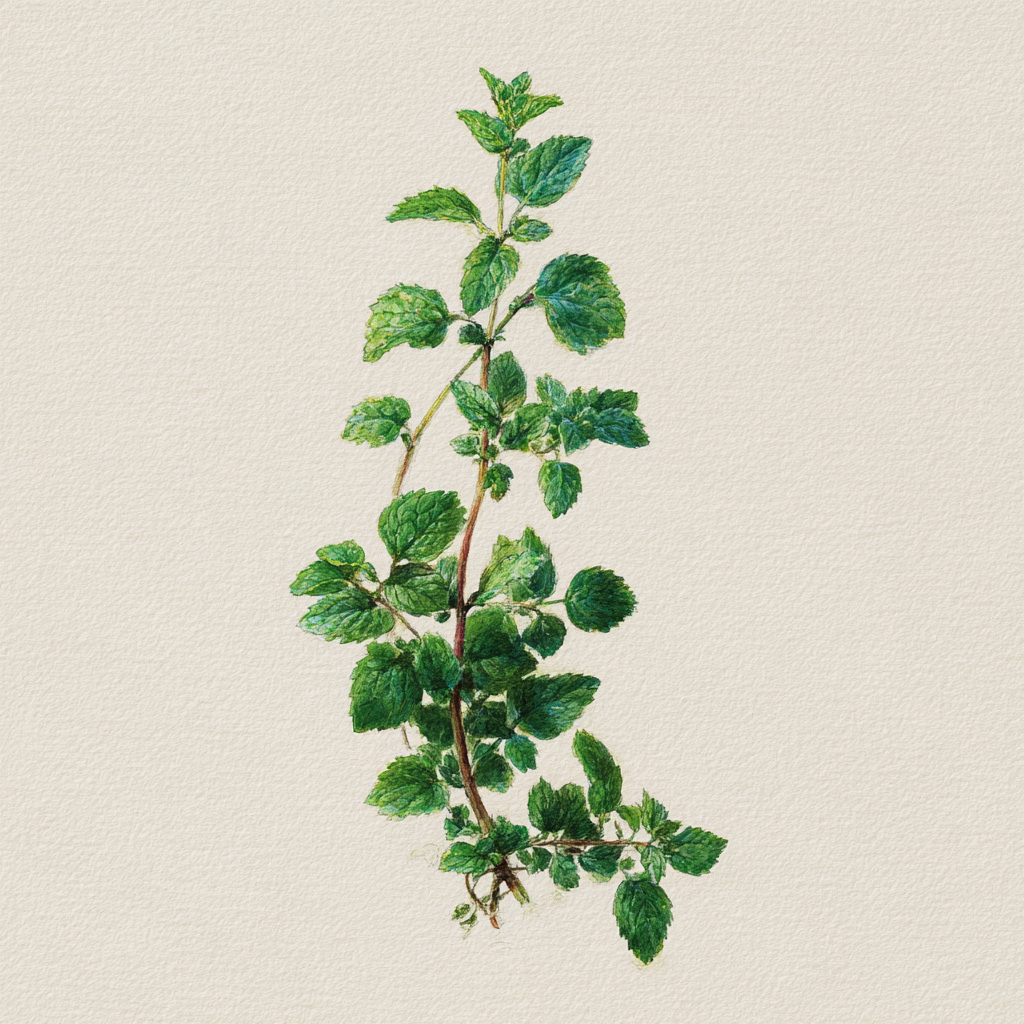
Dense shallow roots with vigorous white rhizomes that travel underground. Rhizomes allow mint to spread beyond its planting spot quickly.
Stem
Square, branching stems that root where nodes touch moist soil. Stems are often upright at first, then lean or sprawl as patches thicken.
Leaves
Opposite, toothed, bright green leaves with a strong mint scent when crushed. Spearmint leaves are usually pointed and less sharply mentholated than peppermint.
Flowers
Small pale purple, pink, or white flowers appear in terminal spikes or clusters and attract bees and small beneficial insects.
Fruit
Produces tiny nutlets after flowering, though garden mint is usually spread by rhizomes and divisions rather than seed.
Natural History
Natural History
The genus Mentha comprises around 25 species native across Europe, Asia, Africa, and North America, most growing in moist soils near streams, seeps, and disturbed ground. Peppermint (Mentha × piperita) is a sterile hybrid - likely a spontaneous cross between watermint (M. aquatica) and spearmint (M. spicata) - that does not produce viable seed and is maintained entirely by vegetative division. It was first formally described by the botanist John Ray from plants found in a Hertfordshire spearmint field in 1696. The menthol chemistry that gives mint its cooling sensation acts on the TRPM8 cold receptor in the sensory nervous system, creating the perception of cold without any actual temperature change - a pharmacological trick that has made mint one of the most widely used flavor compounds in food, medicine, and personal care products. The genus name Mentha derives from Minthe, a naiad nymph from Greek mythology transformed into a plant by Persephone. Mint appears in the New Testament as a tithed garden crop (Matthew 23:23) and is documented by Pliny the Elder, Charlemagne's Capitulare de Villis, and virtually every European herbal tradition for 2,000 years.
Traditional Use
Traditional Use
Mint has one of the longest documentary records of any culinary herb - named in the New Testament as a tithed crop, described by Pliny, listed in Charlemagne's Capitulare de Villis, and present in virtually every European herbal tradition for 2,000 years. Peppermint specifically became one of the most commercially significant medicinal plants of the 19th century.
Parts Noted Historically
Classical Antiquity and Biblical Record - Leaves
Mint appears in ancient Greek and Roman writing with evident familiarity. Pliny the Elder described it in Naturalis Historia. Matthew 23:23 and Luke 11:42 both name mint (hedyosmon) as a tithed garden crop in first-century CE Jerusalem - confirming it was commercially significant enough to be formally counted among taxable household goods.
Medieval European Gardens - Leaves
Mint appears in Charlemagne's Capitulare de Villis (812 CE) among the required plants in royal estates. Hildegard von Bingen's 12th-century Physica describes it. The Forme of Cury (1390) includes mint in English recipes. Mint's perennial rhizome growth and easy propagation made it a fixture in monastery physic gardens and cottage herb beds throughout medieval Europe; John Gerard's 1597 Herball lists several distinct species.
Mitcham Peppermint and English Commercial Cultivation - Flowering tops
Peppermint was formally described from Hertfordshire in 1696 by John Ray. By the late 18th century, Mitcham in Surrey had become the center of English peppermint essential oil production, growing the sterile hybrid specifically for distillation. Mitcham peppermint oil was the world standard for over a century and supplied European pharmacy and confectionery industries. The cultivar grown at Mitcham is still sold as "Mitcham" peppermint in the herb trade today.
Moroccan Atay and North African Tea Tradition - Leaves
Fresh spearmint in Moroccan atay - the sweet mint tea poured from a height to create foam - represents one of the most culturally specific uses of any herb in the world. The preparation combines Chinese green tea with Moroccan-grown spearmint and sugar, a tradition that took its current form in the 19th century when Chinese green tea became available through European trade, fusing an established African spearmint culture with an Asian tea base.
Culinary mint is safe as food. Concentrated peppermint oil is much stronger and can irritate skin. Pennyroyal (Mentha pulegium) is toxic in large doses and is not a culinary herb.
This information is provided for historical and educational purposes only and is not medical advice. Always consult a qualified healthcare professional before making decisions related to your health.
Loading photo submission…