
Spider Mites
Microscopic eight-legged arachnids (not technically insects) that pierce plant cells to feed on sap. Nearly invisible to the naked eye, they are most problematic in hot, dry weather and can build to devastating population densities within days. The fine webbing they produce is often the first sign of a significant infestation.
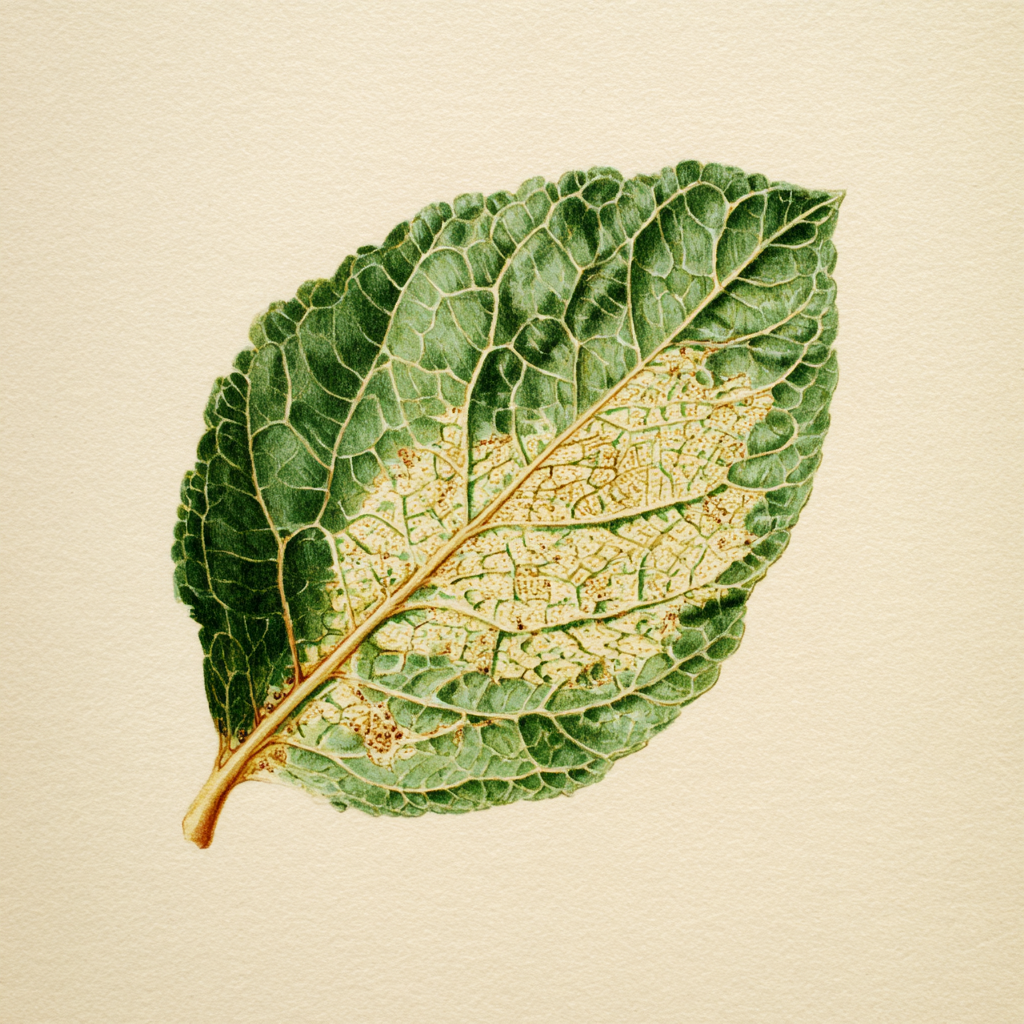
Symptoms to Look For
- Fine silk webbing on leaf undersides and between stems
- Stippled, bronzed, or silvery discolouration on leaf surfaces - each spot is a dead feeding site
- Leaves becoming dry, papery, and dropping prematurely
- Dust-like movement visible when inspecting the underside of leaves with a hand lens
- Yellow or reddish mottling spreading uniformly across the entire leaf surface
Affected Plants
Organic Solutions
Forceful Water Spray
A strong jet of water directed at leaf undersides physically removes mites and disrupts colonies. Raising humidity also suppresses reproduction since mites thrive in hot, dry conditions. Repeat every 2 - 3 days for two weeks.
Neem Oil
Neem oil functions as both an insecticide and an acaricide. Apply a thorough spray to all leaf surfaces, especially undersides, every 7 days during infestation. Apply at dusk to avoid harming pollinators and beneficial insects. The azadirachtin in neem disrupts mite feeding and egg hatching.
Predatory Mites
Phytoseiulus persimilis and Neoseiulus californicus are commercially available predatory mites that are voracious spider mite predators. Release them when the first signs of infestation appear. They will establish and self-regulate as long as prey is present.
Castile Soap Spray
A 2% solution of pure castile soap kills spider mites on contact by disrupting their outer membrane. Spray all surfaces thoroughly, focusing on leaf undersides, every 3–4 days during active infestations. Safe for beneficial insects once the spray has dried.
Organic Remedies
Prevention
- Keep plants adequately watered — drought-stressed plants are far more susceptible to spider mite outbreaks. Mulching around the base helps maintain soil moisture and reduces plant stress
- Avoid dusty conditions around plants, particularly on dry roads or paths; dust particles on leaves favour mite colonisation
- Build populations of natural predators — predatory mites, ladybirds, and lacewings maintain spider mite populations at low levels when present. Plant dill, yarrow, fennel, and other umbrella-flowered plants to support these beneficial insects year-round
- Apply compost tea as a foliar spray during warm, dry weather — the beneficial organisms help suppress the leaf surface conditions that spider mites prefer
Garden, by Willowbottom recommends only organic, wildlife-friendly solutions. No synthetic pesticides, no harmful chemicals - ever.