Verticillium Wilt
A soil-borne fungal disease caused by Verticillium dahliae and V. albo-atrum that colonises the vascular system similarly to Fusarium wilt. It affects a very wide range of plants and can persist in the soil for many decades. It is most severe in cool soils in spring and autumn, and particularly problematic on strawberries and stone fruits.
Symptoms to Look For
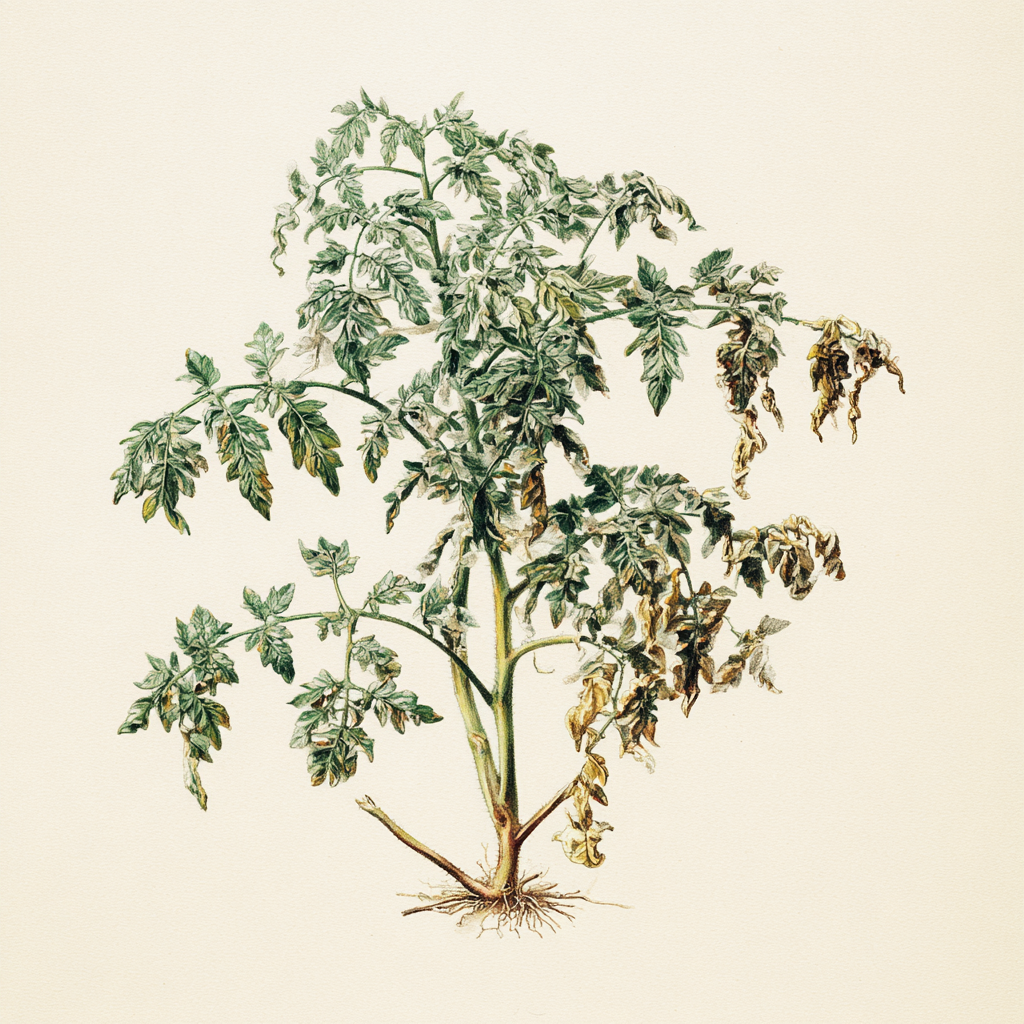
- Sudden wilting of individual branches or one side of the plant on warm days, recovering at night initially - the partial recovery distinguishes it from late blight
- V-shaped yellow lesion developing from the edge of affected leaves inward
- Brown or dark discolouration in vascular tissue when the stem is cut - especially visible in a ring or V pattern near the base
- Stunted growth and gradual plant decline over weeks
- Older leaves yellowing and dropping first, then whole plant collapse
Affected Plants
Organic Solutions
Soil Solarisation
Cover the affected bed with clear plastic sheeting for 4 - 6 weeks in summer. Solar heating reduces Verticillium populations in the top 15 - 20 cm substantially. Most effective in hot, sunny climates where soil temperatures reach 60°C.
Resistant Varieties
Many tomato and strawberry varieties carry the "V" resistance gene. When planting in known Verticillium-affected soil, always choose V-rated varieties as the primary management strategy.
Brassica Green Manure
Digging in brassica green manures (mustard, radish) releases glucosinolate compounds that act as soil biofumigants, suppressing soil-borne pathogens including Verticillium as they decompose. Grow, then cut and incorporate before plants set seed.
Build Soil Biology
Large additions of compost and organic matter build microbial diversity and populations of organisms naturally antagonistic to Verticillium. Consistent organic matter additions over several seasons significantly reduce pathogen populations.
Prevention
- Implement strict crop rotation of at least 4 years for all affected plant families
- Never plant strawberries or other susceptible crops in beds where wilt-affected plants recently grew
- Build soil health consistently — high biological activity in soil naturally suppresses Verticillium through competitive exclusion. Consistent compost additions, compost tea applications, and diverse organic matter inputs are the most effective and durable strategy for managing Verticillium in the long term
Garden, by Willowbottom recommends only organic, wildlife-friendly solutions. No synthetic pesticides, no harmful chemicals - ever.