Mountain Mint
HerbPycnanthemum virginianum
Have seeds for this? Add to inventory →Mountain mint is a hardy native perennial herb prized for its intensely aromatic leaves and dense clusters of small white flowers that attract beneficial insects. This mint-family plant forms well-behaved clumps through fibrous crowns and short rhizomes, making it less aggressive than culinary mints while still providing excellent pollinator support and fragrant foliage for tea.
Growing Conditions
Growing Conditions
Sunlight
Full Sun to Partial Shade
Water Needs
Moderate
Soil
Average to moist, well-draining loam; tolerates clay and seasonally damp soils once established
Spacing
18 - 24 inches
Days to Maturity
Harvest lightly once established; flowers in summer from year 2
Growing Zones
Growing Zones
Thrives in USDA Zones 3 - 8
When to Plant
When to Plant
Transplant
Spring or autumn from nursery plants or divisions
Direct Sow
Late autumn or early spring on prepared soil
Harvest
Harvest leaves before bloom for tea; leave plenty of flowers for pollinators
Phenology (Natural Timing Cues)
Transplant
Mountain mint establishes best when planted during cool, moist seasons that allow root development before summer stress or winter dormancy. Spring planting gives a full growing season for establishment, while autumn planting works well in milder zones where plants can root in before hard freezes.
- Soil workable and draining cleanly
- Steady cool nights with mild days
- Active spring growth visible on other perennials
- Autumn leaf drop beginning in deciduous trees
Start Dates (Your Location)
Average dates use your saved zone; readiness also checks your forecast when available.
Best Planting Window
Spring window
Spring
Plant early enough for roots to settle before summer heat.
Autumn window
Early autumn
Plant early enough for roots to grow before winter; avoid late planting into cold, wet soil.
Planting Method
Plant divisions from a healthy parent plant. Divisions preserve the established plant’s traits better than seed.
Critical Timing Note
Keep divisions watered through establishment and protect them from harsh sun until new growth resumes.
Use the average timing, but check your local forecast before planting.
Typical Harvest Window
June to September
Organic Growing Tips
Organic Growing Tips
Plant near vegetables that benefit from small wasps, hoverflies, and native bees visiting nearby flowers.
Cut back after flowering if you want to reduce self-seeding and keep the clump compact.
Divide spreading clumps every few years to refresh growth and share plants.
Avoid rich, constantly fertilized soil; steady moisture and sun produce sturdy, aromatic growth.
Care Guidance
Optional seasonal guidance for what you can do, even when nothing is urgent.
Care Guidance
Watering
If the top 2 inches of soil feel dry, a deep watering at the base may help more than frequent light watering. In healthy soil, rain may cover much of what it needs.
Feeding
Extra feeding is rarely required if soil is healthy. If growth looks pale or slow, a light compost top-dressing is often enough before adding anything stronger.
Seasonal care
In late fall, a light cleanup and fresh mulch can help if winter protection is useful in your climate. Leaving a little space around crowns and trunks often helps air move and keeps excess moisture from sitting there.
Harvest timing
Harvests often cluster around June to September. If fruit, leaves, or roots start looking ready, color, size, firmness, and scent usually tell you more than the calendar alone.
Known Varieties
Common cultivars worth knowing
Known Varieties
Pycnanthemum virginianum (Virginia Mountain Mint)
The straight species with narrow aromatic leaves and dense white flower clusters
Best for
General herb and pollinator garden use
Pycnanthemum muticum (Broad-leaved Mountain Mint)
Related species with broader leaves and similar pollinator value
Best for
Shadier locations and naturalized plantings
Companion Planting
Companion Planting
Good companions
Support & insectary plants
Nearby plants that attract pollinators, beneficial insects, or improve soil health.
Avoid planting near
No known conflicts
Common Pests
Common Pests
- No significant pest issues
All pest management in Garden uses safe, organic, non-toxic methods only. No synthetic pesticides, ever.
Native Range
Native Range
- Origin
- Eastern and central North America, from southeastern Canada south to Georgia and west to the Great Plains
- Native Habitat
- Open woodlands, prairie edges, wet meadows, stream banks, fens, and sunny to partly shaded moist ground where it forms colonies in seasonally wet or consistently moist soils
- Current Distribution
- Native across much of eastern and central North America and cultivated in native plant, pollinator, meadow, and herb gardens throughout temperate regions.
Taxonomy
Taxonomy
- Kingdom
- Plantae
- Family
- Mint family (Lamiaceae)
- Genus
- Pycnanthemum
- Species
- Pycnanthemum virginianum
Morphology
Morphology
Root System
Fibrous perennial crown with short rhizomes that gradually expand the clump; much less aggressive than culinary mints
Stem
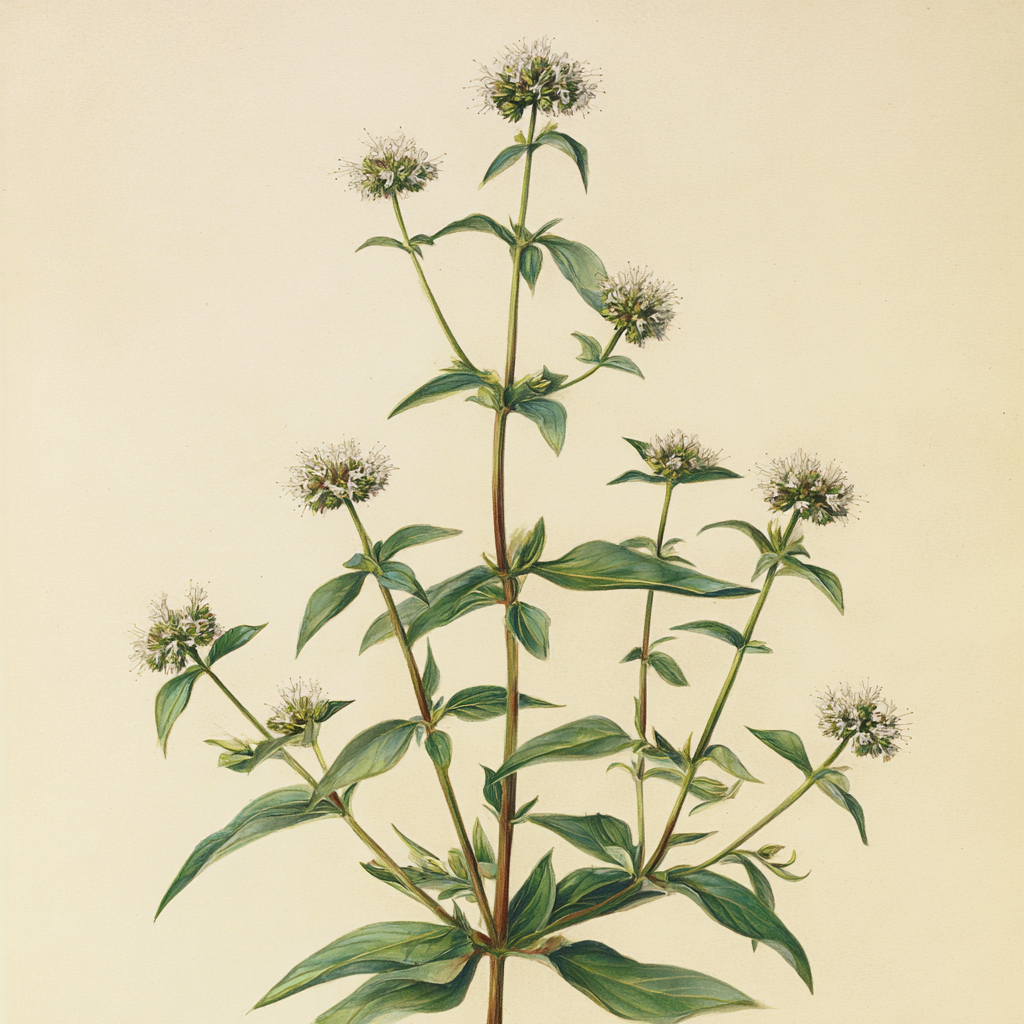
Square stems typical of mint family, growing 2-3 feet tall with branching near the top; stems become woody at the base
Leaves
Narrow, lance-shaped leaves with serrated edges and intense minty fragrance when crushed; silvery-white bracts appear around flower clusters
Flowers
Dense clusters of small white tubular flowers in summer that attract native bees, beneficial wasps, hoverflies, and butterflies
Fruit
Small nutlets form after flowering; plants may self-seed moderately in favorable conditions
Natural History
Natural History
Mountain mint is native to eastern and central North America, where it has long thrived in the transition zones between woodlands and prairies, along stream corridors, and in wet meadows from Canada to the southeastern United States. Indigenous peoples of the region recognized its potent aromatic properties and used the leaves traditionally. European settlers encountered mountain mint in colonial times and noted its resemblance to Old World mints, though it proved less aggressive in spreading than imported Mentha species. The genus name Pycnanthemum comes from Greek words meaning "dense flower," referring to the characteristic tight clusters of small white blooms that make this plant so valuable to native pollinators. Unlike true culinary mints, mountain mint spreads primarily through short rhizomes from fibrous crowns rather than aggressive runners, making it a well-behaved addition to herb and pollinator gardens while still providing the intense aromatic oils that give it its common name.
Traditional Use
Traditional Use
Mountain mint held significance in traditional practices of various Indigenous groups across its native range in eastern North America, where the aromatic leaves were valued for their intense minty fragrance and recorded uses in historical ethnobotanical accounts
Parts Noted Historically
Cherokee traditional knowledge - leaves
Historical accounts document Cherokee use of mountain mint leaves in traditional steam preparations and as aromatic material, with the intense scent considered valuable for ceremonial and practical purposes
Appalachian folk traditions - leaves and flowers
Early Appalachian settlers learned from Indigenous knowledge and incorporated mountain mint into folk practices, using the aromatic leaves in traditional teas and as scenting material for stored goods
Mountain mint is generally considered safe as a tea herb, though its intense aromatic compounds may cause sensitivity in some individuals
This information is provided for historical and educational purposes only and is not medical advice. Always consult a qualified healthcare professional before making decisions related to your health.
Loading photo submission…