Dandelion
HerbTaraxacum officinale
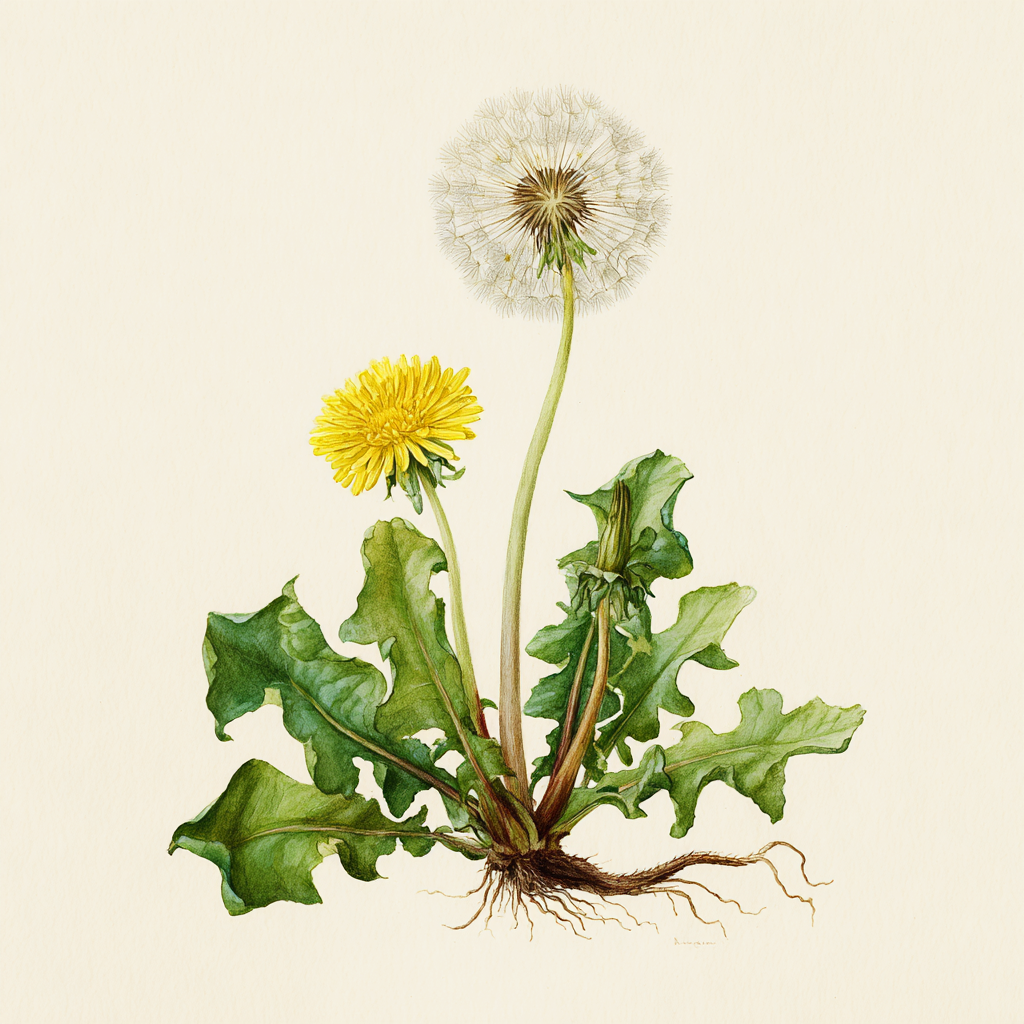
Have seeds for this? Add to inventory →Dandelion is a robust perennial herb prized in the kitchen garden for its tender spring leaves, edible flowers, and roasted roots. Its deep taproot draws up minerals from the subsoil that cycle back into the topsoil as leaves decompose. Its early blooms are among the first pollen and nectar sources for bees emerging in spring.
Growing Conditions
Growing Conditions
Sunlight
Full Sun to Partial Shade
Water Needs
Low to Moderate
Soil
Tolerates most soils; thrives in deep, loose, well-drained loam with moderate fertility; tolerates compacted or clay soil
Spacing
6 inches
Days to Maturity
Harvest anytime once established
Growing Zones
Growing Zones
Thrives in USDA Zones 3 - 10
When to Plant
When to Plant
Start Indoors
Start seeds indoors 4-6 weeks before last frost for early transplants, though direct sowing is more common
Transplant
Transplant seedlings after last frost when soil is workable
Direct Sow
Direct sow in early spring as soon as soil is workable, or in autumn for spring germination
Harvest
Harvest young leaves at any time once the plant is established; pick flower buds before opening for best flavor; dig roots in autumn of the first or second year when inulin content is highest
Phenology (Natural Timing Cues)
Direct Sow
Dandelion seed germinates readily in cool, moist soil and is best sown as soon as the ground can be worked in early spring, or in late summer for fall-established plants. Sowing too late in spring means competition from heat and weeds before seedlings establish; autumn sowing into warm soil followed by cool nights gives strong root development before winter. Wait for soil to be crumbly and workable rather than wet and compacted.
- Forsythia is in bloom or just finishing — soil is workable and cool
- Lawn grasses are greening up and beginning active growth
- Overnight temperatures are consistently above 40°F
- Soil crumbles rather than clumping or smearing when squeezed
- For autumn sowing: summer heat has eased and nights are consistently cool but frost is still 6 or more weeks away
Start Dates (Your Location)
Average dates use your saved zone; readiness also checks your forecast when available.
Average Last Frost
Set your growing zone to see personalized calendar dates.
Use the average timing, but check your local forecast before planting.
Direct Sow
Early spring
This uses autumn or first-frost timing, so keep the planting note as written. Wait until soil is workable.
Typical Harvest Window
March, April, May, June, September, October, November
Organic Growing Tips
Organic Growing Tips
Top-dress around established plants with worm castings in early spring to encourage large, tender leaves before the plant bolts
Allow a few plants to flower and set seed at the edge of the orchard or food forest; the tap roots will break up compacted soil and cycle calcium and potassium into the surface layer
A dilute compost tea drench in early spring promotes leafy growth over flower production if culinary leaves are the primary goal
Blanch leaves for milder flavor by covering the crown with an inverted pot or straw mulch for 7-10 days before harvest
Chop-and-drop wilted dandelion leaves around fruit trees and berry bushes as a nutrient-rich mulch instead of composting them separately
Avoid compacting soil around dandelion roots during cultivation; the tap root is the plant's engine and breaking it stimulates regrowth from the crown
Care Guidance
Optional seasonal guidance for what you can do, even when nothing is urgent.
Care Guidance
Watering
If dry weather lingers, let the top 2 inches start to dry before watering again. This plant often responds better to an occasional deep soak than to frequent light watering.
Feeding
If growth is strong, compost-rich soil often carries most of the load. If the plant starts looking pale or stalls, a light compost top-dressing or gentle organic feed may help.
Seasonal care
In late fall, a light cleanup and fresh mulch can help if winter protection is useful in your climate. Leaving a little space around crowns and trunks often helps air move and keeps excess moisture from sitting there.
Harvest timing
Harvests often cluster around March, April, May, June, September, October, November. If fruit, leaves, or roots start looking ready, color, size, firmness, and scent usually tell you more than the calendar alone.
Known Varieties
Common cultivars worth knowing
Known Varieties
Pissenlit Amelioré (Improved Dandelion)
A French cultivated selection with broader, less deeply lobed leaves and noticeably reduced bitterness compared to wild types; developed specifically for salad use
Best for
Culinary leaf harvest, fresh salads
Thick-leaved Dandelion (Vert de Montmagny)
A heritage French forcing variety with thicker, more upright leaves that blanch particularly well under cover, producing pale, crisp, mildly flavored chicons similar to endive
Best for
Blanching and winter forcing
Russian Dandelion (Taraxacum kok-saghyz)
A distinct species selected for very high latex content in the roots; historically grown during WWII as a rubber crop substitute, now of renewed commercial research interest but rare in home gardens
Best for
Botanical curiosity, root latex production
Companion Planting
Companion Planting
Good companions
- apple
- fruit trees
- chives
- strawberry
Support & insectary plants
Nearby plants that attract pollinators, beneficial insects, or improve soil health.
Avoid planting near
No known conflicts
Common Pests
Common Pests
All pest management in Garden uses safe, organic, non-toxic methods only. No synthetic pesticides, ever.
Native Range
Native Range
- Origin
- Dandelion is native to Europe and parts of temperate Asia, with its center of origin generally considered to be in Eurasia. Its complex taxonomy and long history of human movement make precise native boundaries difficult to define.
- Native Habitat
- In its native range, dandelion occurs in open, disturbed habitats such as meadows, grasslands, roadsides, and field margins, typically in temperate climates with moderate moisture.
- Current Distribution
- Dandelion is now naturalized and extremely widespread across temperate regions worldwide, including the Americas, Australia, New Zealand, and parts of South Africa, making it one of the most cosmopolitan flowering plants on Earth.
Taxonomy
Taxonomy
- Kingdom
- Plantae
- Family
- Daisy family (Asteraceae)
- Genus
- Taraxacum
- Species
- officinale
Morphology
Morphology
Root System
The fleshy, unbranched tap root can reach 12-18 inches deep in loose soil, storing inulin-rich carbohydrates that fuel spring regrowth; any root fragment left in the ground will regenerate, so cultivation for removal must be thorough
Stem
Dandelion produces no true above-ground stem; all leaves and hollow, leafless flower scapes emerge directly from a ground-level crown, making it resistant to mowing and easy to distinguish from many look-alikes
Leaves
Deeply toothed, lance-shaped leaves form a flat rosette and exude milky latex when broken; young spring leaves are milder and most palatable, while mature summer leaves become markedly bitter — a useful harvest-timing signal
Flowers
Single composite flower heads open on hollow, leafless scapes from early spring onward and are among the first nectar sources available to bees; leaving a few plants to flower at orchard edges provides important early-season pollinator forage
Fruit
Each flower produces a spherical head of achenes, each attached to a white feathery pappus that carries seeds by wind across considerable distances; allowing plants to set seed in a managed garden will spread them rapidly, so deadhead promptly if self-seeding is not desired
Natural History
Natural History
Taraxacum officinale is native to Eurasia and was carried deliberately to North America by early European colonists who valued it as a spring pot herb and tonic green after long winters with little fresh food. The genus name derives from the Arabic tarakhshaqun, filtered through medieval Latin herbals, and the species has been cultivated in European kitchen gardens since at least the 14th century. Its hollow flower scapes, rosette habit, and deep tap root allow it to thrive in disturbed ground and regrow readily when cut. By the 19th century it had naturalized across temperate regions worldwide, becoming one of the most recognizable plants in any grower's landscape.
Traditional Use
Traditional Use
Dandelion has been documented in European, Arabic, and Native American herbal traditions primarily for its leaves and roots. Medieval European herbalists including Hildegard of Bingen noted the plant in written records, and it appears in the Welsh medical text Meddygon Myddfai from the 13th century. Its historical use was predominantly tied to its status as an early-season food plant with documented bitterness-related properties associated with bile and digestion.
Parts Noted Historically
Welsh herbal tradition, Meddygon Myddfai, 13th century - leaves and roots
The physicians of Myddfai recorded dandelion among plants noted for their bitter, cleansing character, reflecting its place in medieval Welsh botanical knowledge
Arab physicians, Ibn Sina (Avicenna), 11th century - leaves
Avicenna referenced a plant identified with tarakhshaqun in the Canon of Medicine in the context of bitter greens associated with liver-related observations in Galenic medical theory
North American Indigenous peoples, multiple nations, 18th-19th century - roots and leaves
Various Indigenous groups, including the Ojibwe and Cherokee, adopted or independently recognized dandelion root and leaf preparations as documented by ethnobotanical recorders in the 18th and 19th centuries, noting its association with seasonal food and bitter-plant traditions
Dandelion is widely regarded as safe as a food plant; individuals with known allergies to Asteraceae family plants may experience contact dermatitis or allergic reactions. The milky latex in stems and scapes may cause mild skin irritation in sensitive individuals.
This information is provided for historical and educational purposes only and is not medical advice. Always consult a qualified healthcare professional before making decisions related to your health.
Loading photo submission…