
Slugs and Snails
Soft-bodied molluscs that rasp holes in plant tissue using a toothed radula tongue. They are nocturnal and most active in wet weather and mild temperatures. Seedlings and low-growing soft-leaved crops are most vulnerable, and a single night's activity can destroy an entire bed of newly transplanted lettuces.
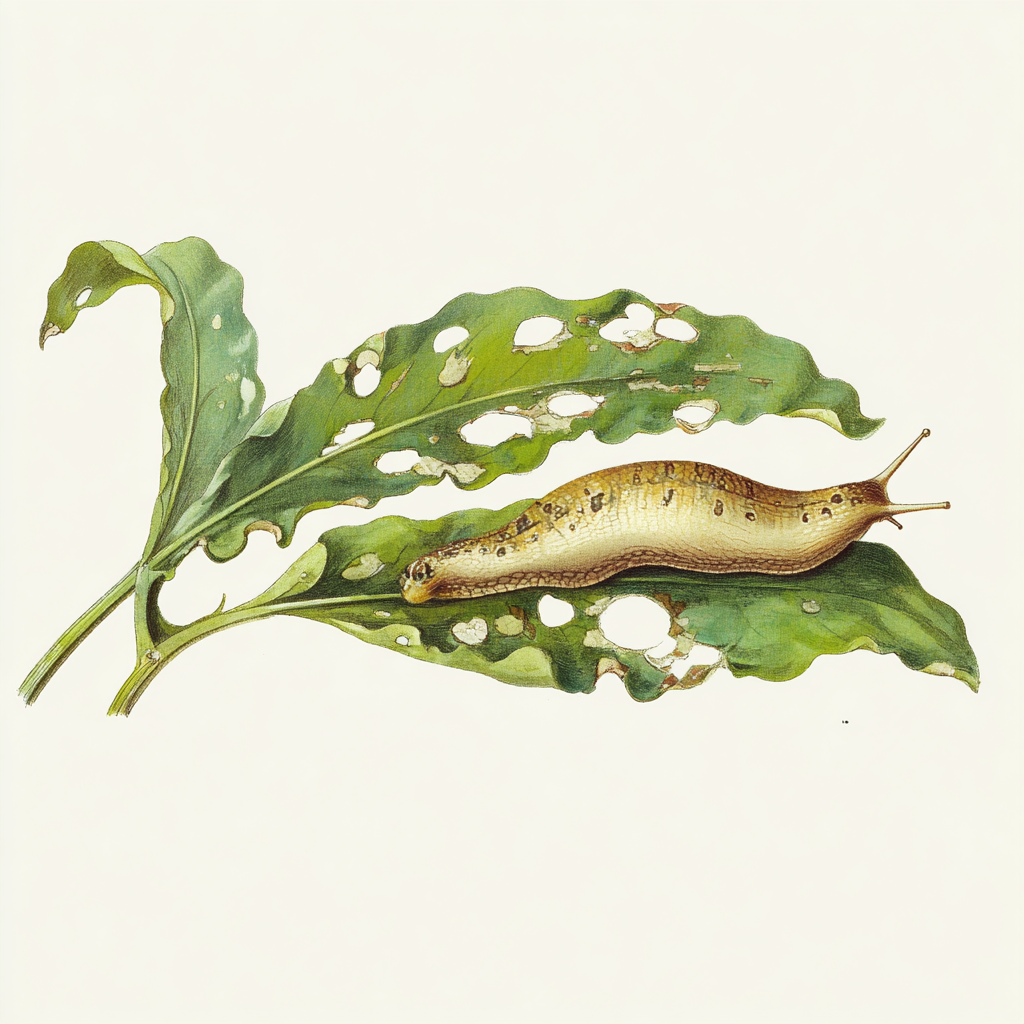
Symptoms to Look For
- Irregular ragged holes in leaves, with no insect visible during daytime inspections
- Silvery slime trails on leaves, on soil, and on nearby hard surfaces in the morning
- Entire seedlings severed at soil level or completely consumed overnight
- Hollow channels bored through soft fruits and root crops
- Damage worst during and immediately after periods of rain or irrigation
Affected Plants
Organic Solutions
Iron Phosphate Pellets
Ferric phosphate pellets (sold as Sluggo or similar) are fully approved for organic use and are safe for wildlife, pets, and children. Slugs and snails ingest the pellets and stop feeding immediately, dying within a few days. Scatter lightly around vulnerable plants.
Beer Traps
Bury a container (yoghurt pot, small jar) flush with the soil surface and fill with cheap beer or a sugar-yeast-water solution. Slugs are attracted to the fermentation smell, fall in, and drown. Empty and refill every 2 - 3 days.
Copper Tape Barriers
Copper tape attached to pot rims or raised bed edging gives slugs and snails a mild electrical reaction when they attempt to cross it. Keep the tape clean of soil and debris to remain effective.
Encourage Natural Predators
Ground beetles, hedgehogs, frogs, toads, thrushes, and slow-worms all eat slugs voraciously. Create habitat: log piles, pond margins, and mulched border areas support populations that naturally regulate slugs.
Organic Remedies
Prevention
- Water in the early morning rather than evening so the soil surface dries before peak slug activity at night
- Surround seedlings with a gritty top-dressing of sharp grit, crushed eggshell, or coarse sand - slugs dislike crossing rough textures
- A garden rich in wildlife, including toads, hedgehogs, and ground beetles, rarely has serious slug problems - biodiversity is the best long-term solution
Garden, by Willowbottom recommends only organic, wildlife-friendly solutions. No synthetic pesticides, no harmful chemicals - ever.