
Cantaloupe
FruitCucumis melo
Have seeds for this? Add to inventory →Cantaloupes are warm-season vine fruits with sweet, orange flesh that require hot summers and excellent drainage. They are closely related to cucumbers and benefit from similar companion planting strategies.
Native Range
- Origin
- Melon is an Old World domesticate with native and early crop ancestry across Africa and parts of Asia.
- Native Habitat
- Warm dry open ground, scrub, field margins, disturbed soils, and seasonally arid habitats.
- Current Distribution
- Widely cultivated in warm climates; not native outside its region of origin.
Growing Conditions
Sunlight
Full Sun
Water Needs
Moderate
Soil
Sandy, well-draining loam; pH 6.0 - 6.8
Spacing
36 - 48 inches
Days to Maturity
75 - 90 days from transplant
Growing Zones
Thrives in USDA Zones 5 - 11
Companion Planting
When to Plant
Start Indoors
3 - 4 weeks before last frost
Transplant
2 weeks after last frost, soil 70°F+
Harvest
Ripe when stem slips easily from vine and pleasant musky scent develops
Phenology (Natural Timing Cues)
Start Indoors
Start cantaloupe indoors only 3-4 weeks before the last frost date - just enough of a head start. Cantaloupes started too early become rootbound and stall after transplant.
- Dandelion bloom is fading.
- Lilacs are blooming or beginning to fade.
- Night temperatures are approaching 55°F outdoors.
Direct Sow
Direct sow cantaloupe only when soil has reached at least 70°F - cold soil causes seed rot rather than germination. In short-season climates, transplants are more reliable.
- Lilacs have faded.
- Soil feels warm several inches down, not just at the surface.
- Tender annual weeds are growing quickly.
- Night temperatures reliably stay above 60°F.
Transplant
Transplant cantaloupe only after soil is truly warm and nights are settled - a single cold night early in establishment can set vine growth back by a week or more.
- Lilacs have faded.
- Soil is warm several inches down.
- Night temperatures reliably stay above 60°F.
- Oak leaves are near full size.
Start Dates (Your Location)
Based on your saved growing zone and this plant's timing notes.
Typical Last Frost
Set your growing zone to see personalized calendar dates.
Organic Growing Tips
Slip a piece of wood, tile, or straw mat under developing fruits to prevent rot.
Plant radishes throughout the patch as a trap crop for cucumber beetles.
Reduce watering sharply as fruits near maturity to intensify sweetness.
Enrich planting holes with compost and mulch the root zone generously - cantaloupe grown in biologically active, moisture-retentive soil produces sweeter fruit and is less susceptible to the wilt diseases spread by cucumber beetles.
Common Pests
All pest management in Garden uses safe, organic, non-toxic methods only. No synthetic pesticides, ever.
Taxonomy
- Kingdom
- Plantae
- Family
- Gourd family (Cucurbitaceae)
- Genus
- Cucumis
- Species
- Cucumis melo
Natural History
Cucumis melo - the species that includes cantaloupe, muskmelon, honeydew, Galia, Crenshaw, Casaba, and dozens of regional forms - was domesticated in Africa, with secondary diversification across South and Central Asia that produced the enormous regional variety still found today. India alone contains hundreds of distinct melon forms. What North Americans call "cantaloupe" is technically a muskmelon (Cucumis melo var. reticulatus), named for the fine netting on the rind; true cantaloupe (var. cantalupensis) is a smooth-skinned European melon named after Cantalupo, a papal estate near Rome where it was cultivated in the 15th century after being brought from Armenia. Central Asia - particularly Uzbekistan, Turkmenistan, and Afghanistan - developed one of the world's great melon cultures along the Silk Road, producing large, fragrant, long-keeping melons prized across the region for centuries. The "slip-ripening" characteristic of North American muskmelons - where a clean abscission zone forms between stem and fruit at maturity so the fruit detaches easily - is a bred trait selected for its value as a reliable ripeness indicator.
Traditional Use
Melon cultivation has one of the most geographically spread traditional histories of any fruit, from African origins through Persian, Arab, Central Asian, and European food cultures. The great fragrant melons of Central Asia were luxury goods along the Silk Road; European interest in melons was intense enough to drive dedicated cultivation at papal estates and royal gardens.
Parts Noted Historically
Central Asian and Silk Road Melon Traditions - Fruit
The oasis cities of Central Asia - Samarkand, Bukhara, Merv - were famous along the Silk Road for melons of exceptional fragrance and sweetness. The Uzbek and Turkmen traditions of drying melon into hard strips for winter preservation, and of eating fresh melon with salt, dried cheese, and flatbread in summer, represent one of the most refined melon cultures in the world. Babur, the Mughal emperor, reportedly wept with nostalgia for the melons of Fergana while in India.
Persian and Arab Food Traditions - Fruit
Melons were a prestige food in Persian and Arab court cuisine from at least the 9th century onward, served chilled or eaten with salt. The extensive melon-growing traditions of Iran and Iraq produced regional varieties bred for keeping quality and fragrance. Dried and candied melon preparations were traded widely across the Arab world.
European Cultivation and the Cantalupo Naming - Fruit
Melons were brought to Europe from the Near East and became a prestige garden fruit in medieval and Renaissance Europe. The variety grown at Cantalupo, a papal summer estate in the hills near Rome, became famous enough to give its name to the group. European royalty competed to grow melons in heated walled gardens; they were among the first fruits cultivated under glass. Louis XIV of France was a notably passionate melon grower, with the Versailles kitchen gardens maintaining over 200 varieties.
Cantaloupe and muskmelon fruit is food-safe. The netted rind surface can harbor bacteria - particularly Salmonella - in its crevices; washing the exterior before cutting is advisable to prevent cross-contamination of the flesh.
This information is provided for historical and educational purposes only and is not medical advice. Always consult a qualified healthcare professional before making decisions related to your health.
Morphology (Plant Structure & Identification)
Root System
Shallow to moderately deep fibrous roots that spread broadly in warm soil. Roots need steady moisture early and drier conditions near ripening.
Stem
Trailing annual vines with tendrils and soft hairy stems. Vines are sensitive to transplant shock and cold soil.
Leaves
Rounded to shallowly lobed leaves with a rough surface and musky scent when bruised. Dense foliage can hide developing fruit.
Flowers
Yellow male and female flowers form on the same plant, with female flowers showing a small swollen ovary at the base.
Fruit
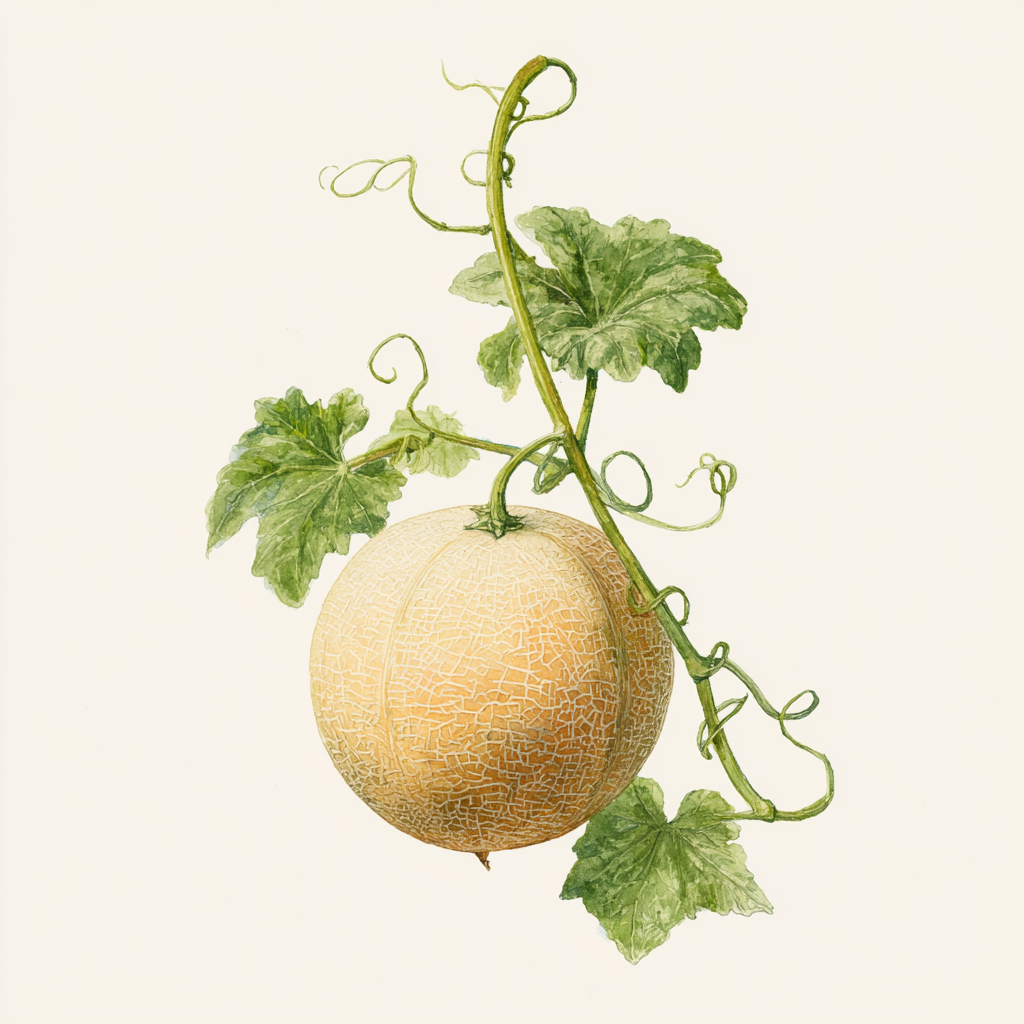
Round to oval melons with netted rind, aromatic orange flesh, and a central seed cavity. Ripe fruit often slips from the vine and smells sweet.
Known Varieties
Common cultivars worth knowing
- Best for: home gardens
Hale's Best Jumbo
Classic muskmelon with sweet orange flesh and strong aroma.
- Best for: fresh eating
Ambrosia
Very sweet hybrid muskmelon with tender flesh.
- Best for: humid regions
Athena
Widely grown Eastern shipping-type cantaloupe with disease resistance.
- Best for: short seasons
Minnesota Midget
Small early melon for short seasons and compact gardens.
- Best for: specialty flavor
Charentais
French heirloom melon with smooth rind and intensely fragrant flesh.
Loading photo submission…