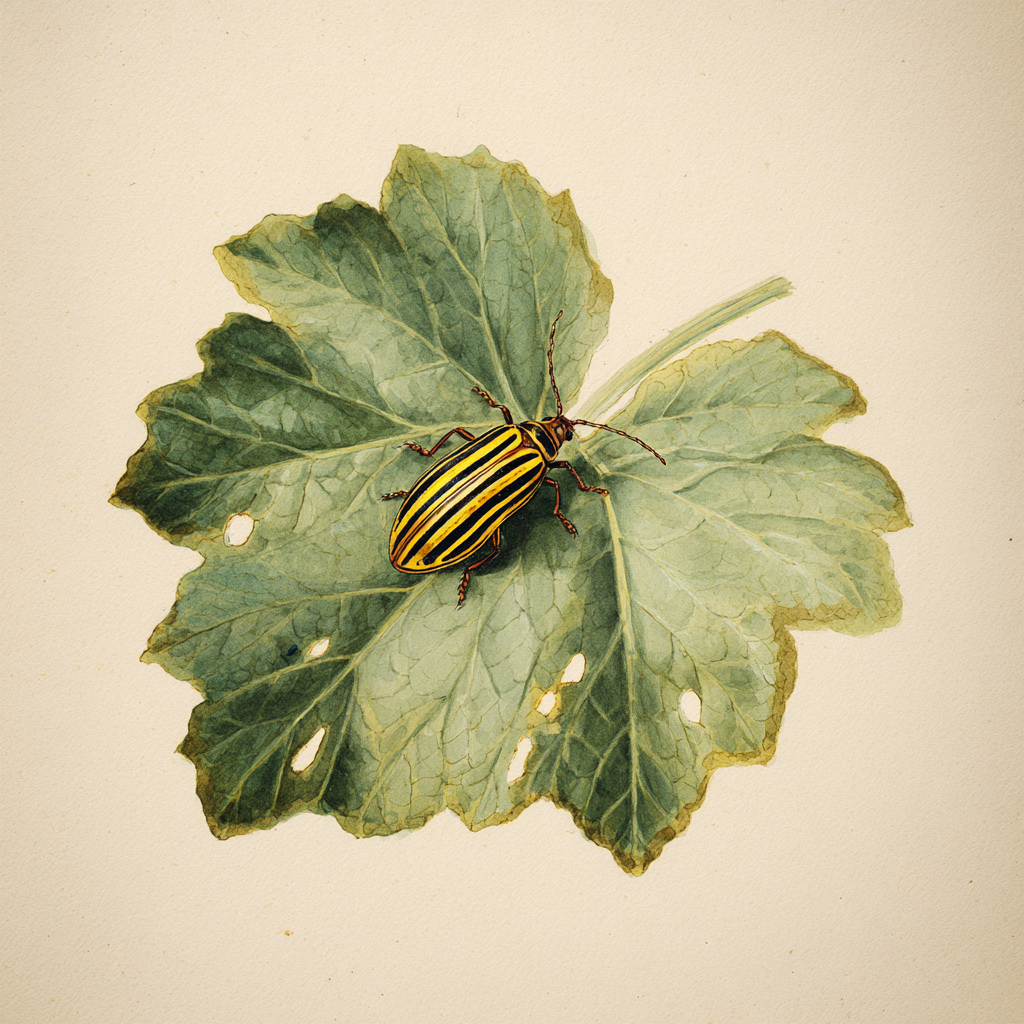
Cucumber Beetle
Small yellow-green beetles (6 mm) with either black spots or black stripes. Both species cause feeding damage but are most damaging as vectors of bacterial wilt and cucumber mosaic virus, which they transmit when feeding. A plant can look healthy one week and be wilting irreversibly the next after beetle feeding.
Symptoms to Look For
- Round holes eaten in leaves and flowers, often while the plant still appears otherwise healthy
- Sudden wilting that spreads rapidly following heavy beetle feeding - a sign of bacterial wilt transmission
- Stunted, yellowing seedlings in early season when beetle pressure is highest
- Adults visible on flowers and the undersides of leaves
- Scarring and scalloping on leaf margins and stem tissue
Affected Plants
Organic Solutions
Row Covers on Seedlings
Cover all cucurbit transplants with fine mesh netting immediately after planting. Remove covers when flowers appear for pollinator access. Protecting plants during their first 3 - 4 weeks prevents the most damaging early-season feeding.
Kaolin Clay
A spray-on coating of kaolin clay (sold as a wettable powder) creates a physical barrier on plant surfaces that irritates and deters feeding beetles. Apply to seedlings and young transplants every 7 - 10 days and after rain.
Yellow Sticky Traps
Cucumber beetles are attracted to yellow. Place sticky yellow cards at plant height near cucurbit beds to monitor population levels and reduce adult numbers during peak emergence.
Companion Planting with Nasturtiums and Radishes
Nasturtiums planted as a border are reported to deter cucumber beetles. Radishes intercropped with cucumbers attract beetle attention to the radishes, protecting the more valuable crop.
Organic Remedies
Prevention
- Delay planting cucurbits by 2–3 weeks where possible to miss the peak emergence of overwintered adults in late spring
- Rotate cucurbit crops on a 3-year cycle - beetles overwinter in the soil and in crop debris and return to the same areas
- Choose wilt-tolerant cucumber varieties such as 'County Fair 83' or 'Marketmore 76' in areas with known bacterial wilt pressure
- Plant dill, fennel, and yarrow in or near cucurbit beds to attract beneficial insects — tachinid flies and ground beetles are natural predators of cucumber beetle larvae
Garden, by Willowbottom recommends only organic, wildlife-friendly solutions. No synthetic pesticides, no harmful chemicals - ever.