
Bacterial Wilt
A bacterial disease caused by Erwinia tracheiphila, transmitted exclusively by cucumber beetles as they feed. The bacteria colonise the plant's water-conducting xylem vessels, blocking water movement and causing rapid collapse. There is no treatment once a plant is infected - prevention and cucumber beetle management are the only defences.
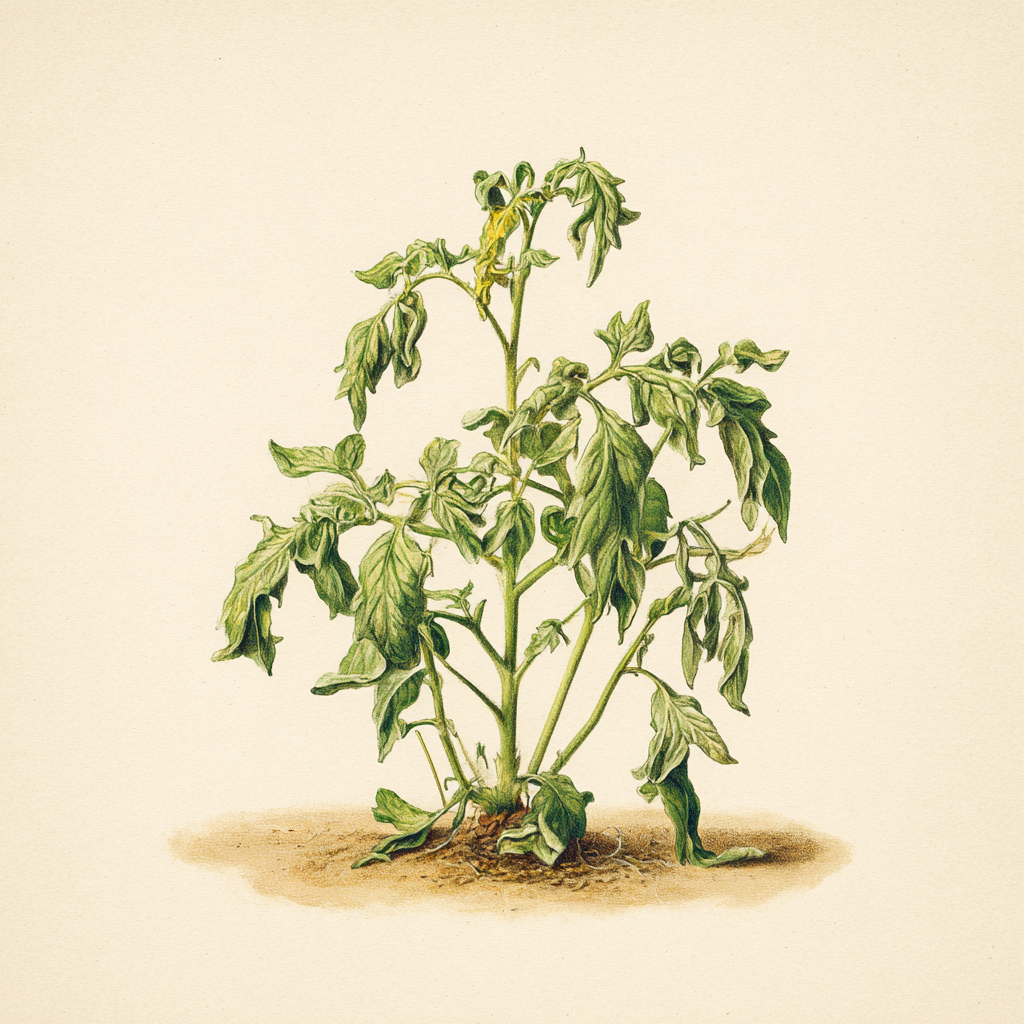
Symptoms to Look For
- Individual vines wilting suddenly and not recovering even after adequate watering
- The entire plant collapsing over one to three days following initial vine wilt
- Diagnostic test: cut a wilting stem and slowly pull the cut ends apart - sticky white threads bridging the cut indicate bacterial wilt
- No recovery even in cool overnight temperatures
- Death of the entire plant within 7 - 14 days of initial symptoms
Affected Plants
Organic Solutions
Remove Infected Plants Immediately
There is no cure for bacterial wilt. Remove wilting plants promptly to prevent cucumber beetles visiting them and carrying bacteria to healthy plants. Place in household waste and do not compost.
Control Cucumber Beetles
Because cucumber beetles are the sole vector, preventing beetle feeding is the only way to prevent bacterial wilt. Use row covers from planting, kaolin clay, yellow sticky traps, and companion planting to manage beetle populations before they transmit the disease.
Row Covers on Seedlings
Cover cucurbit transplants with fine mesh from the day of planting until plants are large and established. Even two to three weeks of beetle exclusion during the vulnerable seedling stage substantially reduces wilt incidence.
Prevention
- Choose wilt-tolerant cucumber varieties in areas with historically high cucumber beetle pressure
- Delay planting cucurbits by 2 - 3 weeks where possible to miss the peak emergence of overwintered beetles, which are most numerous and hungry in late spring
- Manage cucumber beetle populations throughout the season with integrated methods - even a few beetles are tolerable; large populations rapidly become a disease vector problem
Garden, by Willowbottom recommends only organic, wildlife-friendly solutions. No synthetic pesticides, no harmful chemicals - ever.