Anise Hyssop
HerbAgastache foeniculum
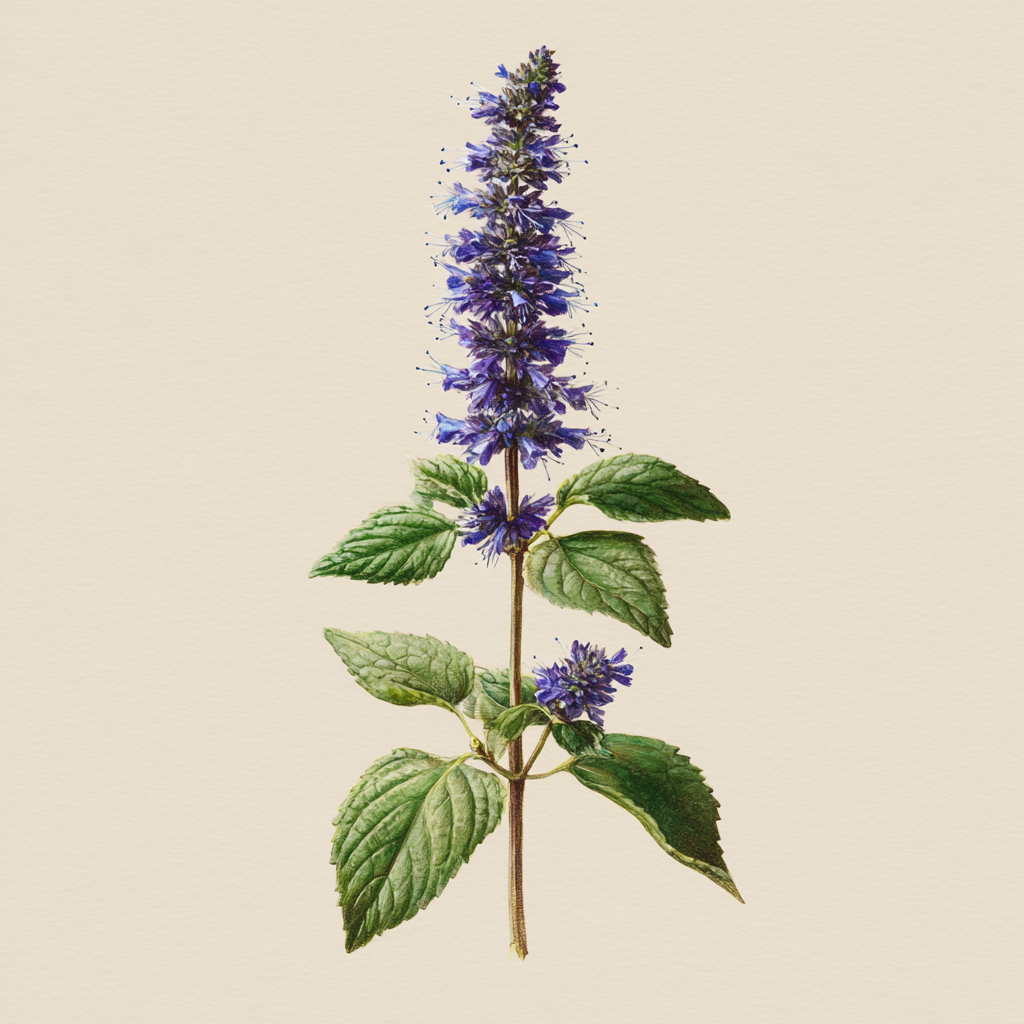
Have seeds for this? Add to inventory →Anise hyssop is a tall, upright North American native perennial herb with licorice-scented leaves and dense spikes of lavender-blue flowers beloved by bees, butterflies, and hummingbirds. It is grown for its aromatic leaves used fresh or dried in teas, salads, and cooking, and for its exceptional pollinator value in the garden. Both leaves and flowers are edible and fragrant, making it as ornamentally useful as it is practical.
Growing Conditions
Growing Conditions
Sunlight
Full Sun to Partial Shade
Water Needs
Low to Moderate
Soil
Well-drained, moderately fertile loam or sandy loam; tolerates average to poor soils; does not thrive in heavy, waterlogged clay
Spacing
18 inches
Days to Maturity
Harvest anytime once established; blooms first year from early indoor start, second year reliably from seed
Growing Zones
Growing Zones
Thrives in USDA Zones 4 - 9
When to Plant
When to Plant
Start Indoors
8-10 weeks before last frost
Transplant
After last frost, when nights are reliably above 40°F
Direct Sow
Direct sow in early spring when soil reaches 60°F, or sow on surface in fall for spring germination
Harvest
Harvest leaves anytime once plants are established and leafy; cut flower spikes as blooms open for fresh use or drying; deadhead spent spikes to extend the bloom season and encourage reblooming
Phenology (Natural Timing Cues)
Start Indoors
Starting anise hyssop indoors 8-10 weeks before last frost gives plants enough size to bloom reliably in their first season and establish a strong crown before winter. Seeds need light to germinate and should be surface-sown; burying them reduces germination rates. Starting too late produces small transplants that may not flower until the second year.
- Start seeds indoors when forsythia is in full bloom or approaching bloom
- Indoor seed trays can go under lights as early as the last hard freeze date approaches
- Outdoor soil is still frozen or cold but indoor growing conditions are reliable
Transplant
Transplant anise hyssop outdoors after the last frost date once night temperatures hold reliably above 40°F; young plants are frost-sensitive when actively growing even though established crowns are cold-hardy. Transplanting into cold, wet soil stunts root development and can trigger damping-off at the crown. Wait for soil to drain cleanly and show some warmth before setting plants out.
- Dandelions in full bloom signal reliable soil warmth for transplanting
- Tender annual weeds germinating in garden beds indicate soil is warm enough
- Nights are consistently above 40°F with no hard freeze in the 10-day forecast
- Lilac buds are swelling or beginning to show color
Start Dates (Your Location)
Average dates use your saved zone; readiness also checks your forecast when available.
Average Last Frost
Set your growing zone to see personalized calendar dates.
Use the average timing, but check your local forecast before planting.
Direct Sow
Early spring
Use the seasonal timing note for this plant.
Typical Harvest Window
June to September
Organic Growing Tips
Organic Growing Tips
Top-dress established crowns with a thin layer of finished compost each spring to encourage vigorous new growth without promoting the lush, disease-prone growth that excess nitrogen causes
A light mulch of straw or shredded leaves around the crown moderates soil moisture and suppresses weeds without smothering the plant; pull mulch back from the crown itself to prevent rot
Worm castings worked into the planting hole at transplant time improve soil biology and gentle nutrient availability without burning young roots
Compost tea applied as a soil drench in early spring activates beneficial soil microbes and supports the shallow, fibrous root network that anise hyssop relies on
Allow a few flower spikes to go to seed each season to encourage self-sown volunteers; transplant or thin these in early spring before they crowd established plants
Divide overcrowded clumps every 3-4 years in early spring using a sharp spade; replant divisions immediately and water in well to maintain vigor and prevent crown rot in the center
Care Guidance
Optional seasonal guidance for what you can do, even when nothing is urgent.
Care Guidance
Watering
If dry weather lingers, let the top 2 inches start to dry before watering again. This plant often responds better to an occasional deep soak than to frequent light watering.
Feeding
If growth is strong, compost-rich soil often carries most of the load. If the plant starts looking pale or stalls, a light compost top-dressing or gentle organic feed may help.
Seasonal care
In late fall, a light cleanup and fresh mulch can help if winter protection is useful in your climate. Leaving a little space around crowns and trunks often helps air move and keeps excess moisture from sitting there.
Harvest timing
Harvests often cluster around June to September. If fruit, leaves, or roots start looking ready, color, size, firmness, and scent usually tell you more than the calendar alone.
Known Varieties
Common cultivars worth knowing
Known Varieties
Blue Fortune
A sterile hybrid (Agastache foeniculum × A. rugosa) with large, long-lasting blue-purple flower spikes and reduced self-seeding; more uniform in habit than straight species and particularly vigorous in mid-summer heat
Best for
Ornamental beds, pollinator gardens, growers who want bloom without volunteer seedling management
Golden Jubilee
A cultivar selected for bright chartreuse-gold foliage that contrasts dramatically with the lavender-blue flowers; equally fragrant and edible, and a strong performer as an ornamental herb
Best for
Ornamental kitchen gardens and containers where foliage color is valued
Liquorice Blue
A tall, straight-species-type selection with particularly rich blue-purple flower spikes and strong anise fragrance; reliable bloomer in its first year from an early indoor start
Best for
Culinary herb gardens and cut flower use
Agastache foeniculum (straight species)
The native straight species; freely self-sows, forming naturalized colonies over time with true-to-type fragrance and excellent pollinator value; shorter-lived as an individual plant than named cultivars but maintains itself through seeding
Best for
Native plant gardens, prairie-style plantings, and growers who want a self-sustaining population
Companion Planting
Companion Planting
Support & insectary plants
Nearby plants that attract pollinators, beneficial insects, or improve soil health.
Avoid planting near
No known conflicts
Common Pests
Common Pests
All pest management in Garden uses safe, organic, non-toxic methods only. No synthetic pesticides, ever.
Native Range
Native Range
- Origin
- Native to central North America.
- Native Habitat
- Dry prairies, open woodland edges, and disturbed ground in the Great Plains and upper Midwest.
- Current Distribution
- Central North America; widely grown as a culinary herb and pollinator plant in temperate gardens.
Taxonomy
Taxonomy
- Kingdom
- Plantae
- Family
- Mint family (Lamiaceae)
- Genus
- Agastache
- Species
- foeniculum
Morphology
Morphology
Root System
Fibrous, shallow crown-forming root system that spreads slowly over time; crowns can be divided every few years in early spring and the plant self-sows freely, making it self-perpetuating in the garden without becoming aggressively spreading
Stem
Upright square stems typical of the mint family, reaching 2-4 feet tall, lightly branched in the upper half; stems are sturdy enough to stand without staking but benefit from light deadheading to encourage side branching and extended bloom
Leaves
Opposite, ovate leaves with serrated margins and a strong anise-licorice fragrance when crushed; leaves are medium green above and slightly paler beneath, and both young and mature leaves are equally flavorful for culinary harvest
Flowers
Dense, elongated spikes of small tubular lavender-blue to purple flowers arranged in whorls; blooms attract an exceptional diversity of bees, butterflies, and hummingbirds and can be harvested fresh or dried for tea and garnish when fully open
Fruit
Spent flower spikes produce abundant small nutlet seeds that drop and germinate readily; deadhead after bloom to prevent excessive self-sowing, or allow some spikes to mature and scatter seed to naturalize the plant in a designated garden area
Natural History
Natural History
Agastache foeniculum is native to the north-central prairies and open woodlands of North America, ranging from the Great Plains into the upper Midwest and Great Lakes region. Indigenous peoples of the Great Plains and Great Lakes, including Chippewa and Cree communities, cultivated and gathered the plant long before European contact. The genus name Agastache derives from Greek meaning 'many spikes,' referencing the plant's dense flower whorls, while foeniculum reflects its fennel-like fragrance. European settlers adopted anise hyssop as a tea herb and garden ornamental in the 18th and 19th centuries. As a short-lived perennial, it maintains populations in the garden through prolific self-seeding, a practical trait growers can either channel or manage through deadheading.
Traditional Use
Traditional Use
Several Indigenous nations of the Great Plains and Great Lakes documented historical uses of Agastache foeniculum leaves in traditional practice. The plant's aromatic properties were noted in ethnobotanical records of the late 19th and early 20th centuries, particularly among Chippewa communities documented by ethnobotanist Frances Densmore. Its role was primarily aromatic and ceremonial rather than pharmaceutical in most recorded traditions.
Parts Noted Historically
Chippewa (Ojibwe), Great Lakes region, recorded by Frances Densmore ca. 1910s - leaves
Densmore's ethnobotanical records noted that Chippewa people used the fragrant leaves in the context of ceremonial and aromatic practice; the plant was gathered from native prairie stands and valued for its distinctive anise scent
Cree, northern Great Plains and boreal fringe, 19th–20th century - leaves
Cree ethnobotanical records document the leaves as an aromatic plant gathered for flavoring and fragrance purposes, with the plant sometimes incorporated into preparations described in historical notes as similar to tea in form
Anise hyssop is widely regarded as safe for culinary use at food quantities; individuals with known allergies to Lamiaceae family plants should exercise caution, and the plant's essential oils are concentrated enough that very large quantities may cause sensitivity in susceptible individuals
This information is provided for historical and educational purposes only and is not medical advice. Always consult a qualified healthcare professional before making decisions related to your health.
Loading photo submission…