
Japanese Beetle
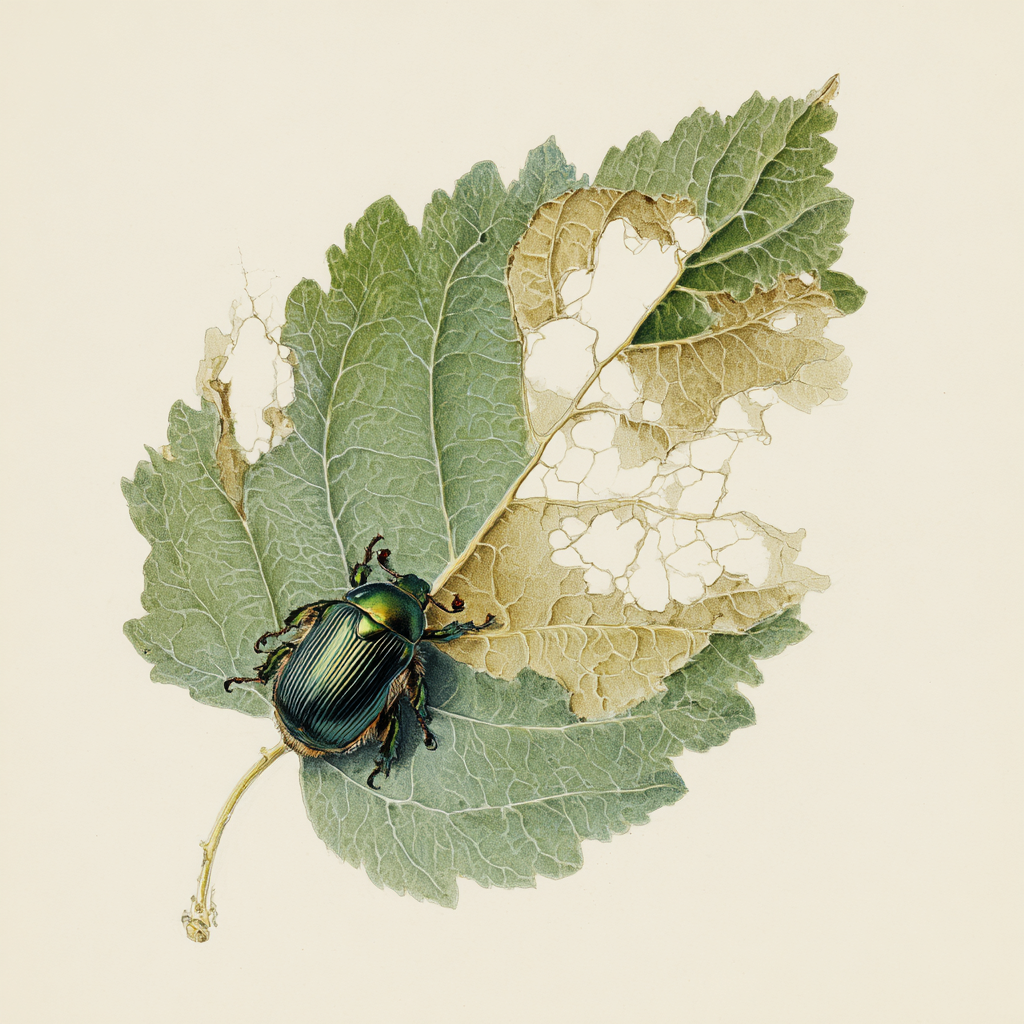
A metallic blue-green beetle with copper wing covers, about 12 mm long. Adults skeletonise leaves and damage flowers and fruit in midsummer, while their c-shaped white grubs live underground and feed on roots. They aggregate on favoured plants, and a single plant can attract dozens.
Symptoms to Look For
- Leaves consumed between veins, leaving a brown, papery, lace-like skeleton
- Clusters of beetles actively feeding together on the same plant or area of the plant
- Damage concentrated in June through August during adult emergence
- Damaged fruit with surface feeding scars
- Dead patches in nearby lawns from grub root damage
Affected Plants
Organic Solutions
Hand-Picking in Early Morning
Beetles are sluggish when cool. In the morning, hold a bucket of soapy water beneath the plant and shake the branch - beetles fall directly into it. This is most effective in early July at peak adult emergence and removes beetles before they release aggregation pheromones.
Milky Spore
Milky spore (Paenibacillus popilliae) is a naturally occurring soil bacteria specific to Japanese beetle grubs. Apply as a powder to lawn and garden soil. It takes 1 - 3 seasons to establish but then provides control for 10 - 20 years by building in the grub population.
Neem Oil
Neem oil sprayed on foliage deters adult feeding and acts as an insect growth regulator disrupting larval development when grubs ingest treated plant material. Apply at dusk to avoid harming pollinators and beneficial insects on open flowers.
Beneficial Nematodes
Apply Heterorhabditis bacteriophora nematodes as a soil drench in late summer when grubs are small and vulnerable. Water the soil before and after application. Nematodes are completely harmless to plants, earthworms, and humans and provide lasting grub control.
Row Covers
Drape fine mesh netting over high-value plants such as grape vines and raspberry canes during the 6–8 week adult emergence window in midsummer to provide complete protection.
Organic Remedies
Prevention
- Apply milky spore to lawn areas in spring and autumn over several seasons to steadily reduce the soil grub population
- Encourage ground-foraging birds — starlings, robins, and blackbirds feed heavily on grubs when turning soil and foraging in lawn areas
- Plant yarrow, fennel, and native flowering plants to attract parasitic flies and wasps that prey on Japanese beetle larvae and adults
- Avoid planting beetles' most-favoured plants (grape, raspberry, rose) in groups that create a concentration attracting aggregating beetles
Garden, by Willowbottom recommends only organic, wildlife-friendly solutions. No synthetic pesticides, no harmful chemicals - ever.