Grain Corn
VegetableZea mays
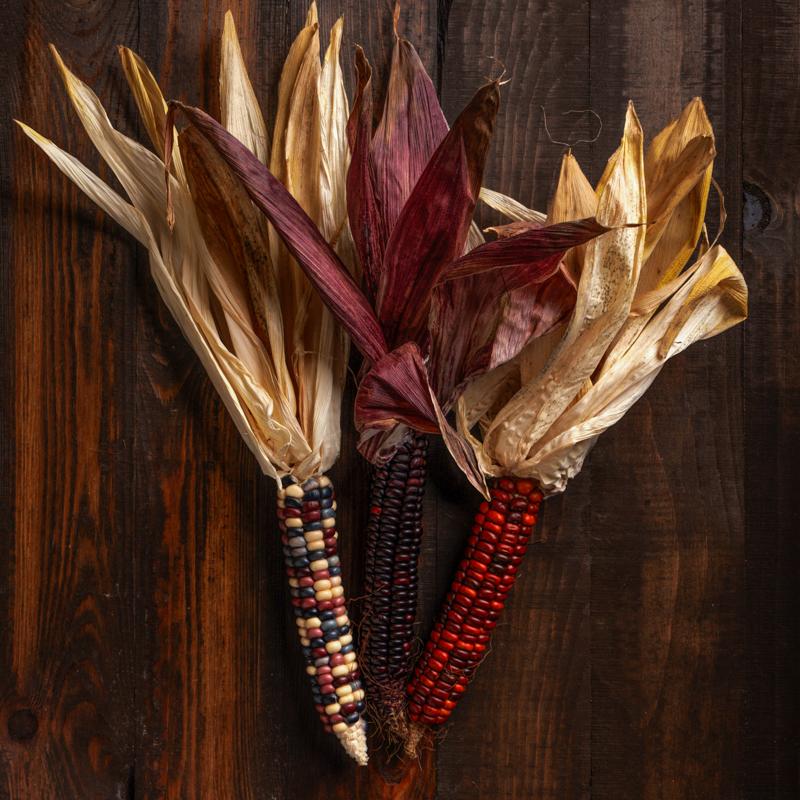
Have seeds for this? Add to inventory →Grain corn, also called dent corn or field corn, is grown to full maturity and dried on the stalk rather than harvested tender like sweet corn. The kernels harden completely as they dry and are milled into cornmeal, masa flour, grits, or polenta, or fermented whole. Plant in blocks for wind pollination the same way as sweet corn, but leave the ears on the plant well into fall until the husks are papery and the kernels are hard throughout.
Growing Conditions
Growing Conditions
Sunlight
Full Sun
Water Needs
Moderate
Soil
Rich, well-draining loam; pH 5.8 - 6.8
Spacing
12 inches in blocks of at least 4 rows
Days to Maturity
90 - 120 days from direct sow to dry harvest
Growing Zones
Growing Zones
Thrives in USDA Zones 3 - 11
When to Plant
When to Plant
Direct Sow
1 - 2 weeks after last frost, soil 60°F+
Harvest
90 - 120 days; leave ears on stalk until husks are papery and kernels are fully hard
Phenology (Natural Timing Cues)
Direct Sow
Direct sow only when soil has reached at least 60°F. Grain corn needs a longer season than sweet corn, so timing the sow too late in short-season zones leaves insufficient time for the ears to dry fully before hard frost.
- Lilacs are blooming or just past bloom.
- Oak leaves are the size of a squirrel's ear.
- Soil feels warm several inches down, not just at the surface.
- Night temperatures stay above 50°F.
Start Dates (Your Location)
Average dates use your saved zone; readiness also checks your forecast when available.
Average Last Frost
Set your growing zone to see personalized calendar dates.
Use the average timing, but check your local forecast before planting.
Organic Growing Tips
Organic Growing Tips
Plant in a minimum 4x4 block for good wind pollination - rows produce poorly pollinated cobs.
Apply a drop of mineral oil to fresh silks at the tip of each ear to suffocate corn earworm larvae.
Interplant with Three Sisters companions - beans fix nitrogen that feeds the heavy corn plants.
Leave ears on the stalk as long as possible so they dry in the field. Only pull them indoors if hard frost or sustained wet weather threatens before the kernels are hard.
Care Guidance
Optional seasonal guidance for what you can do, even when nothing is urgent.
Care Guidance
Watering
If the top 2 inches of soil feel dry, a deep watering at the base may help more than frequent light watering. In healthy soil, rain may cover much of what it needs.
Feeding
Extra feeding is rarely required if soil is healthy. If growth looks pale or slow, a light compost top-dressing is often enough before adding anything stronger.
Seasonal care
During the main season, harvesting when the crop is ready and removing damaged growth can help keep the planting productive if it starts to look crowded or tired.
Known Varieties
Common cultivars worth knowing
Known Varieties
Reid's Yellow Dent
Classic open-pollinated Midwestern dent corn with high yield and reliable drying. Origin in the 1840s Illinois Corn Belt.
Best for
cornmeal, grits, large plantings
Bloody Butcher
Deep red heirloom dent corn with striking color that carries through to the flour. Tall plants, 100 to 110 days.
Best for
red cornmeal, polenta, decorative dried ears
Hickory King
Large-kerneled white dent corn long grown in the Appalachian South for hominy and grits. Very large kernels on medium-sized ears.
Best for
hominy, grits, stone-ground meal
Mountain Morado
Deep purple Andean flour corn with soft endosperm suited to masa and whole-grain cornmeal. High in anthocyanins. 100 to 110 days.
Best for
masa, purple cornmeal, specialty flour
Floriani Red Flint
Italian heirloom polenta corn with hard, glassy red kernels. Considered by many to make the finest polenta flour.
Best for
polenta flour, specialty milling
Oaxacan Green Dent
Rare Mesoamerican heirloom with bright green kernels that dry to a jade color. Soft flour-type endosperm.
Best for
masa, specialty flour, seed saving
Companion Planting
Companion Planting
Common Pests
Common Pests
All pest management in Garden uses safe, organic, non-toxic methods only. No synthetic pesticides, ever.
Simple Ways to Use
Simple Ways to Use
Start here if you're not sure how to use this crop in the kitchen.
Quick recipes you can make right away
Stone-Ground Cornmeal Polenta
Bring 4 cups of water to a boil with a generous pinch of salt, then slowly pour in 1 cup of coarse stone-ground cornmeal while whisking constantly to prevent lumps. Reduce the heat to the lowest setting and stir every few minutes for 30 to 45 minutes until the polenta pulls away from the sides of the pan and tastes fully cooked with no raw grain flavor. Stone-ground meal takes longer than fine commercial polenta but has a richer, more complex flavor.
Whole-Grain Corn Tortillas
Mix 2 cups of masa harina or freshly nixtamalized corn flour with enough warm water to form a soft dough that holds together without cracking at the edges. Roll golf-ball-sized portions between two sheets of plastic in a tortilla press or with a flat-bottomed pan, then cook each tortilla on a dry cast iron skillet 60 to 90 seconds per side until light brown spots appear and the tortilla puffs slightly. Keep finished tortillas wrapped in a cloth so they stay pliable.
Overnight Grits
Combine 1 part coarse stone-ground grits with 4 parts water, add salt, and cook over very low heat for 45 to 60 minutes, stirring every 10 to 15 minutes until the grits are creamy and fully tender with no hard centers. Finish with butter off the heat. Stone-ground whole-grain grits cook more slowly than quick-cook varieties but develop a deeper, nuttier flavor and retain the germ and bran.
How to Preserve
How to Preserve
Use this section to store or process extra harvest before it spoils.
Practical methods for extra harvest
Field-dry on the stalk
Leave ears on the plant until the husks are papery brown and the kernels are hard enough that a thumbnail cannot dent them, typically 4 to 6 weeks after sweet corn would be harvested. Pull the husks back and hang the ears in a warm, dry, well-ventilated space to finish curing if wet weather threatens before they are fully dry. Shell only when kernels are completely hard and the moisture content feels low.
Store shelled dried corn
Shell fully dry kernels from the cob and spread them out for a few days to confirm they are dry throughout before sealing them in containers. Store in airtight glass jars, food-grade buckets with tight lids, or sealed bags in a cool, dark location. Properly dried corn stored this way keeps 1 to 2 years with minimal quality loss and longer if kept very cool and dry.
Nixtamalize for masa
Combine 1 pound of dried shelled corn with 1 tablespoon of food-grade calcium hydroxide (cal) and enough water to cover by 2 inches, bring just to a simmer, then remove from heat and soak overnight. The next day rinse the corn thoroughly in several changes of water, rubbing the skins off as you go, until the rinse water runs mostly clear. The resulting nixtamal can be ground fresh for masa or dried and ground into masa harina. Nixtamalized corn releases bound niacin and is nutritionally superior to unprocessed dried corn.
How to Store
How to Store
Simple storage tips
Store dried whole kernels in airtight containers away from light, heat, and moisture. A cool pantry or root cellar is ideal.
Do not shell corn until it is completely dry. Shelling partially dry corn traps moisture and leads to mold during storage.
Stone-ground cornmeal and grits contain the germ and bran, which means they go rancid faster than degerminated commercial meal. Store in the refrigerator or freezer and use within 3 to 6 months.
If corn smells musty or shows any dark discoloration after shelling, discard it. Aflatoxin from mold is a real risk with improperly dried grain.
Vacuum sealing or adding oxygen absorbers to stored whole corn extends shelf life significantly for long-term pantry storage.
How to Save Seed
How to Save Seed
Step-by-step seed saving
- 1
Grain corn crosses very easily with any other corn that sheds pollen at the same time, including sweet corn and popcorn. Isolate by at least 400 feet or stagger plantings by 2 to 3 weeks so tasseling does not overlap.
- 2
Leave ears on the stalk until the husks are fully brown and papery and the kernels are hard. For seed purposes, let them dry even longer than you would for food.
- 3
Select ears from the most vigorous plants with well-filled ears and kernels that are true to the variety color and shape.
- 4
Bring ears indoors to finish curing in a warm, ventilated space. Shell only when kernels feel completely hard and dry, then spread them for a few more days before storing.
- 5
Store seed corn in paper envelopes or breathable bags inside a sealed container in a cool, dry location. Corn seed stays viable 2 to 4 years when stored dry and cool.
Native Range
Native Range
- Origin
- Zea mays is a domesticate derived from wild teosinte native to the Balsas River valley of southwestern Mexico. Grain corn types were developed across Mesoamerica and the Andes by indigenous communities selecting for high starch content, large kernel size, and ease of processing.
- Native Habitat
- Wild teosinte relatives occupy warm open slopes, field margins, grasslands, and seasonally disturbed habitats in Mexico and Central America. Cultivated grain corn requires fertile, warm agricultural ground and is not self-sustaining in the wild.
- Current Distribution
- Cultivated worldwide as the most widely grown cereal crop by tonnage. Dent corn dominates field production in North America, while flour corn and specialty landraces are grown at smaller scale by heritage grain producers, indigenous communities, and specialty mills globally.
Taxonomy
Taxonomy
- Kingdom
- Plantae
- Family
- Grass family (Poaceae)
- Genus
- Zea
- Species
- Zea mays
Morphology
Morphology
Root System
Fibrous grass root system with brace roots near the soil surface that anchor tall stalks. Roots need steady moisture during tasseling and ear fill, then can handle drier conditions once kernels are past the dough stage.
Stem
Tall jointed stalk, typically taller than sweet corn at 7 to 10 feet, with large ears. Some grain corn varieties produce two ears per stalk.
Leaves
Long strap-like leaves with parallel veins, clasping the stalk at nodes. Leaf rolling is an early sign of drought stress.
Flowers
Separate male tassels at the top shed pollen onto female silks emerging from ears. Each silk connects to one potential kernel; poor pollination causes missing kernels in the dried ear.
Fruit
Ears contain rows of kernels enclosed in husks. Grain corn is left on the stalk until the kernels are fully hard and the husks are papery and dry. Dent varieties show a characteristic indentation in the crown of each mature kernel where the starchy endosperm has contracted.
Natural History
Natural History
Maize (Zea mays) was domesticated from wild teosinte in the Balsas River valley of southwestern Mexico roughly 9,000 years ago and spread through Mesoamerica over the following millennia. The dent corns - characterized by a starchy indentation that forms in the crown of each kernel as it dries - were developed over centuries by indigenous communities in Mexico and the Americas who selected for large kernels with high starch content suited to nixtamalization and long-term dry storage. Dent corn arrived in North America with European colonization but was quickly adopted and further developed by settlers: by the 19th century, open-pollinated dent varieties such as Reid's Yellow Dent had become the dominant field corn of the American Midwest and the basis for the modern corn belt. Flour corns used for masa and heirloom cornmeal - including the purple and blue Andean and Mesoamerican varieties now sought by specialty growers - descend from pre-Columbian selections that prioritized soft endosperm for easy grinding over the hard, glassy starch of flint types.
Traditional Use
Traditional Use
Grain corn sits at the center of Mesoamerican and indigenous North American foodways, where its primary cultural significance is agricultural and culinary rather than narrowly medicinal. The most consequential technology associated with it is nixtamalization, the alkaline processing step that transforms dried corn into a nutritionally complete food.
Parts Noted Historically
Nixtamalization - Mesoamerican Tradition - Kernels
Indigenous Mesoamerican civilizations developed nixtamalization - soaking dried grain corn in calcium hydroxide or wood ash lye before grinding - by at least 1500 BCE. The process releases bound niacin (vitamin B3), increases available calcium, and improves the flavor and handling of the resulting masa. European colonists adopted corn as a food crop but ignored the processing step, causing widespread pellagra across regions where corn became a staple without nixtamal. The food sovereignty and nutritional knowledge embedded in this technique is central to ongoing Indigenous culinary revitalization movements in Mexico and the American Southwest.
Andean Flour Corn Traditions - Kernels
Andean civilizations developed distinct flour corn varieties with soft, easily ground endosperm suited to the high-altitude climates of Peru and Bolivia. Purple and blue corns - including the ancestral forms of varieties like Mountain Morado - were cultivated for both food and ceremonial use, used in chicha fermentation, and preserved as landrace varieties by highland communities for thousands of years.
Southeastern US Cornmeal Traditions - Kernels
After dent corn spread through the American Southeast during the 18th and 19th centuries, stone-ground cornmeal became foundational to regional cuisines from Appalachia to the Gulf Coast. Traditional stone mills retained the germ and bran that industrial roller mills later removed, making whole-grain cornmeal nutritionally denser. The heritage grain revival of recent decades has brought renewed interest in open-pollinated dent and flour corns ground at traditional mills.
Grain corn is safe for consumption. The critical consideration for nutritional adequacy is nixtamalization: when grain corn is consumed as a dietary staple without alkaline processing, niacin remains bound and unavailable, creating risk of pellagra in populations relying heavily on unprocessed corn.
This information is provided for historical and educational purposes only and is not medical advice. Always consult a qualified healthcare professional before making decisions related to your health.
Related Articles
Related Articles
Loading photo submission…