
Dahlia
FlowerDahlia pinnata
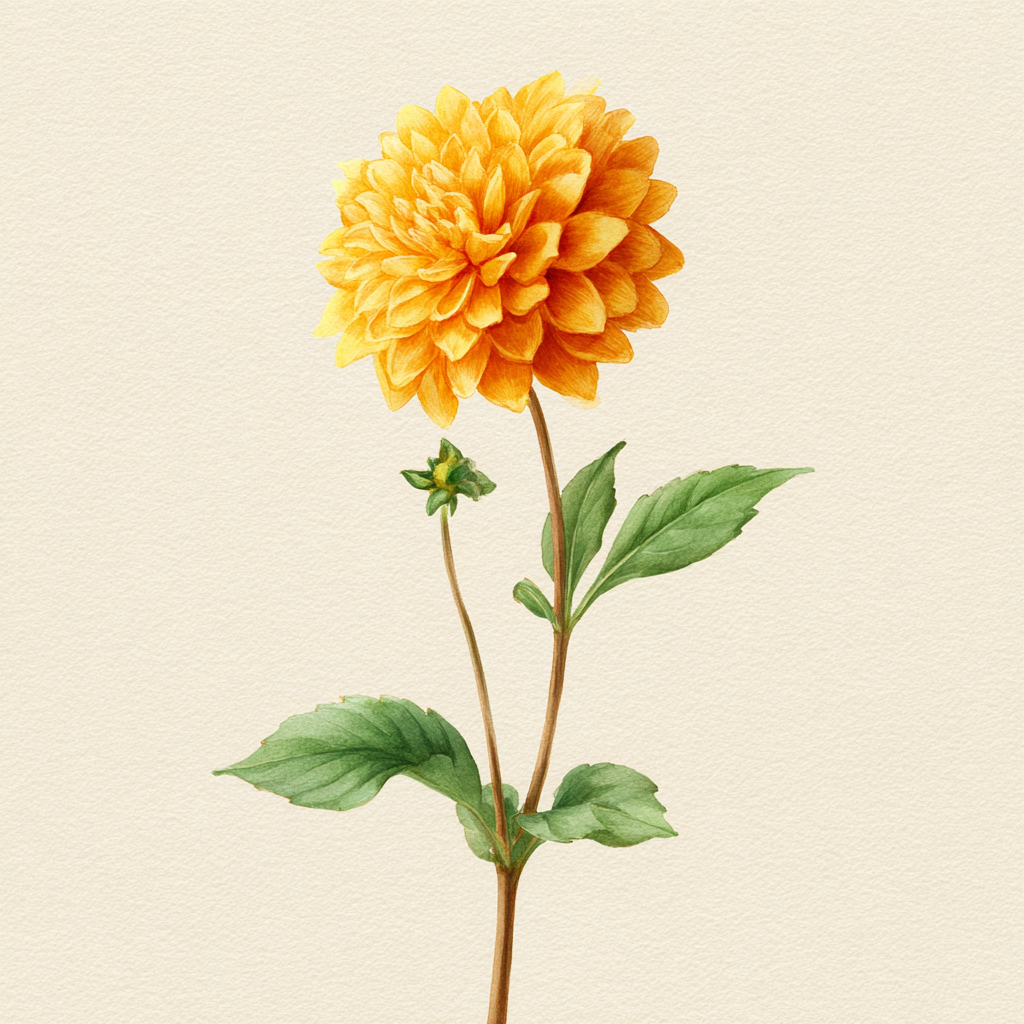
Have seeds for this? Add to inventory →Dahlias are tuberous perennials grown as annuals in cold climates, producing an extraordinary range of flower forms and colours from midsummer until first frost. Single and semi-double varieties are most valuable for attracting pollinators.
Native Range
- Origin
- Native to the highland regions of Mexico and Guatemala, where multiple Dahlia species evolved in montane environments.
- Native Habitat
- Montane forests, highland meadows, slopes, and open clearings with rich volcanic soils, experiencing wet summers and dry or cool seasonal rest periods.
- Current Distribution
- Cultivated globally as ornamental garden plants; modern garden dahlias are complex hybrids that do not occur as wild native plants outside their ancestral range.
Growing Conditions
Sunlight
Full Sun
Water Needs
Moderate
Soil
Rich, well-draining loam; pH 6.5 - 7.0
Spacing
12 - 36 inches depending on variety
Days to Maturity
90 - 120 days from tuber planting to full flower
Growing Zones
Thrives in USDA Zones 8 - 11
Companion Planting
When to Plant
Transplant
Plant tubers after last frost, 4 - 6 inches deep
Harvest
Dig tubers after first frost in cool climates; store in frost-free conditions
Phenology (Natural Timing Cues)
Transplant
Dahlia tubers planted too early into cold, wet soil rot before they can root. The goal is warm, well-draining soil and genuinely settled weather - not just the calendar date of last frost. Dahlias perform best when the soil is already warming and the worst cold swings are firmly behind you. Pre-sprouting tubers indoors gives a useful head start in short-season climates.
- Lilacs have faded and their leaves are near full size.
- Soil at 4 - 6 inches feels warm to the touch rather than cool.
- Tender annual weeds are germinating and growing steadily without setback.
- Stored tubers show firm, plump eyes or short, sturdy emerging shoots.
- Night temperatures consistently stay above 50°F.
Start Dates (Your Location)
Based on your saved growing zone and this plant's timing notes.
Best Planting Window
Spring window
After your last frost
Plant once frost risk has passed and spring conditions are settled.
Autumn window
Usually skip autumn planting
Use spring unless you have locally grown nursery stock and enough mild weather for roots to establish.
Planting Method
Plant firm tubers with visible growing points. Tubers are the standard planting form, not seed.
Critical Timing Note
Wait until frost risk has passed and soil is warming; cold, wet soil can rot tubers.
Organic Growing Tips
Choose single-flowered varieties for best pollinator value; pompom types have limited nectar accessibility.
Pinch out the central growing tip when the plant has 3 - 4 sets of leaves for bushier, more floriferous plants.
Dig and store tubers in barely damp compost in a frost-free shed in climates with freezing winters.
Apply a thick straw mulch over tubers left in the ground in borderline zones for winter protection.
Common Pests
- Aphids
- Slugs
- Earwigs
- Powdery Mildew
- Vine Weevil
All pest management in Garden uses safe, organic, non-toxic methods only. No synthetic pesticides, ever.
Taxonomy
- Kingdom
- Plantae
- Family
- Daisy family (Asteraceae)
- Genus
- Dahlia
- Species
- Dahlia pinnata
Natural History
Dahlia pinnata and related species are native to Mexico and Guatemala, where they grow as tuberous perennials in montane forests and highland meadows at elevations between roughly 1,500 and 3,000 meters. The Aztec people called the plant acocotli or cocoxochitl - hollow stem flower - and grew it both as a food crop (tubers of some species are edible and were consumed before the potato became widespread) and for its flowers. Spanish botanists encountered dahlias in Mexico in the 16th century, but living plants did not reach Europe until 1789, when seeds sent by Vicente Cervantes of the Mexican Botanical Garden arrived at the Royal Gardens in Madrid. Cavanilles formally described and named the genus in honor of Swedish botanist Anders Dahl, a student of Linnaeus. European breeders transformed the plant from a modest single-flowered highland species into one of the most diverse ornamental genera in cultivation; by the 1840s, thousands of named varieties existed and competitive dahlia shows had become significant social events in England. The tubers' ability to preserve a specific flower form clonally - every division producing an identical plant - drove both the commercial trade and the obsessive variety-naming culture that characterized 19th-century dahlia enthusiasm.
Traditional Use
Dahlia carries a rarely told pre-ornamental history as an Aztec food plant and a dramatic botanical discovery story. Its transformation from Aztec crop plant to the centerpiece of Victorian flower shows is one of the most complete cultural reinventions of any garden genus.
Parts Noted Historically
Aztec Food and Practical Use - Tubers
The Aztec people cultivated dahlia tubers as a food source alongside other root crops, and the hollow stems were used as water conduits. Spanish botanist Francisco Hernández, personal physician to Philip II of Spain, documented Mexican plants including dahlias during his 1570-1577 expedition to New Spain - the first systematic natural history survey of the Americas - and recorded both food and practical applications.
Early European Botanical Introduction - Tubers and flowers
The first dahlia plants to arrive in Europe in 1789 were evaluated as a potential food crop, not an ornamental - the idea that the tubers might supplement the recently introduced potato drove initial interest. The food trial failed (the flavor was unappealing), but the plants flowered with spectacular effect, and European horticulturalists immediately recognized ornamental potential. Within twenty years, breeders had transformed the species beyond recognition from its wild form.
Victorian Dahlia Show Culture - Flowers and tubers
By the 1840s, dahlia cultivation had become one of the defining horticultural obsessions of Victorian England. The clonal tuber system - which allowed exact preservation and sale of named varieties - created a variety economy in which prize-winning plants commanded significant prices. The National Dahlia Society was founded in England in 1881 and established the flower form classification system (ball, cactus, decorative, pompom, and others) that remains the basis of modern dahlia classification worldwide.
Inulin Research and Modern Industrial Use - Tubers
Dahlia tubers contain high concentrations of inulin, a fructose polymer used in food science as a dietary fiber and prebiotic ingredient. In the early 20th century, dahlia tubers were briefly investigated as an industrial inulin source. The connection between the Aztec food plant, Victorian ornamental, and 20th-century food-science compound is one of the more unexpected threads in the plant's history.
This information is provided for historical and educational purposes only and is not medical advice. Always consult a qualified healthcare professional before making decisions related to your health.
Morphology (Plant Structure & Identification)
Root System
Clustered fleshy tubers attached to a crown with visible eyes; new shoots emerge from the crown, not from detached tuber pieces without eyes.
Stem
Upright hollow to pithy stems that branch after pinching and often need staking in tall varieties.
Leaves
Opposite compound leaves with toothed leaflets, usually medium to dark green and sometimes bronze-toned.
Flowers
Composite flower heads with highly variable forms, from open single blooms to cactus, ball, decorative, and dinnerplate types.
Fruit
Dry achenes can form after pollination, though named varieties are usually propagated by tubers or cuttings.
Known Varieties
Common cultivars worth knowing
- Best for: pollinator-friendly beds
Bishop of Llandaff
Red single to semi-double flowers with dark foliage and good pollinator access.
- Best for: cut flowers
Cafe au Lait
Large blush, cream, and tan dinnerplate blooms popular in floral design.
- Best for: cutting gardens
Cornel Bronze
Ball dahlia with bronze-orange blooms and strong vase life.
- Best for: bold color
Thomas Edison
Large deep purple decorative dahlia with strong garden presence.
- Best for: dramatic borders
Arabian Night
Dark burgundy decorative blooms on productive plants.
- Best for: mixed perennial beds
Totally Tangerine
Anemone-flowered peach-orange dahlia with open centers for pollinators.
Loading photo submission…