Angelica
HerbAngelica archangelica
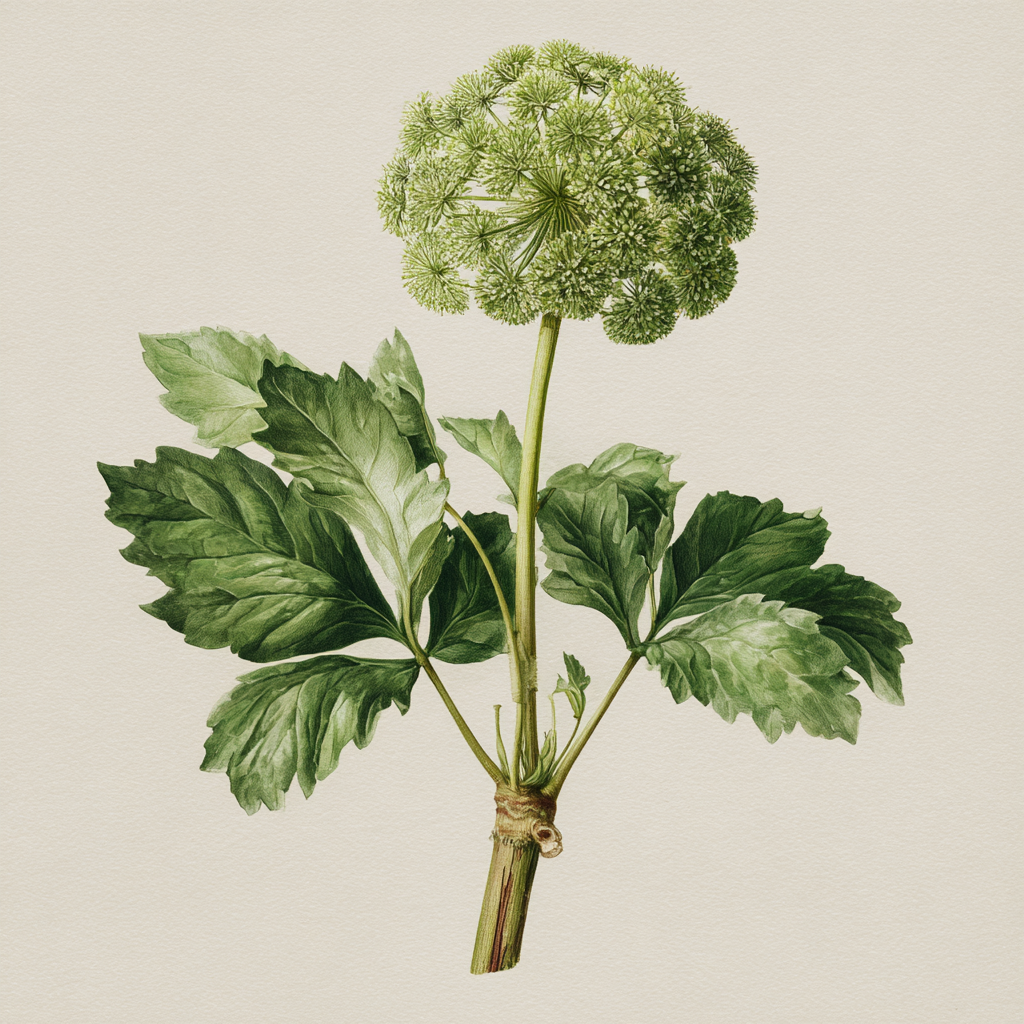
Have seeds for this? Add to inventory →Angelica is a statuesque biennial herb native to cool northern European and Scandinavian regions, valued for its hollow ribbed stems, bold architectural foliage, and large spherical flower umbels. Every part of the plant carries a distinctive musky-sweet fragrance reminiscent of celery and juniper. It thrives in moist, partially shaded garden spots and self-seeds reliably when allowed to flower.
Growing Conditions
Growing Conditions
Sunlight
Full Sun to Partial Shade
Water Needs
High
Soil
Rich, deep, consistently moist, well-draining loam with high organic matter; slightly acidic to neutral pH preferred
Spacing
36 inches
Days to Maturity
Leaves harvestable from first season; stems and seeds in second year
Growing Zones
Growing Zones
Thrives in USDA Zones 3 - 9
When to Plant
When to Plant
Start Indoors
Sow fresh seed indoors 8-10 weeks before last frost; seed loses viability quickly and must be fresh
Transplant
Transplant seedlings outdoors after last frost when soil is consistently workable
Direct Sow
Direct sow fresh seed in late summer or early autumn immediately after harvest for best germination; seeds require cold stratification and germinate in spring
Harvest
Harvest young leaf stems in the first season; harvest hollow main stems in early spring of the second year before flowering; cut seed umbels when just turning from green to beige
Phenology (Natural Timing Cues)
Direct Sow
Angelica seed is notoriously short-lived and germinates most reliably when sown fresh in late summer or early fall, allowing natural cold stratification over winter. Seed stored even a few months loses viability sharply, making autumn direct-sowing the most practical path. If spring-sown indoors, seed must be cold-stratified in the refrigerator for 3-4 weeks before sowing.
- Seed umbels on second-year plants turn from green to beige and dry on the stalk - arvest and sow immediately
- Daytime temperatures drop reliably below 70°F and nights feel distinctly cool
- Annual weeds begin to slow; soil moisture is reliable without irrigation
- Deciduous trees begin early leaf drop, signaling the window for autumn sowing
Start Dates (Your Location)
Average dates use your saved zone; readiness also checks your forecast when available.
Average Last Frost
Set your growing zone to see personalized calendar dates.
Use the average timing, but check your local forecast before planting.
Direct Sow
Spring
This uses autumn or first-frost timing, so keep the planting note as written.
Typical Harvest Window
April to August
Organic Growing Tips
Organic Growing Tips
Mulch deeply with wood chips or straw to retain consistent soil moisture and keep roots cool - ngelica struggles in soil that dries out between waterings
Apply a top-dressing of well-aged compost or worm castings in early spring of both the first and second year to sustain the plant's heavy nutrient demands
Water with compost tea once or twice during the growing season to support soil biology and steady, lush growth
In hot climates, site angelica where taller plants or a fence provides afternoon shade to prevent bolting and leaf scorch
Allow at least one second-year plant to set and drop seed each season to maintain a self-renewing colony without replanting
Watch for aphid colonies on the hollow stems; a blast of water or a dilute neem oil spray handles outbreaks without disrupting the beneficial wasps that also visit the umbels
Care Guidance
Optional seasonal guidance for what you can do, even when nothing is urgent.
Care Guidance
Watering
During active growth and extended dry periods, this plant often benefits from steadier moisture. If the top inch dries out, a slow deep watering at the base is often enough.
Feeding
Extra feeding is rarely required if soil is healthy. If growth looks pale or slow, a light compost top-dressing is often enough before adding anything stronger.
Seasonal care
During the main season, harvesting when the crop is ready and removing damaged growth can help keep the planting productive if it starts to look crowded or tired.
Harvest timing
Harvests often cluster around April to August. If fruit, leaves, or roots start looking ready, color, size, firmness, and scent usually tell you more than the calendar alone.
Known Varieties
Common cultivars worth knowing
Known Varieties
Angelica archangelica (species)
The standard garden and culinary form; bold architectural habit, musky sweet fragrance, and reliable self-seeding make it the default choice for most growers
Best for
Culinary stem harvest, confectionery, and pollinator support
Angelica gigas
Korean angelica with dramatic deep burgundy-purple stems and dark wine-red umbels; slightly shorter than archangelica and more ornamental than culinary in emphasis
Best for
Ornamental border plantings and beneficial insect attraction
Angelica sylvestris 'Vicar's Mead'
A cultivar with strongly purple-flushed foliage and dark stems; naturalistic garden form with good self-seeding habit and striking visual contrast
Best for
Ornamental use in shaded or woodland garden settings
Companion Planting
Companion Planting
Support & insectary plants
Nearby plants that attract pollinators, beneficial insects, or improve soil health.
Avoid planting near
No known conflicts
Common Pests
Common Pests
- aphids
- leafminers
- slugs
- caterpillars
- carrot fly
All pest management in Garden uses safe, organic, non-toxic methods only. No synthetic pesticides, ever.
Native Range
Native Range
- Origin
- Native to northern Europe and central Asia.
- Native Habitat
- Riverbanks, moist mountain meadows, and shaded forest margins in northern and central Europe.
- Current Distribution
- Naturalized across much of temperate Europe and North America; widely cultivated as a culinary and medicinal herb.
Taxonomy
Taxonomy
- Kingdom
- Plantae
- Family
- Carrot family (Apiaceae)
- Genus
- Angelica
- Species
- Angelica archangelica
Morphology
Morphology
Root System
Develops a stout, branching taproot that can reach 12 inches deep and stores significant energy for the second-year flowering surge; damaging the taproot at transplanting often causes stunting or premature death.
Stem
Second-year stems are hollow, strongly ribbed, and can reach 4-8 feet tall; the hollow stems are the primary culinary harvest and should be cut before flowering begins for best flavor and texture.
Leaves
Large, pinnately compound leaves with serrated leaflets emit a distinctive musky-sweet fragrance when bruised; yellowing lower leaves in mid-summer are normal senescence, but pale or mottled foliage may indicate aphid feeding or overwatering.
Flowers
Compound umbels up to 10 inches across appear in the second year and are richly attractive to parasitic wasps, hoverflies, and bees; allow at least one umbel to set seed fully if you want self-sown plants to continue the colony.
Fruit
Flat, winged schizocarps (paired seeds) ripen from green to pale straw color and shatter quickly; harvest the entire umbel when seeds begin to turn and ripen off the stalk in a paper bag to capture viable seed before dispersal.
Natural History
Natural History
Angelica archangelica is native to northern and central Europe, Scandinavia, and across into central Asia, where it grows wild along riverbanks, moist forest margins, and subalpine meadows. Scandinavian and Sami peoples cultivated and ate the plant long before it entered formal European herbalism. Its name references the archangel Michael, reflecting a medieval European belief that the plant offered protection during plague outbreaks. By the 16th century it was widely grown in monastery gardens and traded across northern Europe. Botanically, angelica is monocarpic - t flowers once, sets seed, and dies - aking seed management essential for maintaining a continuous garden supply.
Traditional Use
Traditional Use
Angelica archangelica holds a prominent place in northern European and Scandinavian ethnobotany, where roots, seeds, and stems were recorded as protective and restorative across several centuries of documented use. Medieval European herbalists including John Gerard and later Nicholas Culpeper described the root as among the most valued in their pharmacopoeias. Sami and other Nordic peoples used the stems as food and the roots in traditional practice long before the plant entered formal European written records.
Parts Noted Historically
Medieval European monastic herbalism, 14th-15th century - root
Monastery records and plague-era herbals described the dried root as a protective botanical carried or placed in vinegar preparations; Gerard's Herball (1597) documented the root as one of the most esteemed of all English garden herbs
Sami and Nordic traditional culture, Scandinavia - stem and root
Sami peoples consumed young stems as a food plant and employed the root in traditional practice; the plant was so culturally significant it was cultivated in dedicated garden plots in Lapland and traded southward into continental Europe
Nicholas Culpeper, English herbal tradition, 17th century - root and seed
Culpeper's Complete Herbal (1653) recorded the root and seed as warming and associated with protection against cold and pestilence, reflecting the prevailing humoral medical framework of the period
Angelica contains furanocoumarins that cause photosensitivity and can produce skin burns on contact with plant sap followed by sun exposure; all parts of the plant are toxic to livestock. Angelica archangelica closely resembles the deadly poison hemlock (Conium maculatum) and water hemlock (Cicuta species) and must be positively identified before any harvest. Pregnant individuals should avoid handling or ingesting the plant in quantity due to documented uterine stimulant activity historically recorded in European herbalism.
This information is provided for historical and educational purposes only and is not medical advice. Always consult a qualified healthcare professional before making decisions related to your health.
Loading photo submission…