Arrowwood Viburnum
FlowerViburnum dentatum
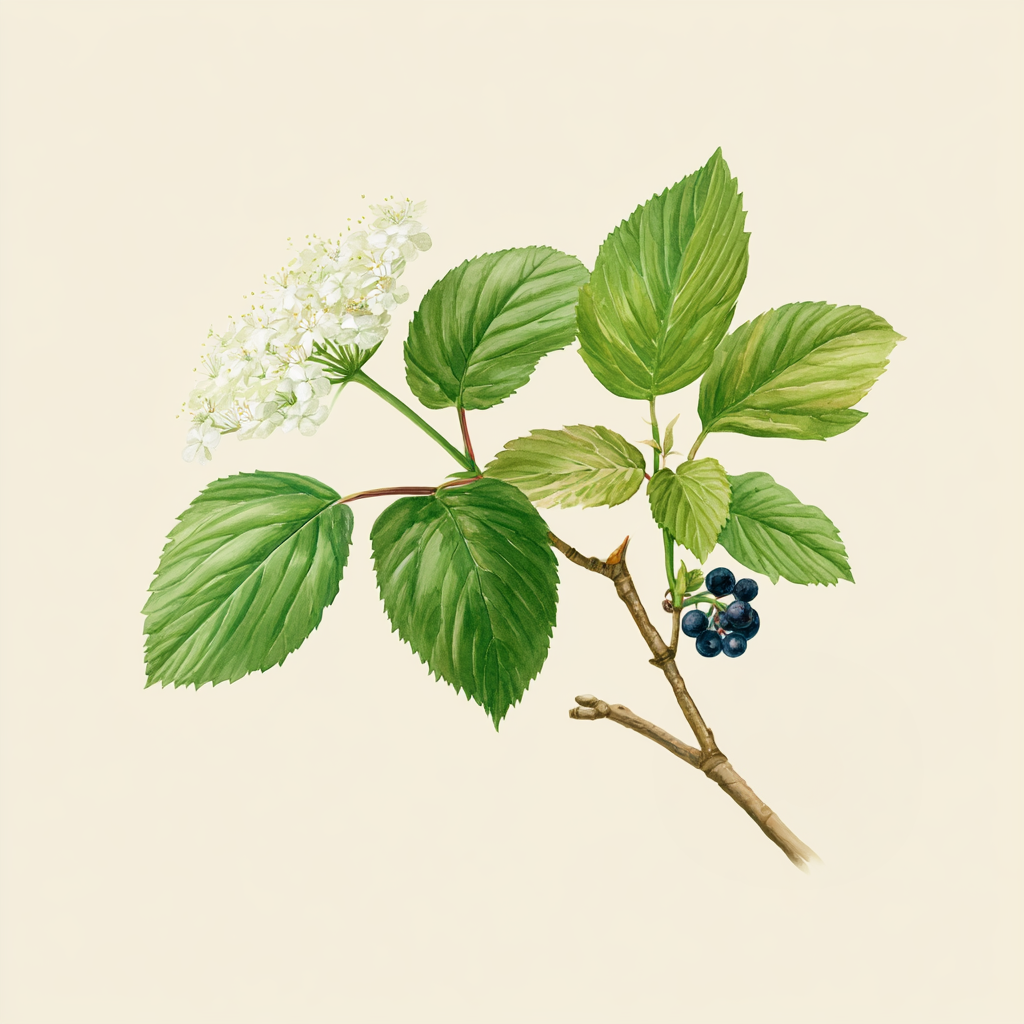
Have seeds for this? Add to inventory →Arrowwood viburnum is a versatile, four-season native shrub with flat-topped white flower clusters beloved by pollinators in spring, deep blue-black berries relished by birds in late summer, and outstanding burgundy to orange-red fall foliage. One of the most adaptable native shrubs, it tolerates a wide range of soils, moisture levels, and light conditions. Indigenous peoples used the exceptionally straight young stems for arrow shafts, giving the plant its common name. Cross-pollination between different individuals substantially increases berry production.
Growing Conditions
Growing Conditions
Sunlight
Full Sun to Partial Shade
Water Needs
Moderate
Soil
Adaptable; tolerates dry to moist, clay to sandy, pH 5.5-6.5; best in average, well-drained garden soil
Spacing
72 to 120 inches
Days to Maturity
Flowers in year 2-3; berry production increases with a second genetically distinct plant nearby
Growing Zones
Growing Zones
Thrives in USDA Zones 3 - 8
When to Plant
When to Plant
Transplant
Plant container-grown stock in spring or fall; cross-pollination between two or more unrelated plants dramatically increases berry set
Harvest
Berries ripen August-September; mildly bitter to humans but important wildlife food; not typically consumed by people
Phenology (Natural Timing Cues)
Transplant
Plant arrowwood viburnum in early spring before bud break or in fall after leaf drop while soil remains workable. It is adaptable and establishes reliably under a wide range of conditions. Consistent moisture during the first season is the primary factor in successful establishment.
- Spring: forsythia in bloom and soil no longer frozen
- Deciduous trees beginning bud swell
- Fall: deciduous trees in color and nighttime temps below 50°F
- Soil workable and not waterlogged
Start Dates (Your Location)
Average dates use your saved zone; readiness also checks your forecast when available.
Best Planting Window
Spring window
Spring
Plant early enough for roots to settle before summer heat.
Autumn window
Usually skip autumn planting
Use spring unless you have locally grown nursery stock and enough mild weather for roots to establish.
Planting Method
Use nursery-grown planting stock rather than treating this as a standard seed-starting crop.
Critical Timing Note
Plant early enough for roots to establish before weather stress arrives.
Use the average timing, but check your local forecast before planting.
Organic Growing Tips
Organic Growing Tips
Plant at least two genetically different individuals for cross-pollination and maximum berry production.
Viburnum leaf beetle has become a significant pest in the northeast; select resistant species such as V. dentatum over more susceptible V. opulus.
Prune immediately after flowering to avoid removing next year's buds; no annual pruning is necessary for healthy plants.
Mulch with 2-3 inches of wood chips to conserve moisture and suppress weeds during establishment.
Care Guidance
Optional seasonal guidance for what you can do, even when nothing is urgent.
Care Guidance
Watering
If the top 2 inches of soil feel dry, a deep watering at the base may help more than frequent light watering. In healthy soil, rain may cover much of what it needs.
Feeding
Extra feeding is rarely required if soil is healthy. If growth looks pale or slow, a light compost top-dressing is often enough before adding anything stronger.
Pruning
If pruning is needed, dormancy or the period just after harvest is often the simplest window. Dead, damaged, or crossing growth is usually the first place to start.
Seasonal care
In late fall, a light cleanup and fresh mulch can help if winter protection is useful in your climate. Leaving a little space around crowns and trunks often helps air move and keeps excess moisture from sitting there.
Known Varieties
Common cultivars worth knowing
Known Varieties
Chicago Lustre
Selection with exceptional glossy dark green foliage; superior fall color and berry production; highly resistant to viburnum leaf beetle. One of the best choices for the northeast.
Best for
Northeast gardens; leaf beetle resistance; reliable berry production; fall color
Blue Muffin (Christom)
Compact form reaching 5-7 feet; heavy berry production; works well in smaller landscapes while retaining full wildlife value.
Best for
Smaller gardens; mass planting; heavy berry set
Straight Species
Seed-grown wild-type arrowwood; maximum genetic diversity and wildlife value; ideal for restoration and naturalized plantings.
Best for
Ecological restoration; naturalized areas; maximum bird value
Companion Planting
Companion Planting
Good companions
- Native Asters
Support & insectary plants
Nearby plants that attract pollinators, beneficial insects, or improve soil health.
- Elderberry
Attracts pollinators
- Goldenrod
Attracts beneficial insects and produces nutrient-rich mulch
- Little Bluestem
Deep-rooted nutrient recycler; useful for chop-and-drop mulch
- Ninebark
Attracts pollinators
Avoid planting near
No known conflicts
Common Pests
Common Pests
- Viburnum Leaf Beetle
- Aphids
- Powdery Mildew
All pest management in Garden uses safe, organic, non-toxic methods only. No synthetic pesticides, ever.
Native Range
Native Range
- Origin
- Native to eastern North America.
- Native Habitat
- Moist thickets, woodland edges, streambanks, and forest margins from New Brunswick to Georgia and west to the Great Plains.
- Current Distribution
- Widespread across eastern North America within its native range; widely cultivated in native plant gardens and restoration plantings.
Taxonomy
Taxonomy
- Kingdom
- Plantae
- Family
- Moschatel family (Adoxaceae)
- Genus
- Viburnum
- Species
- dentatum
Morphology
Morphology
Root System
Fibrous and suckering; forms multi-stemmed colonies over time; roots spread moderately and provide good erosion control on slopes.
Stem
Upright, multi-stemmed shrub 6-10 feet tall and wide; young stems gray-brown with opposite branching.
Leaves
Opposite, ovate to rounded with coarsely toothed margins; dark glossy green in summer, turning burgundy to orange-red in fall.
Flowers
Flat-topped cymes (corymbs) of small creamy-white flowers 3-4 inches across; bloom May-June; attractive to native bees and flies.
Fruit
Blue-black drupes in drooping clusters, 1/4 inch across; ripen August-September; consumed by mockingbirds, catbirds, robins, and more than 35 other bird species.
Natural History
Natural History
Viburnum dentatum is native to eastern North America from New Brunswick south to Georgia and west to the Great Plains, growing naturally in moist thickets, woodland edges, and streambanks. It is among the most ecologically important native shrubs for birds; more than 35 species have been documented consuming its berries, particularly during fall migration. Indigenous peoples across its range used the straight young stems as arrow shafts and in basket weaving. The European-origin Viburnum opulus (guelder rose) was historically planted in its place due to commercial availability, but the native V. dentatum supports far greater wildlife diversity.
Loading photo submission…