
Fennel
HerbFoeniculum vulgare
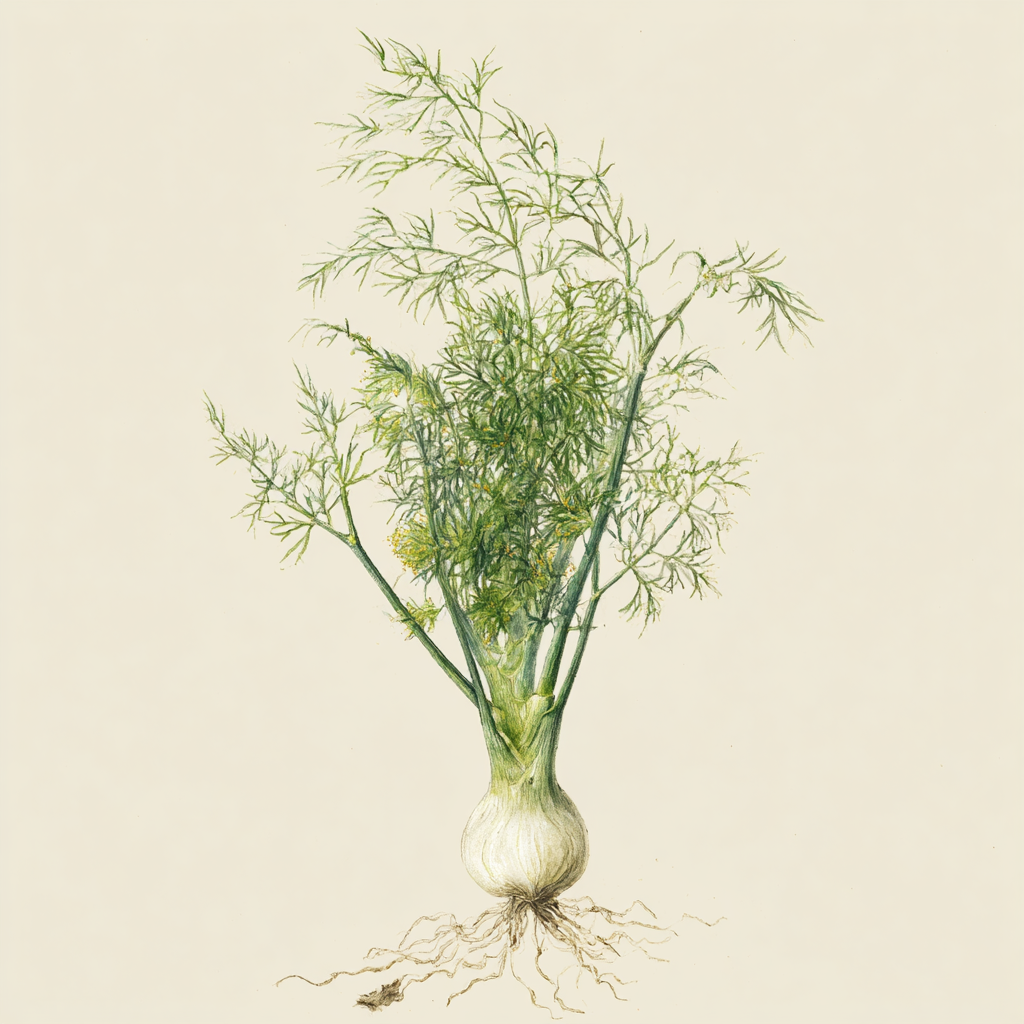
Have seeds for this? Add to inventory →Fennel is an aromatic perennial herb with feathery foliage and anise-like flavour, but it releases allelopathic compounds that inhibit the growth of most neighbouring plants. It is best grown in isolation or at the far edge of the garden.
Native Range
- Origin
- Fennel is native to the Mediterranean region.
- Native Habitat
- Dry open slopes, roadsides, field margins, coastal ground, and disturbed Mediterranean soils.
- Current Distribution
- Naturalized across many mild and temperate regions, especially in disturbed habitats.
Growing Conditions
Sunlight
Full Sun
Water Needs
Low
Soil
Well-draining, lean loam; pH 6.0 - 7.0
Spacing
18 - 24 inches; isolate from vegetable beds
Days to Maturity
Harvest fronds from year 1; seeds in 90 - 100 days
Growing Zones
Thrives in USDA Zones 4 - 10
Companion Planting
Keep Away From
When to Plant
Direct Sow
After last frost; direct sow only - dislikes transplanting
Harvest
Harvest fronds as needed; harvest seeds when golden brown
Phenology (Natural Timing Cues)
Direct Sow
Fennel does not transplant reliably - its taproot dislikes any disturbance, so direct sowing in the final growing position is essential. There are two good windows: early spring while soil is mild before summer heat builds, and late summer as temperatures ease into autumn. Avoid sowing during peak heat or into dry, dusty soil - seedlings will bolt before developing useful bulk. Always allow adequate spacing from vegetable beds at sowing time, as fennel releases allelopathic compounds that inhibit most neighboring crops.
- Dandelions are blooming or beginning to fade (spring sowing).
- Soil is workable and holds moisture without becoming heavy and compacted.
- Mild days are forecast - summer heat has not yet risen sharply.
- Summer heat is easing and first cool nights are returning (late-season sowing).
Start Dates (Your Location)
Based on your saved growing zone and this plant's timing notes.
Typical Last Frost
Set your growing zone to see personalized calendar dates.
Organic Growing Tips
Grow fennel in its own dedicated bed away from vegetable gardens - its allelopathic chemicals inhibit most crops.
Do not plant near dill - they cross-pollinate and produce tasteless hybrids.
Allow fennel to flower freely; its yellow umbels are outstanding beneficial insect attractors.
Mulch around the base with compost or bark to retain moisture and let spent fennel foliage decompose in place — as it breaks down, it returns minerals to the soil and supports the soil biology that makes the whole garden more productive.
Common Pests
- Aphids
- Parsley Worm (Black Swallowtail larva)
All pest management in Garden uses safe, organic, non-toxic methods only. No synthetic pesticides, ever.
Taxonomy
- Kingdom
- Plantae
- Family
- Carrot family (Apiaceae)
- Genus
- Foeniculum
- Species
- Foeniculum vulgare
Natural History
Foeniculum vulgare is native to the Mediterranean basin and has spread as a naturalized weed across California, Australia, South Africa, and other dry temperate climates - often escaping cultivation and colonizing roadsides, disturbed ground, and coastal scrub. Its species name vulgare means "common," reflecting how ordinary and widespread it was considered in classical antiquity. Fennel is among the oldest documented cultivated plants; it appears in ancient Egyptian records, is listed in Charlemagne's Capitulare de Villis of 812 CE alongside dill and other essential herbs, and is named in the Old English Nine Herbs Charm recorded in the 10th-century Lacnunga manuscript. The Greeks called it marathon, and the plain where the Battle of Marathon was fought in 490 BCE may have been named for the fennel that covered it. Florence fennel (Foeniculum vulgare var. azoricum) is a distinct vegetable form selected for a swollen bulb-like leaf base; it was developed in Italy and did not reach northern Europe as a vegetable until the 17th century. The plant's allelopathic compounds inhibit germination of many neighboring species, explaining its reputation as a disruptive garden companion.
Traditional Use
Fennel is one of the oldest continuously used herbs in the world, cited in ancient Egyptian, Greek, and Roman records and present in virtually every significant European herbal tradition from antiquity through the 19th century.
Parts Noted Historically
Ancient Greek and Roman Use - Seeds and fronds
The Greeks grew fennel for both food and foliage. The plain of Marathon may have taken its name from the Greek word for fennel. Pliny the Elder's Naturalis Historia (77 CE) lists 22 distinct applications for fennel. The Roman cookbook Apicius uses fennel seed extensively in fish preparations and sauces, and fennel was considered a standard aromatic in Roman kitchens across the empire.
Medieval European Herbal and Spice Trade - Seeds
Fennel seed was among the aromatic spices traded in medieval Europe and used in bread, sausage, fish dishes, and after-dinner digestives. The 14th-century health handbook Tacuinum Sanitatis describes fennel as warming and beneficial to digestion. Charlemagne's Capitulare de Villis (812 CE) listed fennel among the required plants in royal estates, and it appeared in the Old English Nine Herbs Charm in the 10th century.
Italian Finocchio and Florence Fennel - Bulb
Florence fennel (finocchio) emerged as a distinct vegetable in Italian cultivation by at least the 17th century. Costantino Felici's 1569 Dell'insalata described fennel's importance to Italian salad culture. The bulbing vegetable form reached France and England through Italian-influenced gardens of the Restoration period and remained associated with Italian cooking in northern Europe for a century after its introduction.
Absinthe and Anise Spirit Traditions - Seeds
Fennel seed was one of the three core botanical ingredients of absinthe alongside anise (Pimpinella anisum) and wormwood (Artemisia absinthium), the controversial spirit that defined Parisian café culture in the 19th century. The anethole compound responsible for fennel's anise flavor is also the active flavoring in pastis, sambuca, ouzo, and Pernod - all descendants of the same aromatic tradition.
Culinary fennel is safe as food. Concentrated fennel seed oil contains high levels of anethole and is much stronger than food use; avoid therapeutic-level preparations during pregnancy.
This information is provided for historical and educational purposes only and is not medical advice. Always consult a qualified healthcare professional before making decisions related to your health.
Morphology (Plant Structure & Identification)
Root System
Deep taproot with fine side roots, making fennel sensitive to transplanting. Established plants tolerate dry conditions well.
Stem
Tall hollow ribbed stems branch strongly and can reach several feet. Florence fennel forms a swollen white leaf base near soil level.
Leaves
Very fine feathery blue-green leaves with a strong anise scent. Foliage resembles dill but is usually thicker, taller, and more licorice-scented.
Flowers
Flat yellow umbels attract bees, hoverflies, parasitic wasps, and swallowtail butterflies.
Fruit
Ribbed aromatic seeds mature from green to tan. Seeds are larger and sweeter-smelling than dill seed.
Known Varieties
Common cultivars worth knowing
- Best for: bulbs, roasting
Florence Fennel
Bulbing fennel selected for swollen white bases.
- Best for: pollinators, edible landscaping
Bronze Fennel
Ornamental herb fennel with bronze-purple feathery foliage.
- Best for: cool-season bulbs
Zefa Fino
Reliable bulbing fennel with uniform rounded bases.
- Best for: market-style bulbs
Orion
Hybrid Florence fennel with strong bulb formation.
- Best for: seed and beneficial insects
Sweet Fennel
Herb fennel grown for fronds and aromatic seed rather than bulbs.
Loading photo submission…