Apricot
FruitPrunus armeniaca
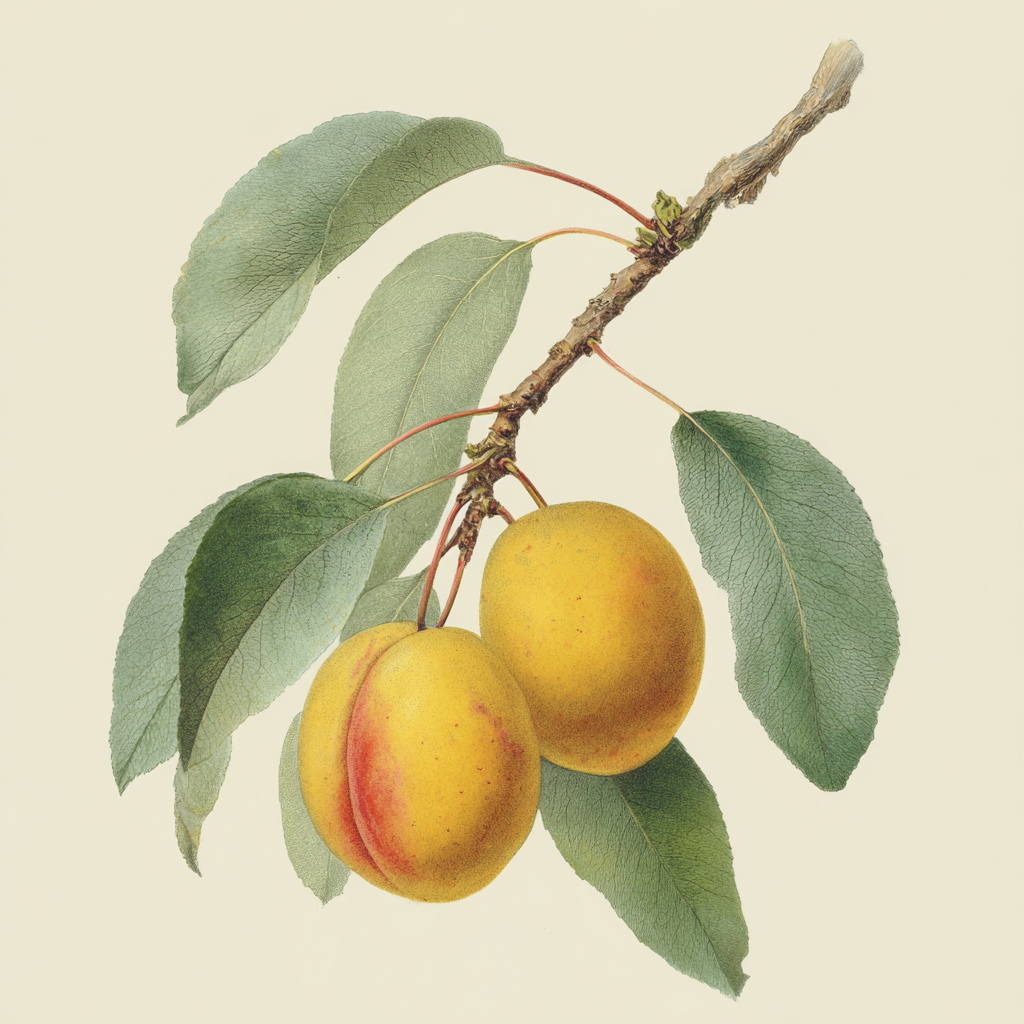
Have seeds for this? Add to inventory →A deciduous fruit tree producing orange, velvety-skinned stone fruits with sweet, aromatic flesh. Early spring blooms make apricots prone to frost damage, requiring careful site selection and cold-hardy varieties in northern zones.
Native Range
- Origin
- Central Asia to north-central and central China
- Native Habitat
- Mountain slopes, valleys, open woodlands, and well-drained continental foothill landscapes with cold winters and warm growing seasons
- Current Distribution
- Widely cultivated in temperate fruit-growing regions worldwide and not native outside its region of origin.
Growing Conditions
Sunlight
Full Sun
Water Needs
Moderate
Soil
Deep, well-draining loam; avoid heavy wet soil and frost pockets
Spacing
15 - 20 feet
Days to Maturity
3 - 5 years to first significant harvest
Growing Zones
Thrives in USDA Zones 5 - 8
Companion Planting
When to Plant
Transplant
Bare-root or container trees in early spring while dormant
Harvest
Pick when fruit is fully colored, aromatic, and gives slightly to pressure
Phenology (Natural Timing Cues)
Transplant
Plant dormant bare-root or container trees in early spring before bud break. Soil must be workable but still cool to encourage root establishment before leaf-out demands. Late planting stresses trees and reduces first-year establishment success.
- Soil workable and draining cleanly
- Buds still tight and dormant
- Forsythia beginning to show color
- Consistent daytime temperatures above freezing
Start Dates (Your Location)
Based on your saved growing zone and this plant's timing notes.
Best Planting Window
Spring window
Early spring
Plant as soon as the soil is workable so roots establish before heat arrives.
Autumn window
Usually skip autumn planting
Use spring unless you have locally grown nursery stock and enough mild weather for roots to establish.
Planting Method
Plant a grafted bare-root nursery tree. Seed-grown fruit trees are not true-to-type, so nursery stock is the reliable path to known fruit quality.
Critical Timing Note
Plant while dormant and before bud break so roots establish before leaves demand water.
Typical Harvest Window
June to July
Organic Growing Tips
Plant on a slight slope or raised area to reduce late-frost damage to early blossoms.
Prune for an open canopy with good airflow to reduce brown rot and canker pressure.
Thin fruit after natural drop so remaining apricots size up and branches are not overloaded.
Mulch broadly but keep mulch away from the trunk to protect the graft union and crown.
Common Pests
- Brown Rot
- Aphids
- Scale
- Plum Curculio
- Bacterial Canker
All pest management in Garden uses safe, organic, non-toxic methods only. No synthetic pesticides, ever.
Taxonomy
- Kingdom
- Plantae
- Family
- Rose family (Rosaceae)
- Genus
- Prunus
- Species
- Prunus armeniaca
Natural History
Apricots originated across the mountains and valleys of Central Asia, with the greatest genetic diversity found in the Tian Shan ranges where wild populations still persist. Chinese cultivation dates back over 4,000 years, with early varieties moving westward along Silk Road trade routes through Persia and Armenia. The species name 'armeniaca' reflects the Roman belief that apricots came from Armenia, though Armenia was a crucial waystation rather than the origin point. Islamic scholars and Persian poets celebrated dried apricots as portable sustenance for desert travel, while fresh apricots became garden treasures in oasis cities. European colonists brought apricot cultivation to California in the 1700s, where Mediterranean-like conditions proved ideal for commercial production. The tree's defining challenge—extraordinarily early spring blooms that risk frost damage—shaped cultivation patterns worldwide, favoring locations with late-spring warming and protected microclimates. This early-blooming nature makes apricots both more difficult to grow reliably than other stone fruits and uniquely valuable where climate conditions align.
Traditional Use
Historical records document apricot fruit, dried apricots, kernels, and kernel oil across Central Asian, Chinese, Persian, and Mediterranean traditional systems, with fruit valued for nutrition during travel and kernels used in various preparations despite toxicity concerns
Parts Noted Historically
Chinese traditional medicine - kernels
Classical Chinese texts record bitter apricot kernels (xingren) prepared in specific ways, while sweet kernels were used differently, with detailed processing methods to address toxicity
Central Asian pastoral cultures - dried fruit
Nomadic peoples relied on dried apricots as concentrated nutrition for long migrations, with drying techniques passed through generations and specific varieties selected for keeping quality
Persian and Armenian traditions - kernel oil
Historical accounts describe kernel oil extraction and preparation methods, with Persian physicians documenting both applications and cautions regarding kernel preparations
Apricot kernels contain cyanogenic compounds that release hydrogen cyanide when broken down; bitter kernels contain much higher levels than sweet kernels and historical processing methods addressed this toxicity
This information is provided for historical and educational purposes only and is not medical advice. Always consult a qualified healthcare professional before making decisions related to your health.
Morphology (Plant Structure & Identification)
Root System
Deep taproot with extensive lateral root spread; grafted trees develop according to rootstock characteristics with union visible above soil line
Stem
Single trunk with spreading, somewhat brittle branches requiring regular pruning for structure and disease prevention; bark smooth when young, developing fissures with age
Leaves
Heart-shaped with serrated margins, emerging bronze-green and turning deep green; early leaf drop or yellowing can signal water stress, disease pressure, or natural senescence
Flowers
Pink-tinged white blossoms appear before leaves in very early spring, often while frost danger persists; flowers are self-fertile but benefit from cross-pollination for better fruit set
Fruit
Orange stone fruits with velvety skin and orange flesh surrounding a large pit; harvest readiness shown by full color development, aromatic fragrance, and slight softening to gentle pressure
Known Varieties
Common cultivars worth knowing
- Best for: Zones 7-8 with extended growing season
Moorpark
Large, flavorful heirloom variety with excellent fresh eating quality but requires long warm season
- Best for: Northern regions with late spring frosts
Harcot
Cold-hardy Canadian variety with reliable bloom timing and good disease resistance
- Best for: Home orchards in zones 5-6
Goldcot
Self-fertile variety bred for consistent production and cold hardiness
- Best for: Challenging climates with short seasons
Chinese/Mormon varieties
Very cold-hardy selections with later bloom timing, smaller fruit but reliable production
Loading photo submission…