
Whitefly
Tiny (1 - 2 mm) white-winged sap-sucking insects that cluster in large numbers on leaf undersides. They excrete sticky honeydew, promote sooty mould, and can spread plant viruses. Populations build extremely rapidly in warm, sheltered conditions and are a particular challenge in greenhouses and polytunnels.
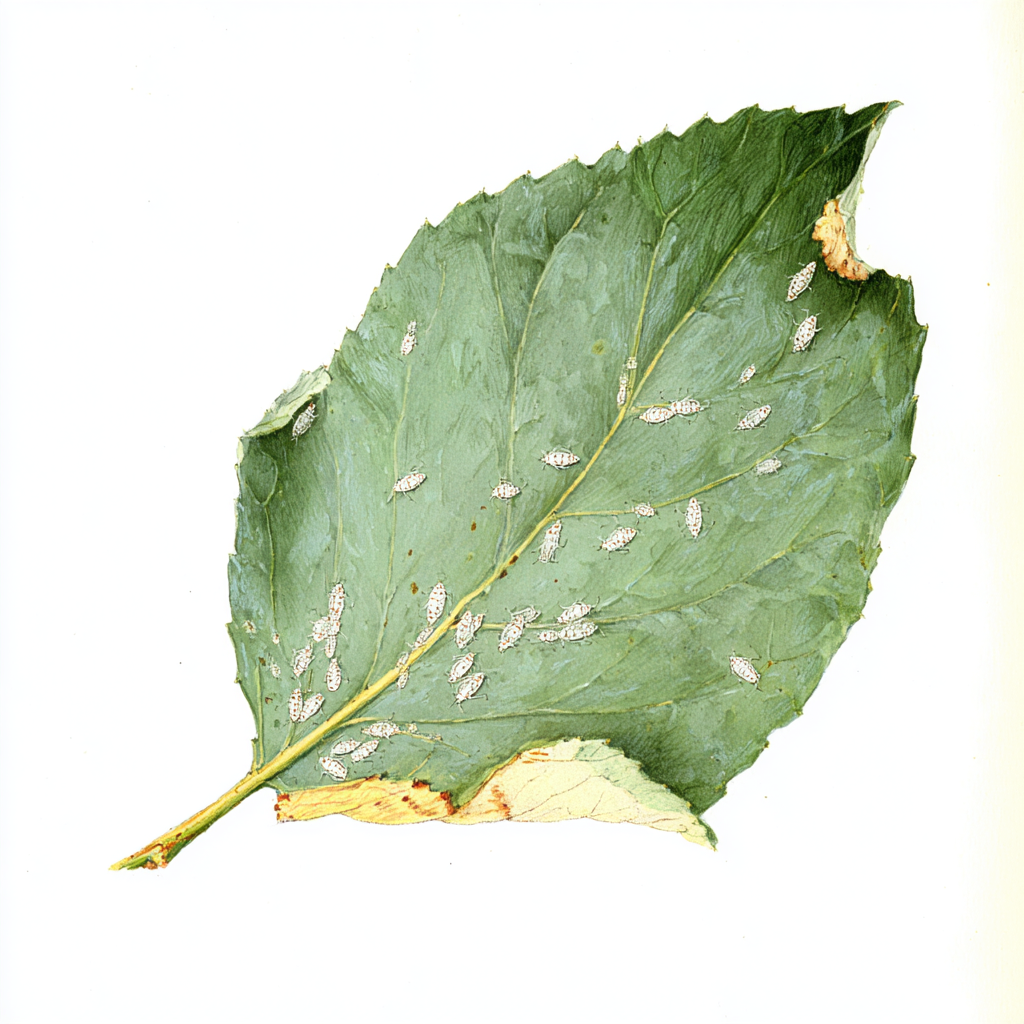
Symptoms to Look For
- Clouds of tiny white insects rise up when a plant is disturbed
- Sticky, shiny honeydew coating on upper leaf surfaces and everything beneath the plant
- Black sooty mould growing over honeydew deposits
- Mottled, pale, or yellowing leaves, especially on lower and older growth
- White scale-like pupae stuck to leaf undersides; fine pale stippling from feeding damage
Affected Plants
Organic Solutions
Yellow Sticky Traps
Whiteflies are strongly attracted to bright yellow. Hang sticky cards just above the canopy - essential for monitoring and can significantly reduce adult populations. Replace when covered. Most effective when deployed early before populations establish.
Neem Oil Spray
Diluted neem oil (2 tablespoons per litre) applied to leaf undersides smothers eggs and nymphs and deters adults from settling. Apply at dusk to avoid harming pollinators and beneficial insects. Repeat every 5–7 days for three consecutive weeks.
Kaolin Clay
Spray kaolin clay onto all plant surfaces. The fine particle film disorients whiteflies and reduces their ability to identify and settle on host plants. Completely harmless to soil and beneficial insects; reapply after rain.
Introduce Encarsia formosa
This tiny parasitic wasp lays its eggs inside whitefly pupae, killing them. Available from biological supply companies, it is highly effective in enclosed spaces such as polytunnels and greenhouses. Release at the first sign of infestation.
Reflective Mulch
Silver or reflective mulch disorients whiteflies and other flying insects by reflecting UV light upward, making it harder for them to locate host plants. Particularly useful for peppers and tomatoes in warm, sunny gardens.
Organic Remedies
Prevention
- Inspect purchased transplants thoroughly before introducing them - whiteflies are frequently introduced on greenhouse-raised plants
- Encourage predatory insects (ladybirds, lacewings, hoverflies) through diverse companion plantings throughout the garden — these insects are your permanent whitefly control
- Avoid high-nitrogen fertilising in midsummer, which produces lush tender growth that whiteflies prefer
- Apply compost tea as a foliar spray every two weeks — the beneficial microorganisms colonise leaf surfaces and compete with pest establishment
Garden, by Willowbottom recommends only organic, wildlife-friendly solutions. No synthetic pesticides, no harmful chemicals - ever.