
Flea Beetle
Tiny jumping beetles (1 - 3 mm) that create characteristic shotgun-blast patterns of small holes in leaves. Multiple species attack different crops; the crucifer flea beetle is most common in vegetable gardens. Seedlings are most vulnerable - adult beetles overwinter in leaf litter and emerge hungry in early spring.
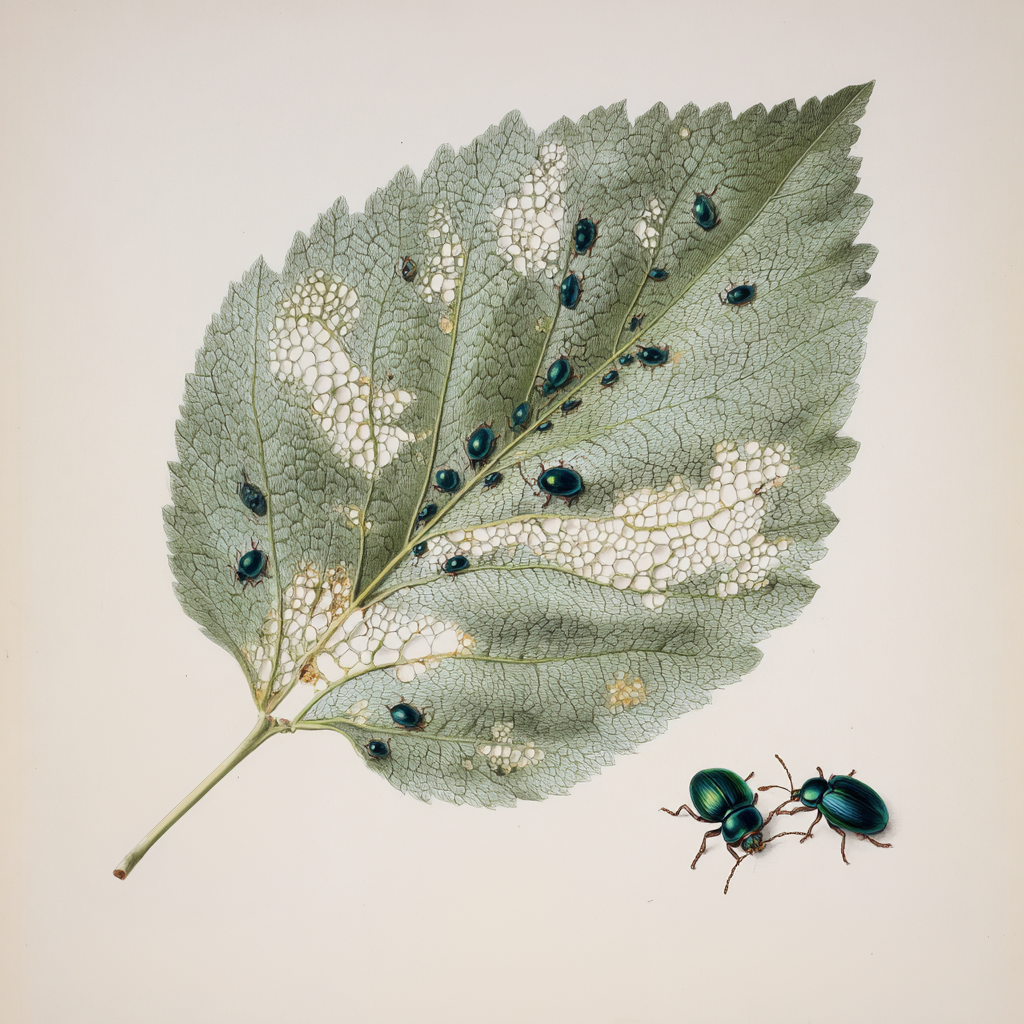
Symptoms to Look For
- Numerous small, round holes peppered uniformly across leaf surfaces - the "shothole" pattern
- Seedlings and recent transplants most severely affected; leaves may be almost entirely consumed
- Tiny dark beetles that jump explosively when the plant is disturbed
- Severe damage slowing or killing seedlings; established plants usually grow through moderate damage
- Pitting or scarring on the surface of root crops in species that feed below ground
Affected Plants
Organic Solutions
Row Covers
Lightweight insect mesh placed over transplants or seeds at the time of planting prevents adult beetles from reaching plants. Most effective in spring and early autumn when flea beetle pressure peaks. Remove covers as plants mature and become tolerant.
Diatomaceous Earth
Dust food-grade diatomaceous earth over the soil surface around vulnerable seedlings as a targeted barrier. Apply as a targeted barrier only — it harms all insects including beneficial ones, so keep applications narrow and focused. Reapply after rain or heavy dew.
Sticky Yellow Traps
Flea beetles are attracted to yellow. Yellow sticky cards placed among young transplants at canopy height reduce adults during peak damage periods and provide population monitoring.
Kaolin Clay Spray
Regular kaolin clay application creates a fine white coating on plant surfaces that physically deters flea beetles from landing and feeding. Apply every 7 days to seedlings and young transplants. One of the most effective and completely non-toxic options available.
Prevention
- Delay transplanting brassica seedlings by 2–3 weeks after the spring flush to miss the peak population of hungry overwintered adults
- Remove brassica crop residues promptly after harvest - adults overwinter in old stems and dead leaf litter
- Plant aromatic companions such as basil, mint, and catnip near susceptible seedlings to mask host-plant volatiles
- Create habitat for ground beetles — they are voracious flea beetle predators. A mulched perennial border or log pile near the vegetable garden supports permanent ground beetle populations
Garden, by Willowbottom recommends only organic, wildlife-friendly solutions. No synthetic pesticides, no harmful chemicals - ever.