
Lemongrass
HerbCymbopogon citratus
Have seeds for this? Add to inventory →Lemongrass is a tropical grass grown for its fragrant, lemony stalks used extensively in cooking. Its strong citrus scent acts as a natural mosquito and flying insect deterrent, making it a useful companion near outdoor seating and vegetable plots.
Native Range
- Origin
- Lemongrass is a tropical Old World grass associated with South and Southeast Asian origin, though cultivated lineages obscure the exact wild range.
- Native Habitat
- Warm grasslands, open slopes, disturbed tropical ground, and seasonally wet-to-dry margins.
- Current Distribution
- Widely cultivated in warm climates; not native outside its region of origin.
Growing Conditions
Sunlight
Full Sun
Water Needs
Moderate
Soil
Rich, well-draining loam; pH 6.0 - 7.0
Spacing
24 - 36 inches
Days to Maturity
Harvest stalks from 6 months after planting
Growing Zones
Thrives in USDA Zones 9 - 11
Companion Planting
When to Plant
Transplant
Spring after last frost in temperate zones; anytime in tropics
Harvest
Harvest outer stalks when thick as a finger; twist and pull from base
Phenology (Natural Timing Cues)
Transplant
Lemongrass is a tropical grass that demands sustained warmth - not just a mild spell, but genuinely settled heat. In temperate zones this means waiting well past last frost until summer warmth is firmly established. Even a single night below 50°F can stunt a newly planted division and halt growth for weeks. In borderline zones, container growing is strongly preferred because it lets the plant be moved under cover during cool spells without losing an established garden plant.
- Lilacs have been past bloom for at least two weeks.
- Daytime temperatures are reliably above 70°F with warm nights.
- Warm-season grasses and annuals in the garden are growing vigorously.
- Hardened-off lemongrass blades stay upright and firm through a full warm day outdoors.
Start Dates (Your Location)
Based on your saved growing zone and this plant's timing notes.
Best Planting Window
Spring window
After your last frost
Plant once frost risk has passed and spring conditions are settled.
Autumn window
Usually skip autumn planting
Use spring unless you have locally grown nursery stock and enough mild weather for roots to establish.
Planting Method
Use nursery-grown planting stock rather than treating this as a standard seed-starting crop.
Critical Timing Note
Plant after cold risk has passed so roots can establish without chilling or stalling.
Organic Growing Tips
In cool climates, grow in large containers that can be moved indoors before first frost.
Divide large clumps every 2 - 3 years and replant in fresh compost-enriched soil.
The essential oil in crushed lemongrass deters mosquitoes and many flying insects naturally.
Water regularly during the growing season; reduce watering significantly in autumn as growth slows.
Common Pests
- Rust
- Leaf Blight
- Aphids
All pest management in Garden uses safe, organic, non-toxic methods only. No synthetic pesticides, ever.
Taxonomy
- Kingdom
- Plantae
- Family
- Grass family (Poaceae)
- Genus
- Cymbopogon
- Species
- Cymbopogon citratus
Natural History
Cymbopogon citratus is one of more than 50 species in the Cymbopogon genus, a group of aromatic tropical grasses native to South Asia and Southeast Asia. Lemongrass likely originated in Sri Lanka or southern India and spread through cultivation across Southeast Asia, Africa, and the tropics. Its aromatic character comes primarily from citral, a compound formed from two isomers - geranial and neral - that is also the dominant aroma compound in lemon balm, lemon verbena, and lemon myrtle, despite those plants being from entirely different families. The Kerala and Tamil Nadu regions of southern India became centers of Cymbopogon essential oil production supplying European fragrance and pharmaceutical markets from the 19th century onward. Lemongrass oil entered the British Pharmaceutical Codex by the early 20th century. The closely related citronella grasses (Cymbopogon nardus and C. winterianus) have been cultivated for insect-repellent oil since at least the 19th century and represent a separate commercial tradition within the same genus.
Traditional Use
Lemongrass occupies a distinctive position as a foundational cooking aromatic in Southeast Asian cuisine while simultaneously supporting a significant essential oil industry centered in South India. Its citral chemistry connects cooking, fragrance, and folk practice across the entire tropical region where it grows.
Parts Noted Historically
Thai, Vietnamese, and Southeast Asian Cuisine - Stalk bases
Lemongrass is a foundational aromatic in Thai tom yum soup, Vietnamese pho broth, Indonesian and Malaysian curry pastes (rempah), and Cambodian kroeung spice paste. Its role in these cuisines is not interchangeable with any other ingredient - the citral-driven fragrance occupies a specific aromatic space that no other plant replicates. Lemongrass has been cultivated in kitchen and temple gardens across Southeast Asia for centuries.
South Indian Essential Oil Production - Leaves
The Kerala and Tamil Nadu regions developed commercial Cymbopogon essential oil production from at least the 17th century. East Indian lemongrass (Cymbopogon flexuosus) and West Indian lemongrass (C. citratus) were both cultivated for citral-rich oil used in fragrance, food flavoring, and later pharmaceutical applications. The Indian essential oil industry supplied European markets from the 19th century and lemongrass oil entered the British Pharmaceutical Codex in the early 20th century.
Ayurvedic and South Asian Household Use - Leaves
Lemongrass is documented in Ayurvedic texts and traditional South Asian folk practice as a tea plant. In Sri Lanka and southern India, it is still a common household tea plant, brewed informally as a warming and aromatic drink. The aromatic properties were understood empirically long before the citral chemistry was identified, and the plant was grown in virtually every household garden in the regions where it is native.
West African and Caribbean Fever Grass Tradition - Leaves
Lemongrass was introduced to West Africa and the Caribbean through Portuguese and colonial trade networks and was rapidly adopted into local household herb traditions. In West Africa, fresh lemongrass leaves are made into a common tea called fever grass and the plant is found in nearly every household garden. In Jamaica and across the Caribbean, the same preparation became standard domestic medicine and a common offered drink - a folk adoption that demonstrates the remarkable ease with which the plant transferred into new cultural settings.
Culinary lemongrass stalks and leaf tea are safe. Concentrated lemongrass essential oil is much stronger and can irritate skin and mucous membranes.
This information is provided for historical and educational purposes only and is not medical advice. Always consult a qualified healthcare professional before making decisions related to your health.
Morphology (Plant Structure & Identification)
Root System
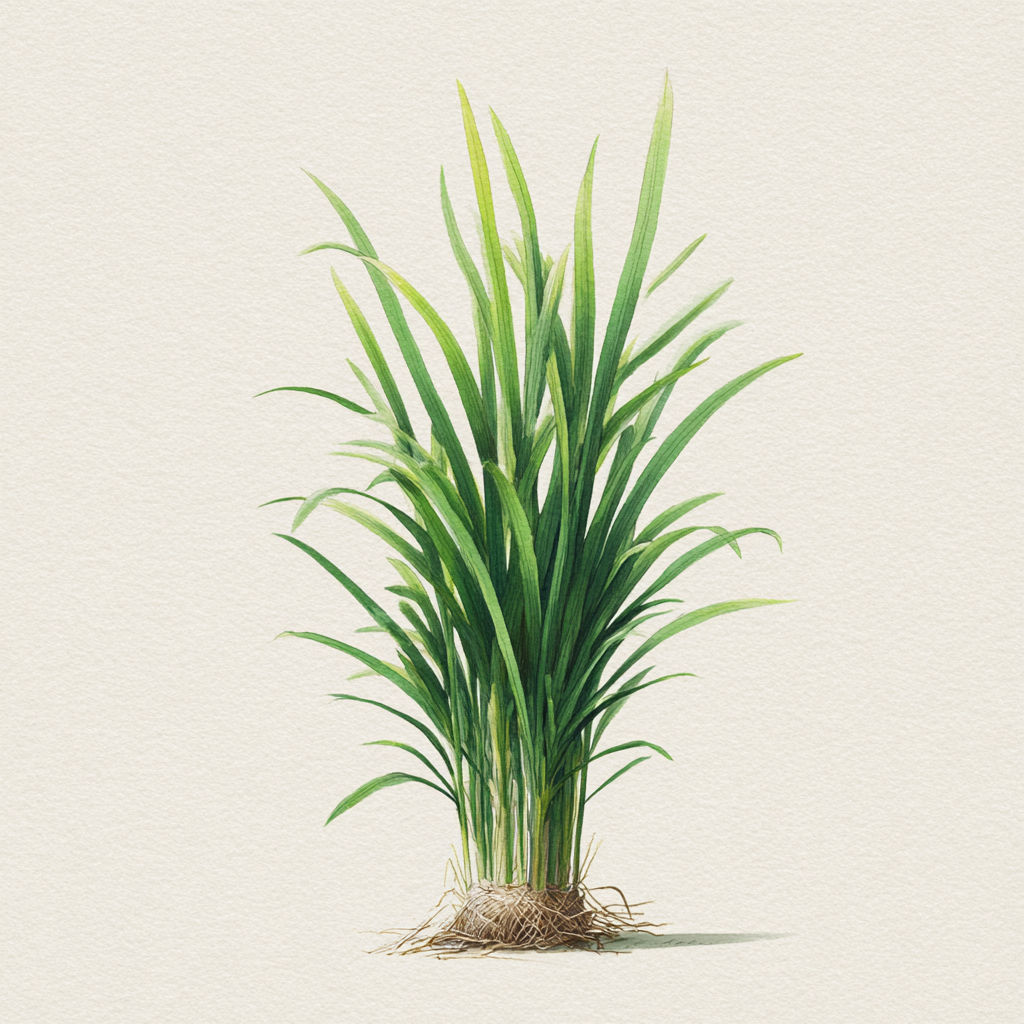
Fibrous grass roots form a dense crown that expands into clumps. Roots need warmth and steady moisture during active growth.
Stem
The usable stalk is a swollen leaf base rather than a woody stem. Outer stalks can be twisted or cut from the clump when thick enough.
Leaves
Long arching blue-green blades with sharp edges and a strong lemon scent when crushed. Leaves can cut skin if handled roughly.
Flowers
Rarely flowers in many home gardens, especially where grown as an annual. In tropical conditions, grasses may form airy seed heads.
Fruit
Seed is uncommon in typical culinary plantings. Gardeners usually propagate lemongrass by rooted stalks or divisions.
Known Varieties
Common cultivars worth knowing
- Best for: cooking
East Indian Lemongrass
Common culinary lemongrass with strong citrus stalks.
- Best for: containers, warm climates
West Indian Lemongrass
Widely grown Cymbopogon citratus type for kitchen use.
- Best for: aromatic plantings
Java Citronella
Related Cymbopogon type grown more for citronella oil than cooking.
- Best for: warm-climate gardens
Cochin Lemongrass
Robust tropical strain associated with strong oil content.
Loading photo submission…