Voles and Moles
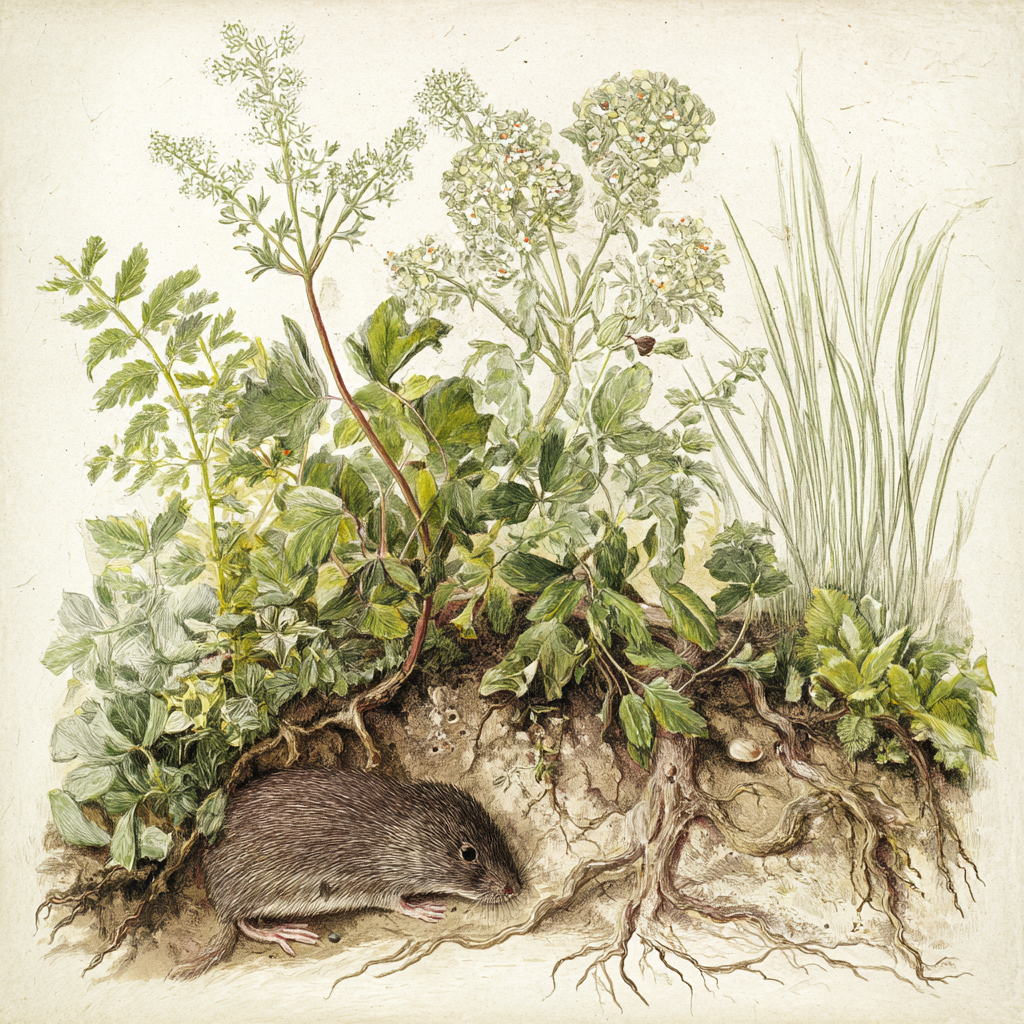
Voles are small rodents that create surface and subsurface tunnels and feed on roots, bulbs, and tubers. Moles are insectivores that eat grubs and earthworms - their tunnelling can uproot plants but they do not eat plant material. Both are present in most gardens; voles cause the primary plant damage.
Symptoms to Look For
- Surface runways - narrow (2 - 3 cm), pressed-flat tunnels in grass or through mulch - indicate voles
- Plants wilting or collapsing despite adequate watering - roots have been eaten below ground
- Root vegetables, bulbs, and tubers with gnawed cavities when harvested
- Large mounds of excavated soil pushed to the surface at intervals (moles)
- Plants pulled down into the soil or apparently sinking - signs of tunnelling beneath
Affected Plants
Organic Solutions
Hardware Cloth Lining
Line raised beds and planting areas with 6 mm hardware cloth laid flat 15 - 30 cm below soil surface, with sides turned up to create a below-ground basket. This prevents voles accessing roots from below and is the most reliable long-term protection for root crops.
Castor Oil Drench
A solution of castor oil and dish soap applied as a soil drench is a well-documented mole and vole repellent. Castor oil is absorbed by the soil and creates a persistent odour that drives burrowing animals away. Apply every 2 - 3 weeks during active seasons.
Encourage Predators
Owls, kestrels, foxes, weasels, and cats are highly effective vole predators. Install owl and kestrel nest boxes, allow perching posts, and avoid all rodenticides - they kill the predators that would otherwise regulate vole populations.
Reduce Dense Ground Cover
Voles prefer moving under the cover of dense vegetation. Mow grass short around garden borders and maintain a cleared strip between long grass and planting beds, exposing voles to predators during movement.
Prevention
- Line the base of all raised beds with hardware cloth - the most reliable and durable protection for root crops against vole damage
- Avoid deep mulch directly around the base of trees and shrubs in winter, where voles will nest and access bark for feeding
- Build habitat for predators proactively: owl boxes, perching posts, and undisturbed boundary areas with native vegetation
Garden, by Willowbottom recommends only organic, wildlife-friendly solutions. No synthetic pesticides, no harmful chemicals - ever.