
Tomato Hornworm
The larval stage of the Five-Spotted Hawk Moth, this caterpillar grows up to 10 cm long and is bright green with white diagonal stripes and a distinctive rear horn. Its camouflage is excellent and it can strip a tomato plant rapidly before being noticed.
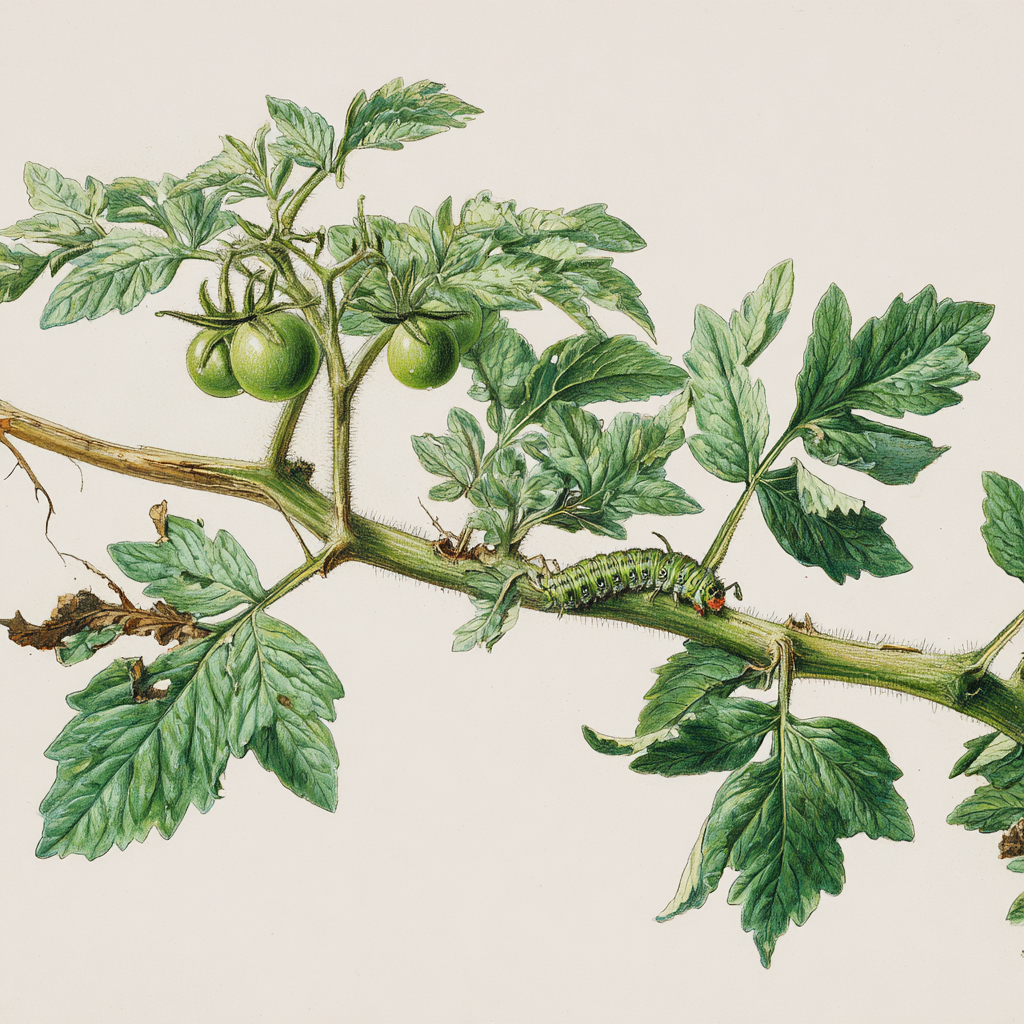
Symptoms to Look For
- Large sections of leaves completely consumed, often leaving only the main stem
- Dark green barrel-shaped droppings on leaves and soil directly below the plant
- Large, ragged bite marks on ripening fruit
- Damage that appears suddenly and progresses very quickly
- Dark green caterpillar blending into stems, usually found on the upper third of the plant
Affected Plants
Organic Solutions
Hand-Picking
Inspect plants at dusk and dawn when hornworms are most visible. Wear gloves and drop them into a bucket of soapy water. Use a UV torch at night - hornworms fluoresce bright green under blacklight, making them easy to spot.
Bacillus thuringiensis (Bt)
Bt kurstaki is a naturally occurring soil bacteria that, when ingested by caterpillars, produces proteins toxic to their gut. Spray foliage thoroughly, focusing on areas where feeding damage is visible. Effective only on actively feeding larvae; breaks down in UV light within a few days.
Kaolin Clay
Apply kaolin clay spray to foliage as a preventive barrier. The particle film deters adult moths from laying eggs on coated leaves. Reapply after rain or every 7–10 days through peak season. Harmless to beneficial insects and soil.
Encourage Parasitic Wasps
Braconid wasps (Cotesia congregatus) lay eggs inside hornworms. If you find a hornworm covered in small white cocoons like grains of rice, leave it - the emerging wasps will parasitise future generations. Plant dill, parsley, and fennel to attract and sustain them.
Prevention
- Lightly cultivate the soil around plants in autumn to expose pupae to birds and cold temperatures
- Plant dill, parsley, and fennel from the beginning of the season to establish populations of braconid wasps and other beneficial insects before hornworm season
- Inspect plants weekly from midsummer - a single hornworm found at 2 cm can be removed before any visible damage occurs
- Build a diverse beneficial insect habitat throughout the garden — parasitic wasps, ground beetles, and predatory bugs naturally keep hornworm populations in check in a biologically active garden
Garden, by Willowbottom recommends only organic, wildlife-friendly solutions. No synthetic pesticides, no harmful chemicals - ever.