Squash Bug
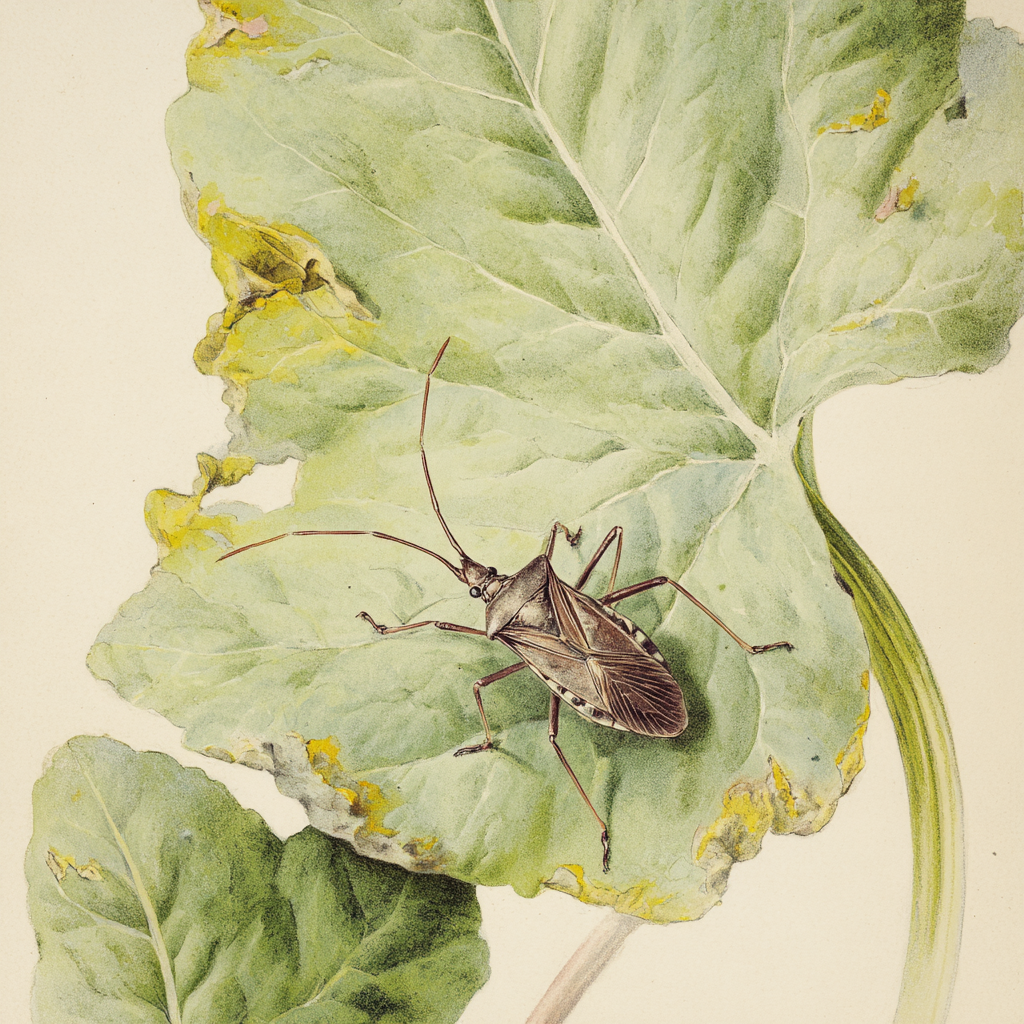
A flat, grey-brown bug about 15 mm long that overwinters as an adult in garden debris and emerges in late spring to attack cucurbit crops. By piercing plant tissue and injecting toxic saliva, it can cause rapid vine death - a problem compounded by its ability to carry cucurbit yellow vine disease.
Symptoms to Look For
- Vines wilting rapidly and failing to recover even when watered
- Yellow spots on leaves that enlarge, turn brown, and become dry and papery
- Bronze or yellow discolouration spreading across vine sections
- Clusters of shiny copper-coloured eggs in neat diamond patterns on leaf undersides
- Adults and nymphs congregating on stems, particularly near the crown
Affected Plants
Organic Solutions
Remove Egg Clusters
Inspect leaf undersides weekly from late May. Squash bug eggs are copper-coloured ovals laid in precise clusters - scrape them off with an old credit card, tape, or sticky roller and destroy them. Removing eggs before they hatch is by far the most impactful control measure.
Trap Boards
Lay pieces of cardboard or wooden boards near squash plants in the evening. Adults shelter under them at dusk. Collect and dump them into soapy water each morning before temperatures rise and beetles become active.
Diatomaceous Earth
Apply food-grade diatomaceous earth as a targeted barrier around the base of plants and near the crown where bugs congregate. Apply as a targeted barrier only — it harms all insects including beneficial ones, so avoid broadcasting it widely. Reapply after rain or irrigation.
Kaolin Clay
Spray kaolin clay onto all plant surfaces — the particle coating makes the plant surface inhospitable to squash bugs without harming soil life or beneficial insects. Most effective applied early and reapplied regularly through the season.
Insecticidal Soap
Insecticidal soap is effective against young nymphs. Spray directly on small nymphs shortly after egg hatch, covering the bodies entirely. Adults have a thicker cuticle that makes soap spray less effective.
Prevention
- Clear all plant debris thoroughly at the end of the season - adult squash bugs overwinter in crop residues, wood piles, and debris near the garden
- Start cucurbits from transplants to give plants a 4–5 week head start before the main pest emergence
- Use row covers from planting until flowering begins; the protected early period is when populations establish
- Plant dill, nasturtiums, and marigolds near cucurbits to attract parasitic wasps and other beneficial insects that prey on squash bug eggs and nymphs
Garden, by Willowbottom recommends only organic, wildlife-friendly solutions. No synthetic pesticides, no harmful chemicals - ever.