Septoria Leaf Spot
A fungal disease caused by Septoria lycopersici that is one of the most common foliar diseases of tomatoes worldwide. While it rarely kills plants outright, it causes progressive defoliation that reduces photosynthesis, weakens plants, and reduces yield. The spores live in infected debris in the soil and are splash-distributed to lower leaves.
Symptoms to Look For
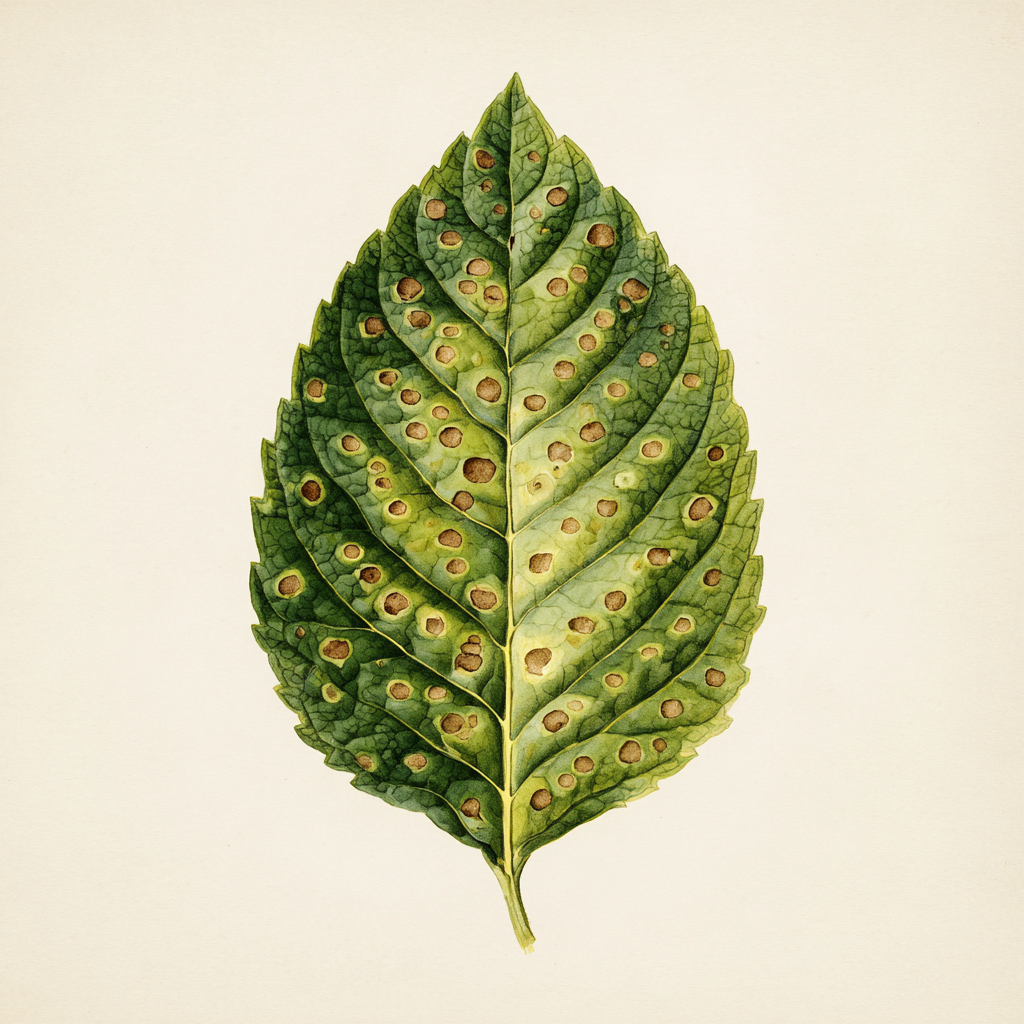
- Small, circular spots with white or grey centres and distinctive dark brown borders
- Tiny black dots visible within spot centres - these are the fungal fruiting bodies (pycnidia)
- Spots appearing first on the lowest, oldest leaves and advancing progressively upward
- Heavy spotting causing leaves to yellow fully and drop prematurely
- Leaves appearing tattered with masses of spots coalescing
Affected Plants
Organic Solutions
Remove Affected Leaves
Remove spotted leaves as soon as they are noticed, working from the base upward. Place in household waste - never compost. Regular leaf removal dramatically slows the upward progression of the disease through the season.
Copper-Based Fungicide
Copper spray applied preventively at transplanting and every 7–10 days provides significant protection. After symptoms appear, copper slows spread but does not cure affected tissue. Apply immediately after removing infected leaves. Use sparingly — copper accumulates in soil over time and can harm earthworms and soil biology at high concentrations.
Thick Mulch
A deep straw or wood chip mulch (8 - 10 cm) around the base of all nightshade plants prevents rain from splashing soil particles - and the spores living in them - onto the lower leaves. This single measure substantially slows disease progression.
Prevention
- Mulch generously around the base of all tomato family crops to prevent soil splash - this addresses the primary infection route
- Water only at the base of plants and never use overhead irrigation for tomatoes, especially in the evening
- Rotate tomato crops on a 3–4 year schedule and clear all crop debris from the bed at the end of each season
- Apply compost tea as a foliar spray every two weeks from transplant time — the beneficial microorganisms colonise leaf surfaces and create a biological barrier that competes with Septoria spore germination
Garden, by Willowbottom recommends only organic, wildlife-friendly solutions. No synthetic pesticides, no harmful chemicals - ever.