Rust
A large group of highly host-specific fungal diseases producing characteristic rust-orange powdery pustules on leaf surfaces. Each rust species infects a particular host plant. Leek rust, allium rust, and mint rust are among the most common in vegetable and herb gardens. Rust weakens plants and causes premature leaf drop in severe cases.
Symptoms to Look For
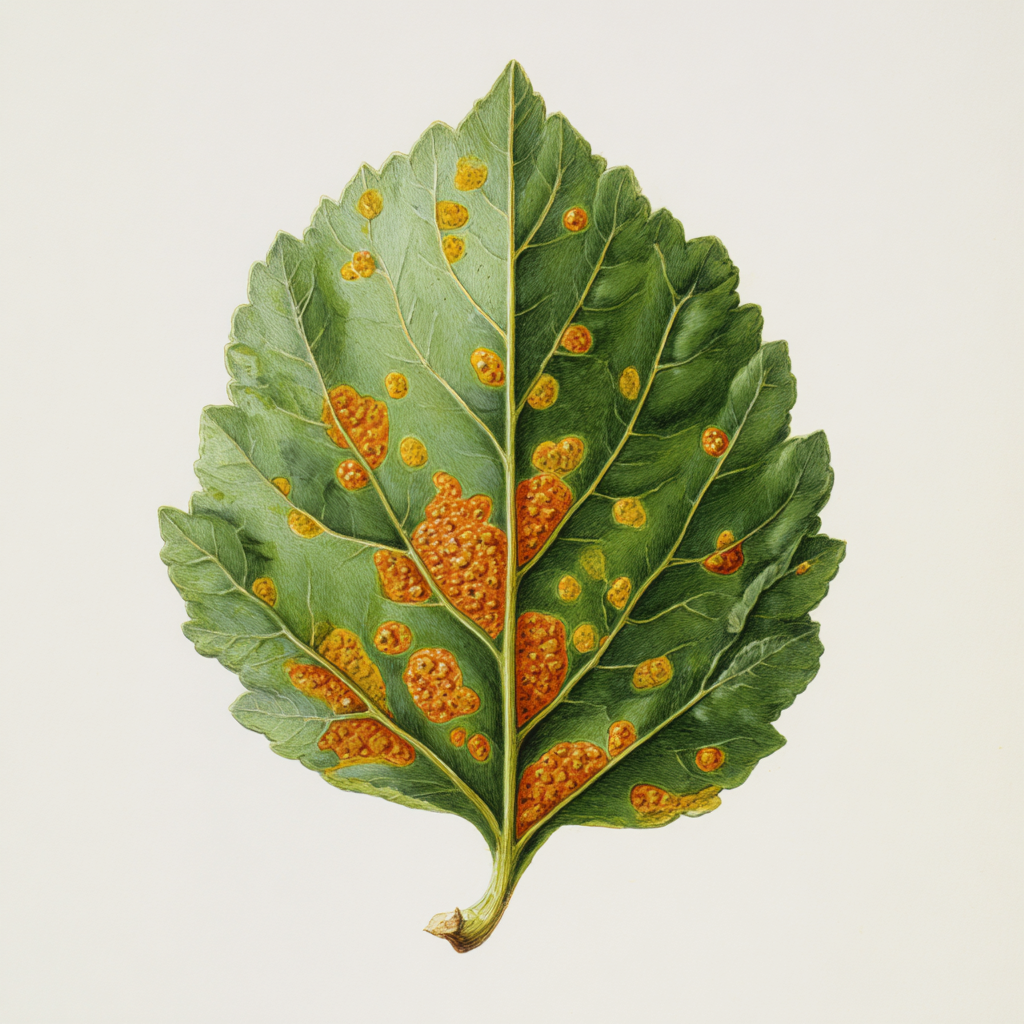
- Orange, yellow, or rust-brown powdery pustules on the underside of leaves
- Corresponding pale yellow or chlorotic spots on the upper leaf surface above the pustules
- Leaves yellowing, browning, and dropping prematurely under heavy infection
- Fine orange-brown powder released when pustules are touched
- Overall weakening of the plant and reduced vigour in severe infections
Affected Plants
Organic Solutions
Remove Affected Leaves
Remove and dispose of all leaves showing rust pustules in household waste. This removes sporulating tissue and slows spread to adjacent leaves and plants. Do not handle other plants without washing hands first.
Elemental Sulphur Spray
Wettable elemental sulphur is an organically approved treatment effective against rust fungi. Apply at the first sign of infection and repeat every 7–14 days. Do not apply when temperatures exceed 30°C as phytotoxicity (leaf burn) may result. Do not apply within 2 weeks of an oil spray.
Neem Oil
Neem oil applied preventively, or in the very early stages of infection, disrupts the fungal life cycle and slows pustule formation. Apply every 7 - 10 days through the growing season on susceptible crops.
Organic Remedies
Prevention
- Rotate alliums (garlic, onion, leek) on a 3–4 year cycle - rust spores overwinter in infected leaf debris and in the soil
- Harvest allium leaves regularly to reduce canopy density and age, which creates the humid microclimate rust needs
- Avoid wetting foliage when watering alliums, mint, and other rust-susceptible plants
- Spray aerated compost tea as a foliar application in spring before symptoms appear — the beneficial microorganisms compete with rust spores on leaf surfaces and significantly reduce infection rates on alliums grown in healthy, compost-rich soil
Garden, by Willowbottom recommends only organic, wildlife-friendly solutions. No synthetic pesticides, no harmful chemicals - ever.