Root Rot
A collective term for root disease caused by water moulds and fungi (primarily Pythium and Phytophthora) that attack roots in waterlogged or poorly-drained soils. It is almost entirely a condition-driven problem - the pathogens are ubiquitous in soil, but only cause disease when plants are kept too wet. Improving drainage resolves most cases.
Symptoms to Look For
- Plants wilting despite moist or wet soil
- Yellowing, pale, or stunted foliage on plants that are otherwise being well cared for
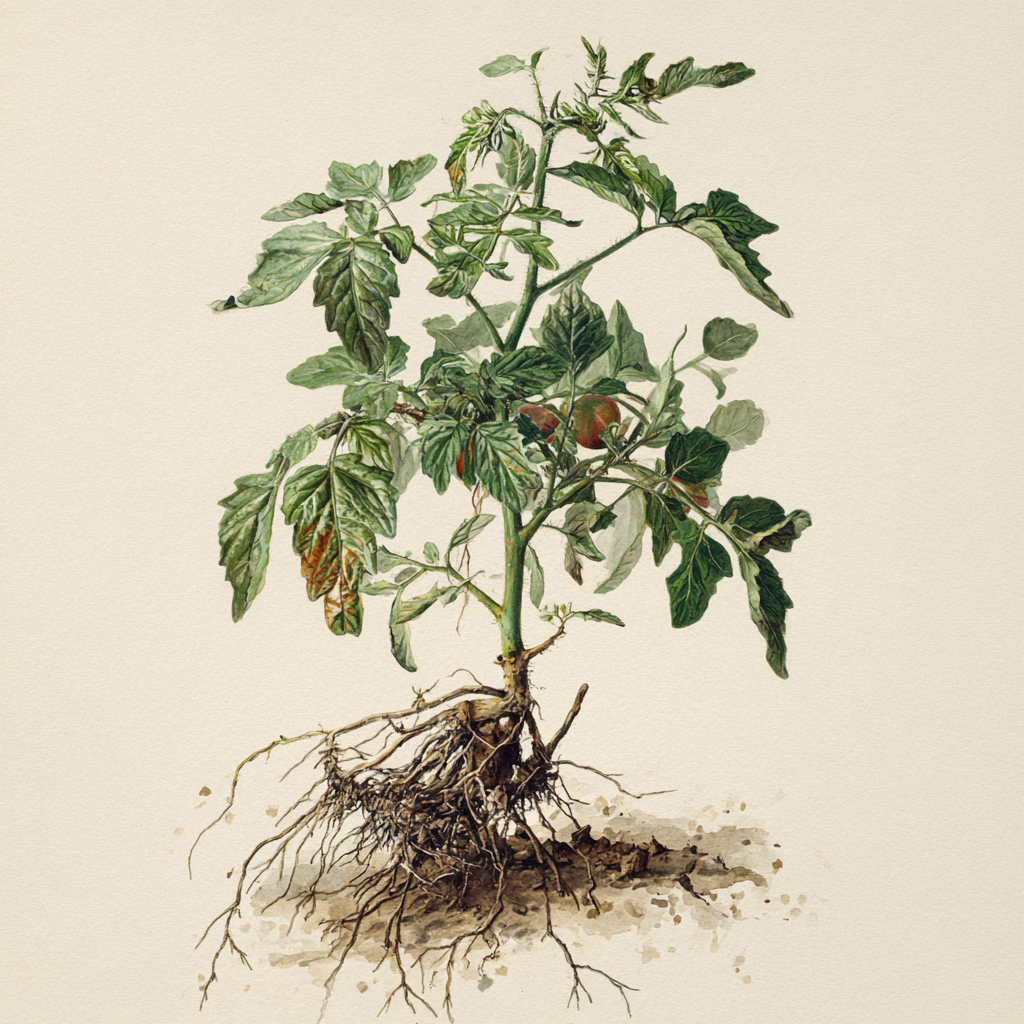
- Brown, mushy, foul-smelling roots when the plant is removed from the soil
- Gradual decline over days to weeks with no recovery
- Roots that are dark, slimy, and disintegrate when handled (healthy roots are white and firm)
Affected Plants
Organic Solutions
Improve Drainage
The primary intervention is to eliminate the cause: improve soil drainage by incorporating organic matter, building raised beds, or establishing drainage channels. No treatment is effective while roots remain in waterlogged conditions.
Hydrogen Peroxide Drench
A solution of 1 part 3% hydrogen peroxide to 4 parts water applied as a soil drench oxygenates the root zone and can kill Pythium and Phytophthora on contact. Repeat twice weekly during recovery to support surviving root tissue.
Beneficial Microbe Inoculants
Trichoderma fungi, mycorrhizal inoculants, and beneficial bacteria (Bacillus subtilis) applied to the root zone suppress root pathogens and support root recovery. Use as a drench when replanting in previously affected areas.
Organic Remedies
Prevention
- Never water until the top 2–3 cm of soil is dry to the touch - most root rot in gardens is caused by chronic overwatering, not by external infection
- Build raised beds with free-draining compost-rich soil in any area with heavy clay or water-retaining ground
- Incorporate perlite, coarse grit, or sharp sand when growing moisture-sensitive plants such as rosemary, lavender, and garlic
- Inoculate planting holes with mycorrhizal fungi when transplanting — mycorrhizal networks help roots access water and nutrients efficiently and strengthen root resistance to Pythium and Phytophthora. Use alongside generous compost additions for best results
Garden, by Willowbottom recommends only organic, wildlife-friendly solutions. No synthetic pesticides, no harmful chemicals - ever.