
Late Blight
The most destructive disease of tomatoes and potatoes worldwide, caused by the water mould Phytophthora infestans - the same organism responsible for the Irish Potato Famine. In cool, wet weather it can kill an entire plant within days. Once it is established in a planting, complete loss is possible.
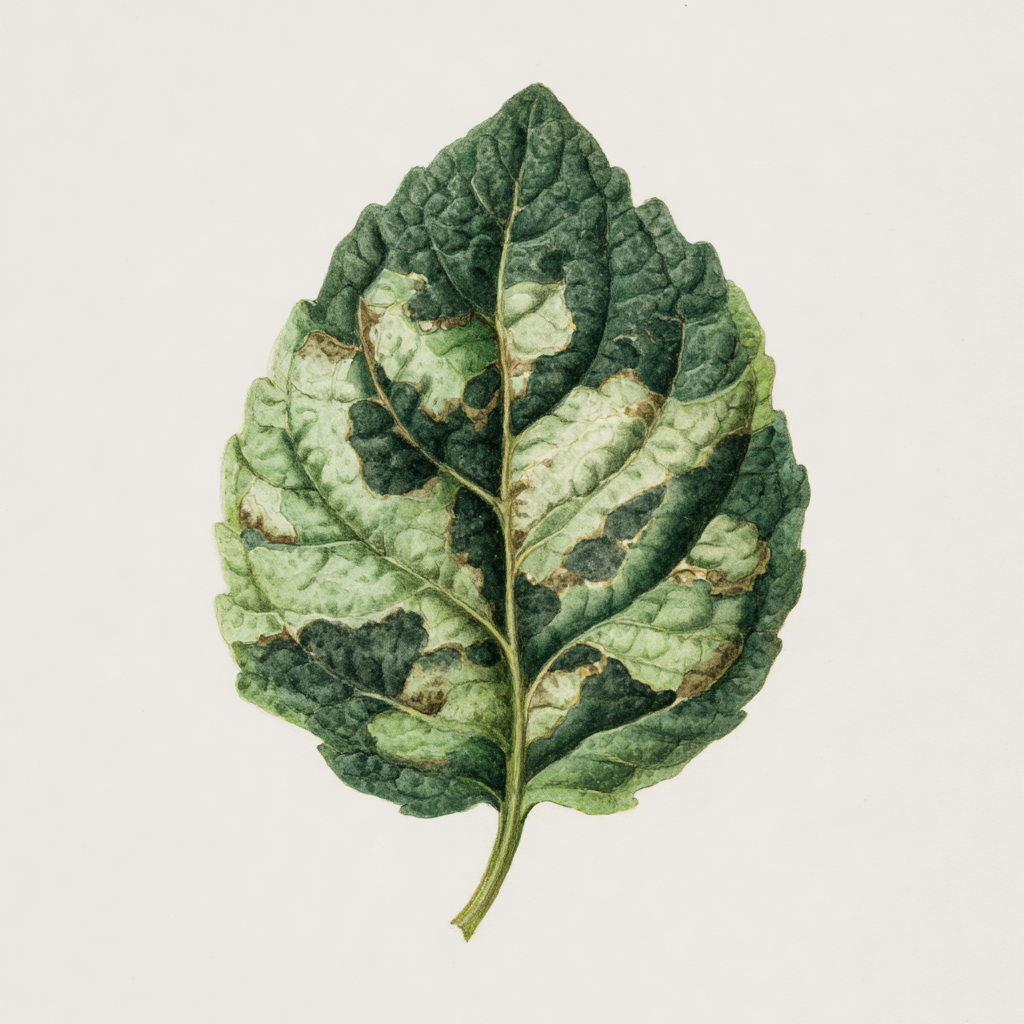
Symptoms to Look For
- Large, irregular, dark greasy-looking patches on leaves, often with a pale greenish halo
- White, downy sporulation on the underside of affected patches during humid nights
- Dark brown to black lesions on stems that girdle and cause stem collapse
- Firm, dark brown patches spreading across fruit
- Entire plants collapsing very rapidly under cool, wet conditions
Affected Plants
Organic Solutions
Remove and Destroy All Infected Material Immediately
Late blight spreads by airborne spores at extraordinary speed. At the first sign of symptoms, remove all infected foliage and fruit, bag them, and place in household waste. Never compost. Wash hands and disinfect tools between plants with a bleach solution.
Preventive Copper Spray
Copper sprays must be applied before infection to be effective — they protect leaf surfaces against spore germination but cannot cure established infections. Apply weekly during high-risk periods (cool temperatures 10–20°C, wet or foggy conditions). Use sparingly — copper accumulates in soil over time and can harm earthworms and soil biology at high concentrations.
Improve Airflow and Staking
Ensure all tomato plants are staked and vertical, with no leaves touching the soil, and that plants have adequate spacing. Late blight requires sustained leaf wetness to germinate - reducing this time is critical to slowing spread.
Organic Remedies
Prevention
- Choose blight-tolerant tomato varieties where late blight is a known annual problem in your area
- Never leave tomato or pepper debris in the soil over winter - Phytophthora oospores survive in crop residues
- Avoid overhead watering entirely and time irrigation for early morning so foliage dries quickly
- Build soil health consistently — Phytophthora is suppressed in soils with high biological diversity. Large annual additions of compost and regular compost tea applications create the microbial environment that naturally antagonises this pathogen
Garden, by Willowbottom recommends only organic, wildlife-friendly solutions. No synthetic pesticides, no harmful chemicals - ever.