Fusarium Wilt
A soil-borne fungal disease caused by Fusarium oxysporum with many crop-specific strains. The fungus enters through the roots and colonises the vascular system, blocking water transport. It can persist viable in soil for 20 years or more, making rotation planning critical for affected beds.
Symptoms to Look For
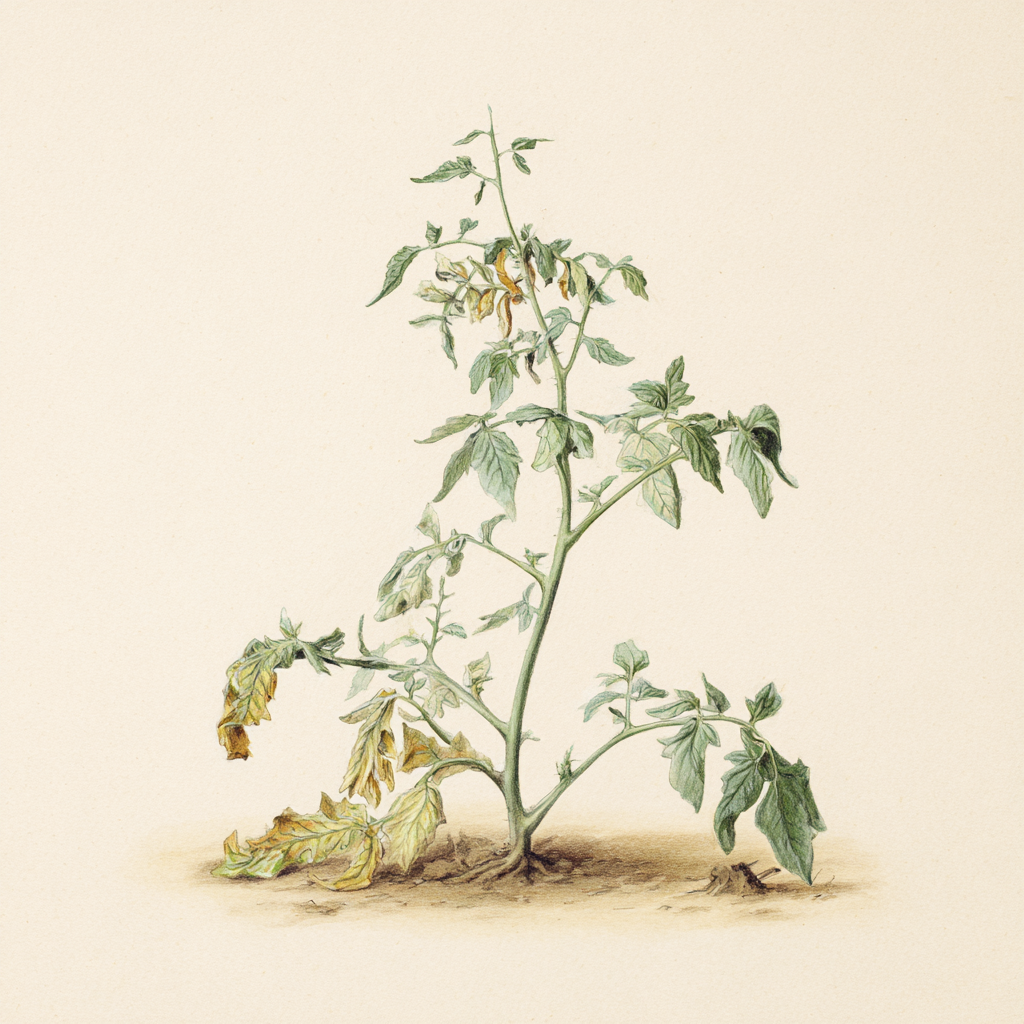
- One-sided yellowing and wilting - often only one branch or one half of the plant wilts first
- Brown discolouration in stem tissue visible when the stem is cut lengthwise, particularly near the base
- Stunted growth and progressive wilting despite adequate watering
- Lower leaves yellowing before upper ones, then entire plant decline
- Pink or white fungal growth at the stem base in warm, humid conditions
Affected Plants
Organic Solutions
Remove Infected Plants
Remove affected plants with as much root and surrounding soil as possible. Do not compost - the fungus persists in infected roots for many years. Dispose of in household waste.
Soil Solarisation
Cover the infected bed with clear plastic sheeting for 4 - 6 weeks in summer. The trapped solar heat raises soil temperatures to levels that significantly reduce Fusarium populations in the top 15 cm. Most effective in hot, sunny climates.
Trichoderma Inoculant
Trichoderma is a beneficial soil fungus naturally antagonistic to Fusarium. Apply a commercial Trichoderma inoculant to the root zone when transplanting susceptible crops to help suppress Fusarium populations and protect new root growth.
Raise Soil pH
Fusarium prefers slightly acidic soils. Adding lime, wood ash, and ensuring good calcium levels through compost creates conditions less favourable to the pathogen. Aim for a soil pH of 6.5 - 7.0 in affected beds.
Organic Remedies
Prevention
- Grow Fusarium-resistant tomato varieties - look for 'F' designation in variety names, indicating tested resistance to Fusarium oxysporum race 1
- Practice strict crop rotation with at least 4 years between the same plant family in any bed
- Avoid overwatering and ensure excellent drainage - saturated soils favour Fusarium spore germination and root infection
- Build soil biological diversity through consistent compost additions and compost tea applications — Trichoderma and other Fusarium-antagonistic organisms thrive in soils rich in organic matter and microbial diversity. A living soil is your most durable Fusarium suppression strategy
Garden, by Willowbottom recommends only organic, wildlife-friendly solutions. No synthetic pesticides, no harmful chemicals - ever.