
Downy Mildew
A water mould (oomycete) disease that, despite its name, is not closely related to powdery mildew. It thrives in the opposite conditions - cool, wet, and humid weather - and different strains are specific to different plant families. It can be confused with powdery mildew but the spore growth is on the underside of leaves, not the top.
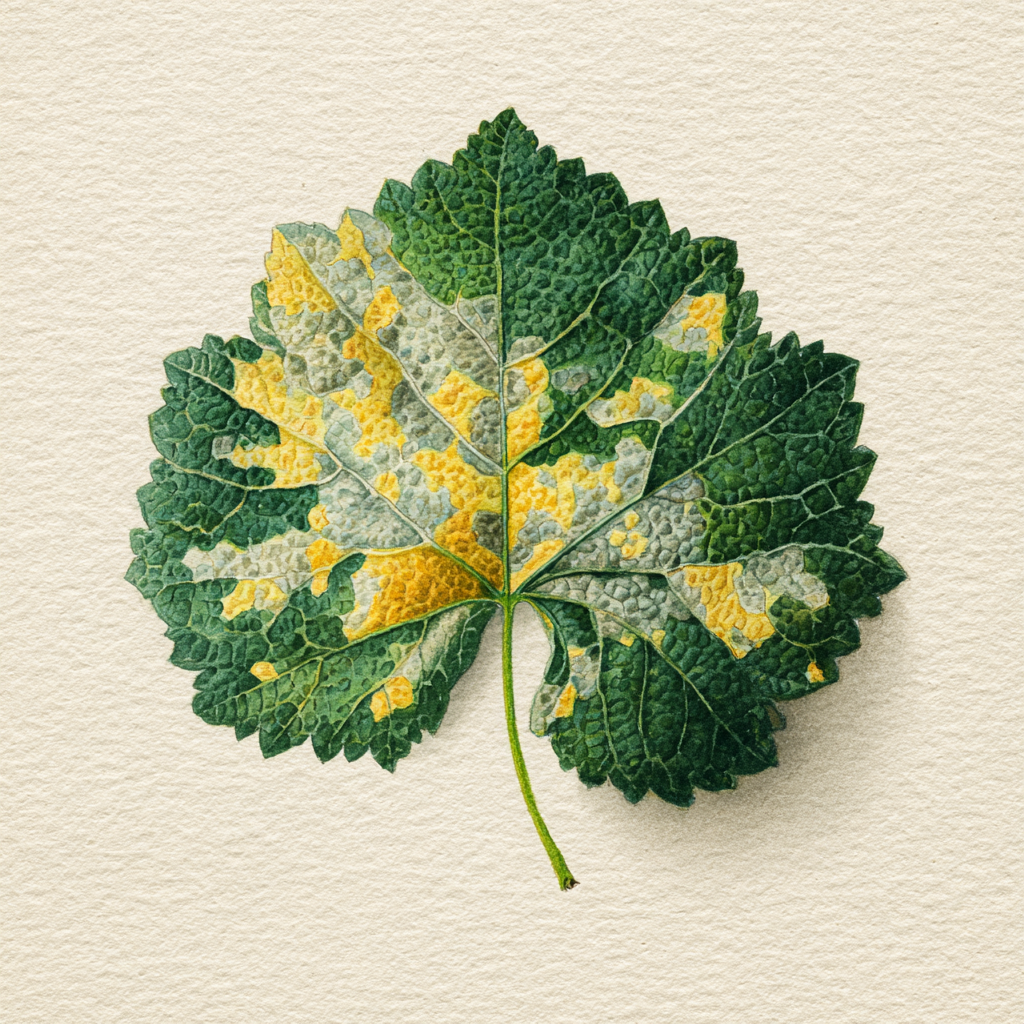
Symptoms to Look For
- Angular yellow or pale green patches on the upper leaf surface, bounded by leaf veins
- Grey-white, purple, or lavender fuzzy sporulation on the underside of the yellow patches
- Patches enlarging and coalescing, eventually turning brown as affected tissue dies
- Leaves wilting, browning, and dropping in severe cases
- Fluffy white fuzz visible on leaf undersides on humid mornings
Affected Plants
Organic Solutions
Remove Infected Leaves
Remove all visibly affected foliage immediately. Bag it and dispose of in household waste - do not compost. Prompt removal reduces the volume of spores being produced and spread.
Copper-Based Spray
Copper hydroxide or copper octanoate sprays applied preventively, or at the very first sign of symptoms, provide significant protection. Apply in the early morning to allow foliage to dry before evening. Use sparingly — copper accumulates in soil over time and can harm earthworms and soil biology at high concentrations.
Improve Ventilation
Increase plant spacing and avoid wetting foliage. Downy mildew requires extended leaf wetness to germinate. Improve airflow around susceptible crops like basil and spinach through regular thinning and generous spacing.
Potassium Bicarbonate Spray
A spray of potassium bicarbonate (1 tablespoon per litre of water with a drop of soap) raises the surface pH of leaves, inhibiting spore germination. More effective as a preventive than as a cure. Apply every 7 - 10 days in humid weather.
Organic Remedies
Prevention
- Water only in the morning so foliage is completely dry by nightfall - downy mildew spores need several hours of leaf wetness to germinate
- Choose downy mildew resistant varieties where available, particularly for basil (which is extremely susceptible to basil downy mildew) and spinach
- Rotate susceptible crops to a different bed each year and avoid planting the same family in wet, shaded positions
- Apply compost tea as a foliar spray every two weeks during humid conditions — the beneficial microorganisms in well-made compost tea compete directly with downy mildew spores and help prevent them establishing on leaf surfaces
Garden, by Willowbottom recommends only organic, wildlife-friendly solutions. No synthetic pesticides, no harmful chemicals - ever.