Deer
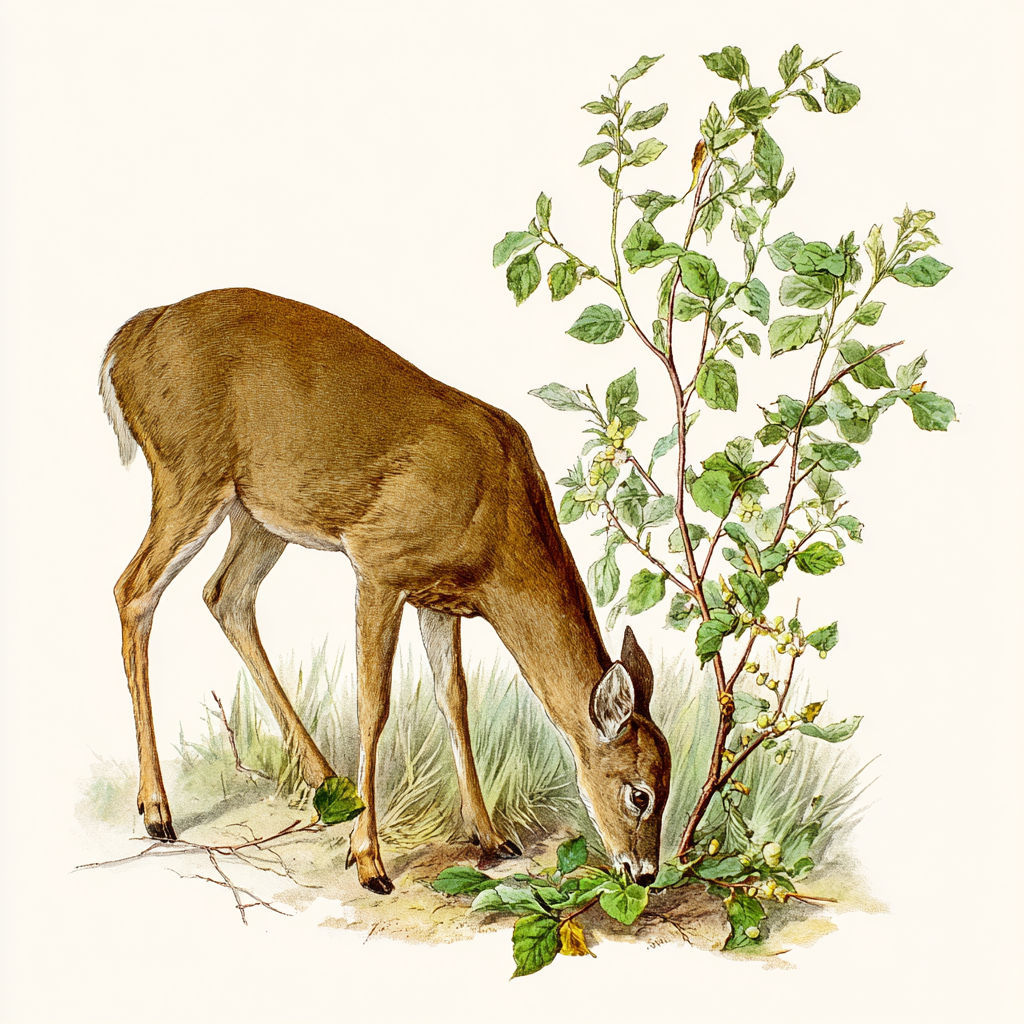
Deer can cause severe damage to gardens overnight, browsing a very wide range of plants. They are most active at dusk and dawn and are more destructive in late winter and early spring when natural forage is scarce. A single deer visit can destroy beds that took months to establish, and once deer find a food source they return reliably.
Symptoms to Look For
- Plants stripped of leaves and new growth overnight
- Ragged, torn leaf edges - deer have no upper front teeth and tear rather than cut cleanly
- Shrubs and young trees with bark rubbed or stripped at a consistent height
- Hoof prints (crescent-shaped slots) in soft soil near damaged plants
- Browsing damage concentrated at a consistent height of 1 - 1.5 m from the ground
Affected Plants
Organic Solutions
Deer Fencing
An 8-foot fence is the only fully reliable deer deterrent. Deer are excellent jumpers - a standard 6-foot fence will be cleared. An electric fence baited with peanut butter teaches deer to avoid the garden very effectively. A double fence of two lower fences set 1 m apart also works as deer are reluctant to jump into a narrow space.
Deer Repellent Sprays
Products based on putrefied egg solids or hot pepper exploit deer's acute sense of smell. Reapply after every rain and monthly through the growing season. Rotate between different products to prevent deer habituating to any single scent.
Motion-Activated Sprinklers
Motion-triggered sprinklers such as Scarecrow startle deer with a sudden burst of water. Very effective when relocated every few days as deer learn precise boundary positions. Works best along established deer travel paths.
Aromatic Barrier Plants
Plant strongly aromatic herbs along the garden perimeter - rosemary, lavender, sage, yarrow, and bee balm. Deer strongly dislike intensely scented plants and tend to avoid areas where these grow thickly.
Prevention
- Install permanent fencing before deer become habituated to the garden - once they establish a feeding route they are very persistent
- Deer are most active at dusk and dawn - harvest vulnerable crops in the evening during periods of high pressure
- Grow particularly susceptible crops (lettuce, peas, beans) in enclosed raised beds with mesh covers where deer pressure is severe
Garden, by Willowbottom recommends only organic, wildlife-friendly solutions. No synthetic pesticides, no harmful chemicals - ever.