
Cabbage Worm
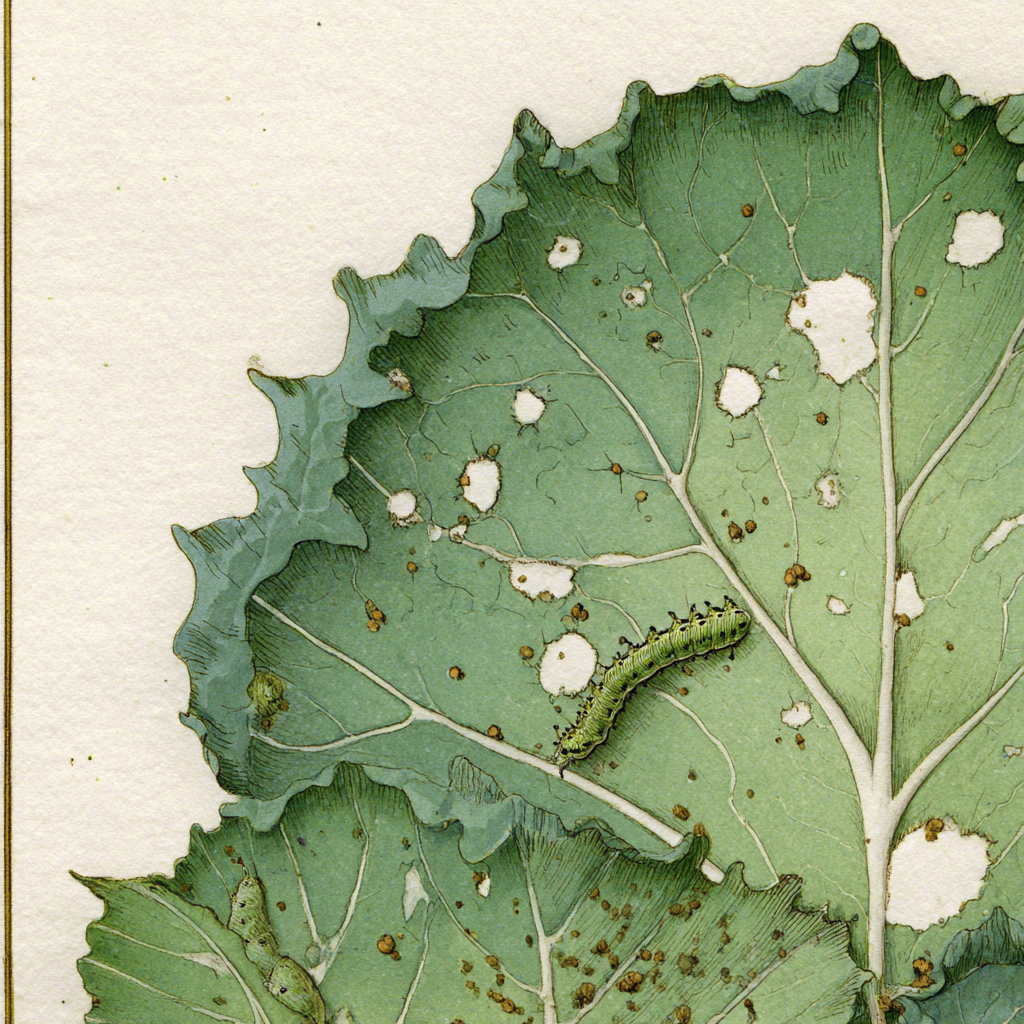
The pale green caterpillar of the Small White butterfly (Pieris rapae), typically 2 - 3 cm long and covered in fine hairs. Adults are the familiar white butterflies seen fluttering around brassicas in summer. Both larvae and eggs are superbly camouflaged against the plants they infest.
Symptoms to Look For
- Ragged, irregular holes chewed through leaves - midribs and larger veins often left intact
- Small round green droppings scattered across leaves and tucked into leaf folds
- Small white butterflies hovering and landing repeatedly on brassica leaves
- Pale green larvae found on the underside of leaves, often near the feeding damage
- Head of broccoli or cauliflower tunnelled into and soiled with droppings
Affected Plants
Organic Solutions
Fine Mesh Row Covers
Insect netting or horticultural fleece placed over brassicas immediately after transplanting prevents adult butterflies from reaching leaves to lay eggs. This is the single most effective method - physical exclusion is close to 100% successful when applied early.
Bacillus thuringiensis (Bt)
Spray Bt kurstaki on all leaf surfaces as soon as larvae are detected. The bacteria must be ingested, so thorough coverage of leaf undersides where small larvae feed is essential. Reapply after rain or every 5 - 7 days.
Hand-Picking Eggs and Larvae
Inspect leaf undersides for pale yellow oval eggs laid singly and flatten them. Larger larvae can be hand-picked into soapy water. Most effective for small gardens or when checking becomes a brief daily routine.
Kaolin Clay
Spray kaolin clay onto brassica leaves as a barrier that confuses adult butterflies seeking plants to lay eggs on. Most effective on young plants before heavy pressure establishes. Reapply after rain.
Aromatic Herb Companions
Interplanting brassicas with thyme, sage, dill, and rosemary is thought to confuse egg-laying females by masking the crucifer host-plant scent. Not fully reliable alone but reduces pressure when combined with other measures.
Organic Remedies
Prevention
- Install insect mesh from the day of planting - once butterflies find the plants, control becomes reactive
- Rotate brassicas to a new bed each season to prevent caterpillar populations building in the same soil
- Avoid leaving brassica stubble in the ground after harvest - remove or dig in promptly
- Attract ground beetles, parasitic wasps, and predatory bugs by planting dill, fennel, yarrow, and marigolds in and around the brassica bed — a diverse beneficial insect population is your most durable long-term control
Garden, by Willowbottom recommends only organic, wildlife-friendly solutions. No synthetic pesticides, no harmful chemicals - ever.