
Botrytis (Gray Mold)
Botrytis cinerea is one of the most widespread fungal diseases affecting both garden plants and stored produce. It infects primarily through damaged, dying, or senescent tissue and spreads rapidly in cool, humid, still-air conditions. Soft fruits - strawberries, raspberries, grapes - are particularly vulnerable at harvest.
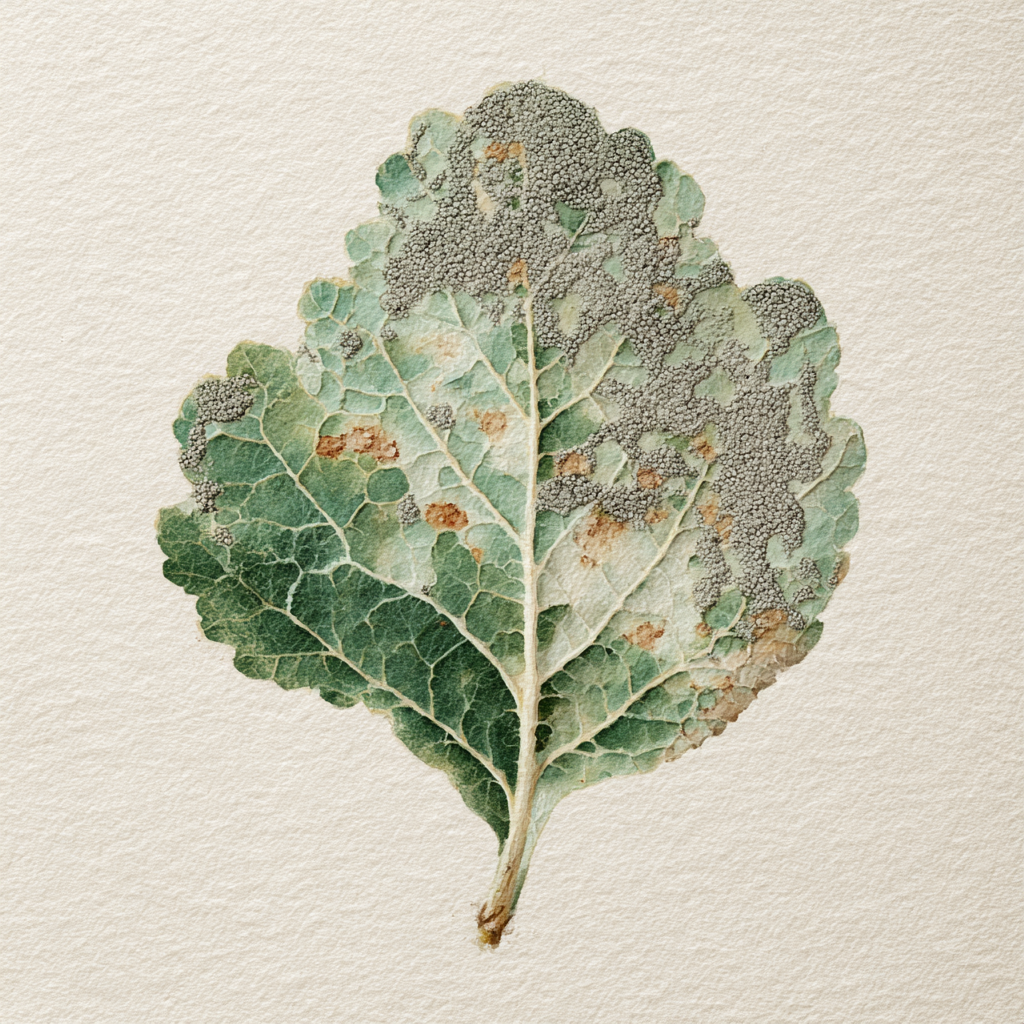
Symptoms to Look For
- Fuzzy grey-brown mould growing on leaves, stems, flowers, or fruit
- Infected tissue becoming soft, brown, and water-soaked beneath the mould
- Flowers and petals turning brown and developing grey fuzz rather than dropping cleanly
- Strawberries, raspberries, and grapes rotting with characteristic grey mould coating
- A puff of grey-brown spores released when infected material is disturbed
Affected Plants
Organic Solutions
Remove Affected Material Immediately
At the first sign of grey mould, remove all infected tissue carefully and dispose of in household waste. Handle infected parts gently - disturbing grey mould releases massive clouds of spores. Act before the mould sporulates if possible.
Improve Air Circulation
Botrytis thrives in still, humid air. Thin dense foliage, remove overlapping leaves, and ensure adequate spacing between plants. A light, open canopy is the most reliable long-term preventive measure.
Potassium Bicarbonate Spray
Potassium bicarbonate spray raises leaf surface pH, inhibiting Botrytis spore germination. Apply every 7 - 10 days in humid weather as a preventive. More effective before infection establishes than after.
Avoid Overhead Watering
Water at the base of plants. Wet foliage and wet flowers are the primary driver of Botrytis spread. Allow the canopy to dry completely. Where possible, use drip irrigation.
Prevention
- Remove spent flowers and ageing foliage promptly - Botrytis enters primarily through senescent or damaged tissue, not healthy living plant material
- Harvest strawberries and soft fruits at peak ripeness; do not leave overripe fruit on the plant as it is the primary source of inoculum
- Space plants generously and avoid dense planting schemes in humid gardens
- Apply compost tea as a foliar spray during high-risk periods — plants with biologically active leaf surfaces are measurably more resistant to Botrytis. The beneficial organisms in compost tea occupy the micro-sites where Botrytis spores would otherwise germinate
Garden, by Willowbottom recommends only organic, wildlife-friendly solutions. No synthetic pesticides, no harmful chemicals - ever.