
Black Spot
A fungal disease primarily associated with roses but also affecting cane fruits in the garden (as related Diplocarpon species). It thrives in warm, wet conditions and can cause severe defoliation. The fungus overwinters on fallen leaves and infected canes, and spreads by rain splash in spring.
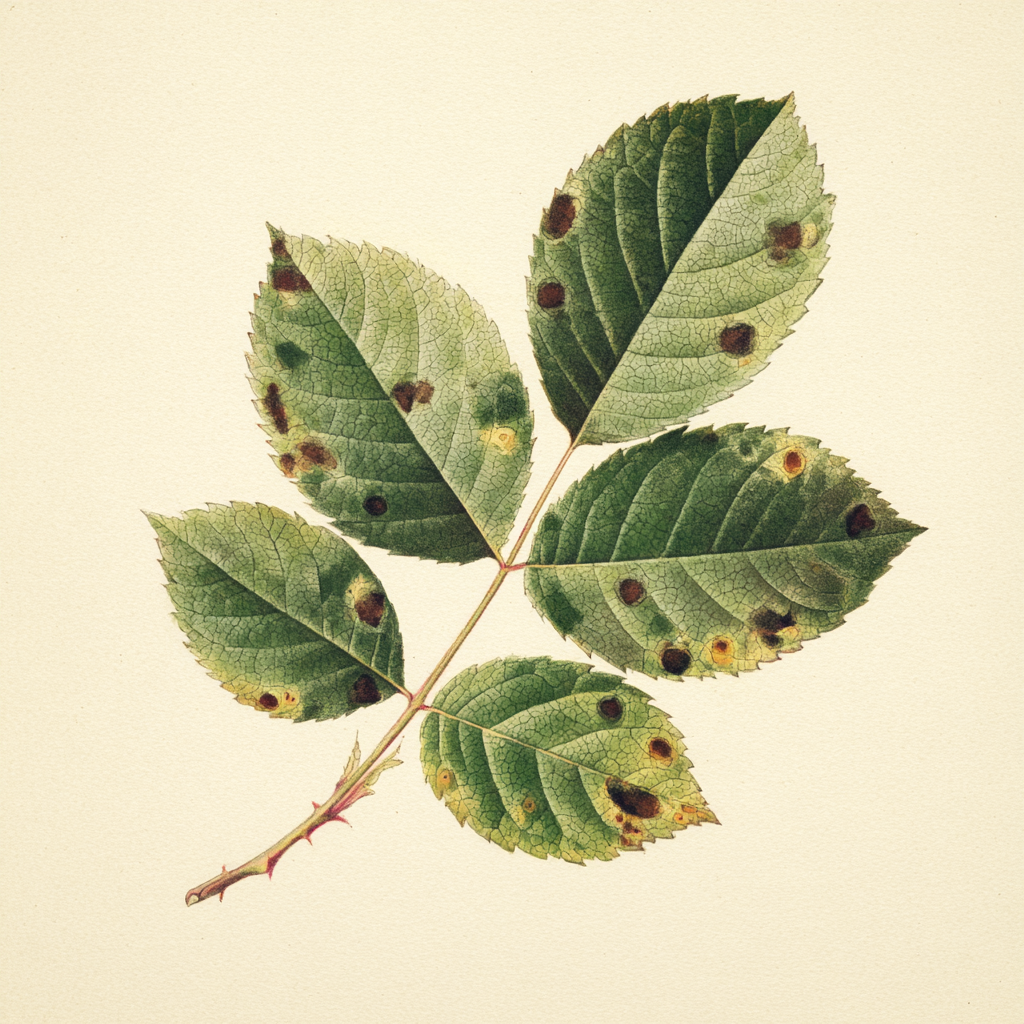
Symptoms to Look For
- Circular black spots with fringed or feathery edges on leaf surfaces - the irregular edge distinguishes it from other leaf spots
- Yellow halos of chlorotic tissue surrounding the black spots
- Leaves yellowing fully around the spots and dropping prematurely, often when plants look otherwise healthy
- Severe defoliation during warm, wet seasons
- Dark spots or lesions on young green canes in severe cases
Affected Plants
Organic Solutions
Remove Fallen Leaves
Collect and dispose of fallen infected leaves from beneath canes and brambles throughout the growing season and entirely at the end of the season. Overwintering spores on fallen leaves are the primary source of spring infection.
Baking Soda or Potassium Bicarbonate
Spray a solution of 1 tablespoon of potassium bicarbonate per litre of water onto foliage in early spring before symptoms appear. The alkaline surface pH inhibits spore germination. Reapply every 7 - 14 days in wet conditions.
Neem Oil
Regular neem oil applications throughout the growing season suppress black spot by disrupting the fungal life cycle. Most effective when begun as a preventive before infection establishes.
Copper Spray
Copper fungicide applied in early spring as buds begin to open provides strong preventive protection. Follow up every 2–3 weeks through the main growing season. Use sparingly — copper accumulates in soil over time and can harm earthworms and soil biology at high concentrations.
Organic Remedies
Prevention
- Choose black spot resistant cane fruit varieties where available
- Prune out and dispose of infected canes entirely at the end of the season - they carry overwintering inoculum
- Mulch around the base of canes to prevent spore splash from fallen leaves back onto new growth in spring
- Apply compost tea as a foliar spray in early spring before symptoms appear — the beneficial microorganisms naturally suppress black spot spore germination and are most effective as a preventive measure at the start of the season
Garden, by Willowbottom recommends only organic, wildlife-friendly solutions. No synthetic pesticides, no harmful chemicals - ever.