Black Cherry
FlowerPrunus serotina
Have seeds for this? Add to inventory →Black cherry is a large native tree of extraordinary ecological importance, supporting more than 400 species of caterpillars and moths - more than any tree genus except oak. Its white flower racemes in spring are magnets for pollinators, and its small black cherries in late summer feed an enormous diversity of birds and mammals. A true keystone species of eastern North American forests, it establishes quickly, produces significant timber, and provides critical linkages in woodland food webs that few other trees can match.
Growing Conditions
Growing Conditions
Sunlight
Full Sun to Partial Shade
Water Needs
Low to Moderate
Soil
Adaptable to a wide range of soils; prefers well-drained loam but tolerates poor, rocky, and sandy soils; pH 5.5-7.0
Spacing
240 to 360 inches
Days to Maturity
First flowering in 5-8 years; fruit production begins at 10 years; maximum fruit production at 30-100 years
Growing Zones
Growing Zones
Thrives in USDA Zones 3 - 9
When to Plant
When to Plant
Transplant
Plant balled-and-burlapped or container-grown nursery stock in early spring; transplants best when young
Harvest
Harvest black cherries in July-August when fully ripe and dark; use for jams, jellies, and wines; remove stones before eating raw
Phenology (Natural Timing Cues)
Transplant
Plant black cherry in early spring before bud break while soil is cool and moist. It establishes readily from young nursery stock and grows quickly - often 2-3 feet per year in good conditions. Fall planting is possible in zones 5-9 but spring is preferred for maximum establishment time.
- Forsythia in full bloom and soil no longer frozen
- Soil workable to shovel depth without clumping
- Surrounding deciduous trees at bud swell stage
- Nighttime temperatures above 28°F reliably
Start Dates (Your Location)
Average dates use your saved zone; readiness also checks your forecast when available.
Best Planting Window
Spring window
Early spring
Plant as soon as the soil is workable so roots establish before heat arrives.
Autumn window
Usually skip autumn planting
Use spring unless you have locally grown nursery stock and enough mild weather for roots to establish.
Planting Method
Plant nursery-grown transplants. They establish faster and more reliably than starting this plant from seed.
Critical Timing Note
Plant early enough for roots to establish before weather stress arrives.
Use the average timing, but check your local forecast before planting.
Typical Harvest Window
July to August
Organic Growing Tips
Organic Growing Tips
Hosts more caterpillar species than almost any other tree in North America; do not spray caterpillars found on foliage.
Black knot gall - a dark, warty fungal growth on branches - can be controlled by pruning out affected wood well below the gall in late winter.
Wilted leaves contain hydrogen cyanide; do not allow wilted leaves to accumulate where livestock or dogs can consume large quantities.
A single mature tree can produce thousands of fruits annually; plant where fallen fruit can be left for wildlife rather than on lawns.
Care Guidance
Optional seasonal guidance for what you can do, even when nothing is urgent.
Care Guidance
Watering
If dry weather lingers, let the top 2 inches start to dry before watering again. This plant often responds better to an occasional deep soak than to frequent light watering.
Feeding
Extra feeding is rarely required if soil is healthy. If growth looks pale or slow, a light compost top-dressing is often enough before adding anything stronger.
Pruning
If pruning is needed, dormancy or the period just after harvest is often the simplest window. Dead, damaged, or crossing growth is usually the first place to start.
Seasonal care
In late fall, a light cleanup and fresh mulch can help if winter protection is useful in your climate. Leaving a little space around crowns and trunks often helps air move and keeps excess moisture from sitting there.
Known Varieties
Common cultivars worth knowing
Known Varieties
Straight Species
The wild-type black cherry; maximum ecological value for caterpillars, pollinators, and birds. Most plants sold at native plant nurseries are the straight species grown from local seed sources.
Best for
Wildlife habitat; ecological restoration; woodland gardens
Canada Red (P. virginiana)
A related species, chokecherry, with similar wildlife value but smaller stature (15-25 feet); often substituted for black cherry in smaller gardens or windbreaks.
Best for
Smaller gardens; windbreaks; zones 2-7
Companion Planting
Companion Planting
Good companions
- Wild Ginger
- Native Asters
Support & insectary plants
Nearby plants that attract pollinators, beneficial insects, or improve soil health.
- Wild Columbine
Attracts pollinators and beneficial insects
- Serviceberry
Attracts pollinators
- Spicebush
Attracts pollinators and beneficial insects
Avoid planting near
Common Pests
Common Pests
- Eastern Tent Caterpillar
- Black Knot Fungus
- Cherry Aphid
- Peach Tree Borer
All pest management in Garden uses safe, organic, non-toxic methods only. No synthetic pesticides, ever.
Simple Ways to Use
Simple Ways to Use
Start here if you're not sure how to use this crop in the kitchen.
Quick recipes you can make right away
Black Cherry Syrup
Simmer ripe black cherries with a little water until the fruit softens and releases plenty of juice, then strain and sweeten the liquid to taste. Discard the pits and use the syrup for drinks, sauces, or desserts.
Cooked Black Cherry Sauce
Pit the cherries if practical or cook them whole and strain later, then simmer them with sugar for 8 to 12 minutes until the fruit collapses and the juice thickens slightly. Use the sauce only after the pits and tough solids are removed.
Black Cherry Jam Base
Cook the fruit down with sugar until it breaks apart and thickens enough to mound lightly on a spoon, then strain or mill if you want a smoother texture. Do not crush or consume the pits, and discard them completely.
How to Preserve
How to Preserve
Use this section to store or process extra harvest before it spoils.
Practical methods for extra harvest
Freeze pitted or strained black cherry pulp
Pit the fruit if practical, or cook it briefly and strain out the pits, then freeze the cleaned pulp in small containers with a little headspace. Freeze in small portions so you can thaw only what you need for sauce or jam.
Make black cherry jelly or syrup
Simmer the fruit with a little water until the skins split and the juice runs freely, then strain the liquid for jelly or syrup. Water-bath can it only with a tested recipe and the full processing time if you want shelf-stable jars.
Dry black cherries after pitting
Pit the fruit if practical and dry it at 135°F until the flesh feels leathery and no wet juice appears when a piece is pressed. Cool it fully before storing, and discard any pieces that still feel sticky or damp after cooling.
How to Store
How to Store
Simple storage tips
Keep black cherries cold in the refrigerator and use them within about 3 to 5 days, because ripe fruit softens quickly.
Store them dry in a shallow container so the fruit on the bottom does not crush.
Use split, bruised, or leaking fruit first for syrup, jelly, or sauce.
Do not consume the pits, and discard pits after pitting or straining cooked fruit.
Freeze or cook very ripe fruit the same day if you will not use it soon.
How to Save Seed
How to Save Seed
Step-by-step seed saving
- 1
Black cherry pits can be planted, but named or especially desirable trees are not usually kept true from seed.
- 2
If you want more of the same tree, use nursery stock or vegetative propagation rather than relying on pits.
- 3
Pits can be saved only for experimentation or breeding, not for keeping a particular fruit quality consistent.
Native Range
Native Range
- Origin
- Native to North America and Central America.
- Native Habitat
- Forest edges, disturbed areas, successional woodlands, and roadsides across an enormous range from Nova Scotia and Manitoba south to Guatemala.
- Current Distribution
- Widespread across most of North America east of the Rockies; introduced and invasive in parts of Western Europe.
Taxonomy
Taxonomy
- Kingdom
- Plantae
- Family
- Rose family (Rosaceae)
- Genus
- Prunus
- Species
- serotina
Morphology
Morphology
Root System
Spreading, moderately deep taproot with wide lateral roots; pioneer species that anchors rapidly in disturbed ground.
Stem
Single-trunked tree reaching 50-80 feet; distinctive scaly, dark gray-black bark with bitter almond scent when scratched.
Leaves
Alternate, narrowly oblong-ovate with finely serrate margins and 1-2 reddish glands at leaf base; glossy dark green; yellow to orange in fall.
Flowers
White, 5-petaled flowers borne in elongated drooping racemes 4-6 inches long; bloom May-June; heavily visited by native bees and butterflies.
Fruit
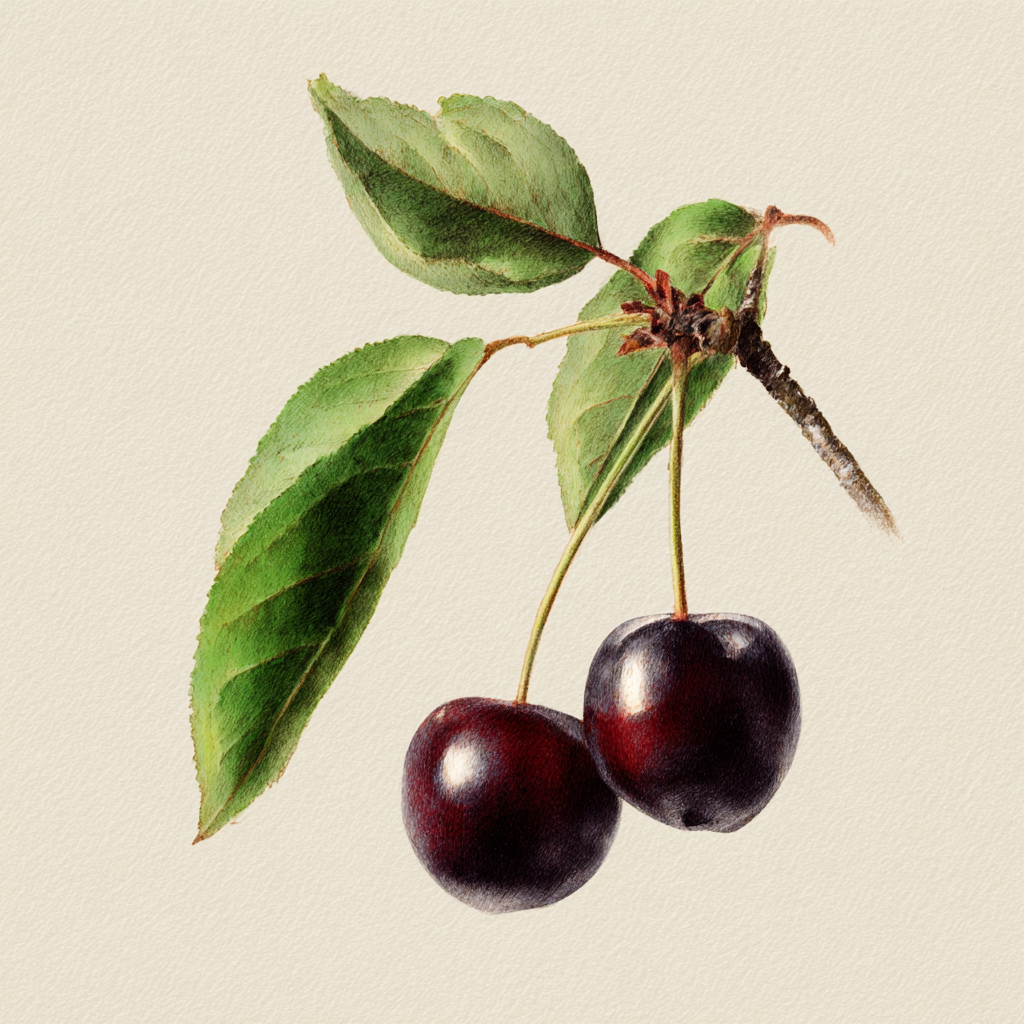
Small, round, dark purple-black drupes 1/3 inch across in drooping clusters; ripen July-August; intensely flavored, used for jams, jellies, and wine.
Natural History
Natural History
Prunus serotina is native across a vast range from Nova Scotia and Manitoba south to Guatemala, growing in forest edges, disturbed areas, and successional woodlands. It is one of the most ecologically significant trees in eastern North America, identified by entomologist Doug Tallamy as second only to oaks in the number of moth and butterfly species it supports. The species name serotina means "late" in Latin, referring to the late-season flowering relative to other cherries. Bark was extensively used by Indigenous peoples and in 19th-century commercial medicine under the name "wild cherry bark." It was introduced to Europe in the 17th century and has become invasive in parts of Belgium, Germany, and the Netherlands.
Traditional Use
Traditional Use
Wild cherry bark was one of the most commercially important medicinal plants in 19th-century North America and remained in the US Pharmacopoeia into the 20th century. Its cough-suppressant and expectorant properties, derived from prunasin and related compounds that hydrolyze to benzaldehyde, were documented across many Indigenous nations and adopted widely into American folk and patent medicine.
Parts Noted Historically
Cherokee, documented by Mooney and Olbrechts, late 19th century - bark
Cherokee healers prepared bark decoctions used in traditional contexts associated with coughs, respiratory complaints, and as a cold remedy; documented in multiple ethnobotanical accounts as a primary respiratory plant.
US Pharmacopoeia, 1820-1975 - inner bark
Wild cherry bark syrup was an official Pharmacopoeia preparation for over 150 years, used as a cough suppressant and expectorant; it remains a component of some over-the-counter cough preparations today.
Ripe fruits are safe to eat in moderate quantities but should have stones removed. Wilted leaves and bark contain prunasin, which can release hydrogen cyanide; do not use bark preparations without proper preparation guidance. Ripe cherries are safe; wilted or damaged leaves are toxic to livestock.
This information is provided for historical and educational purposes only and is not medical advice. Always consult a qualified healthcare professional before making decisions related to your health.
Loading photo submission…